

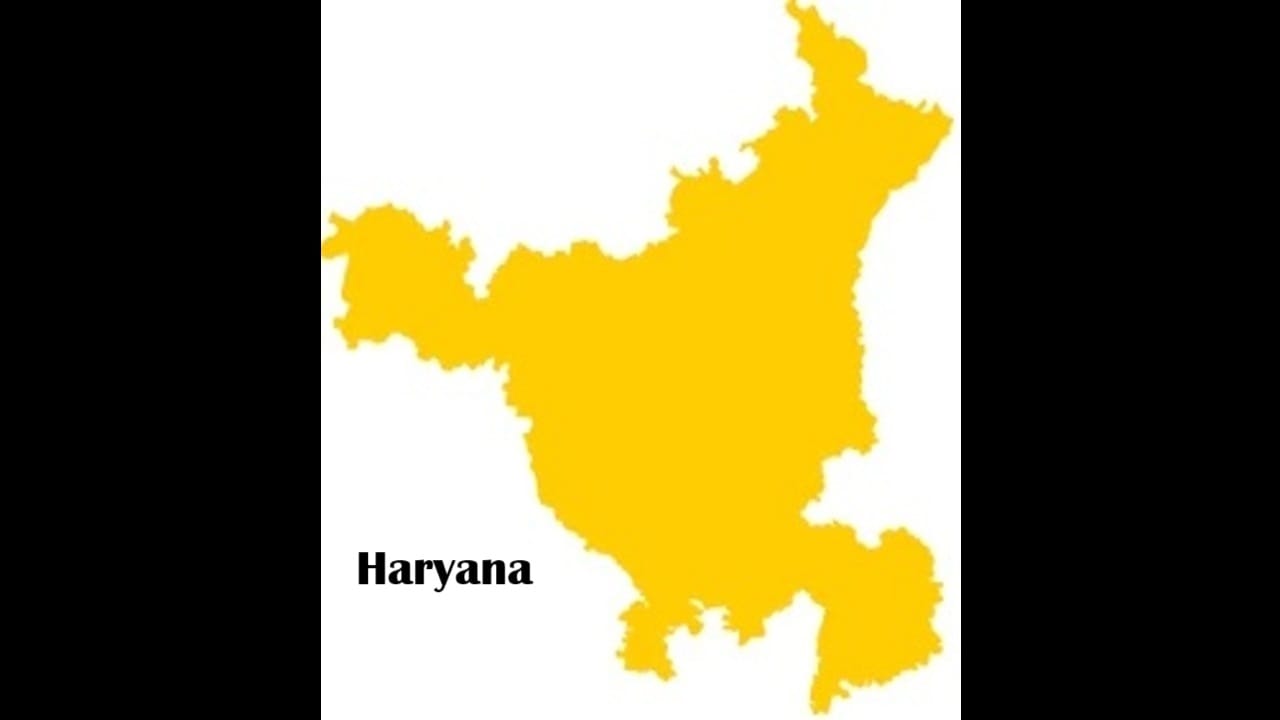
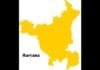
It is heart-warming and really big news emanating from the state, like Haryana. The state, which has long been associated with patriarchal social norms and gender bias, is realising the woman power with seven women IAS officers simultaneously heading district administrations across the state. This is happening for the first time in Haryana since its inception in 1966.
Two more women IAS officers were appointed as Deputy Commissioners on Monday, and with it, the state now has women in charge of seven of its 23 districts. Chief Secretary Anurag Rastogi confirmed that this is the highest-ever representation of women in district leadership posts in Haryana’s history.
Out of these two appointments Mandeep Kaur has been posted as DC of Charkhi Dadri, while Dr Vaishali Sharma has been posted to Jind as DC.
Kaur began her bureaucratic career with the Haryana Civil Services and was promoted to the IAS in 2019 (2013 batch). Dr Sharma, a 2017 batch IAS officer, hails from Uttar Pradesh. She was allocated to the Haryana cadre after being transferred from the Tripura cadre in 2019.
Kaur stresses the significance of appointing women officers by saying it inspires girls and women to recognise the importance of education.
A week earlier, another woman IAS officer from the 2018 batch, Varsha Khangwal, was appointed Deputy Commissioner of Jhajjar. She also belonged to the Haryana Civil Services, who was promoted to the IAS in 2025 and was allocated the 2018 batch.
With these fresh additions, Haryana now has seven women DCs that include Preeti (2015 batch, Yamunanagar); Neha Singh (2015 batch, Sonipat); Aparajita (2018 batch, Kaithal); and Anupama Anjali (2018 batch, Mahendragarh-Narnaul), alongside the three recent appointees.
Anupama Anjali took charge as Mahendragarh DC on April 16 after serving as Additional Deputy Commissioner (ADC) in Rewari. Similarly, Aparajita also earlier worked as ADC in Panchkula, Faridabad, and Ambala.
Neha Singh has been Sonipat DC since March this year, after being transferred from the Gujarat cadre in December 2021. Preeti has been the Yamunanagar DC since November 2025.
Jhajjar district deserves special mention for having women officers leading both the administrative and police departments, with IAS officer Varsha Khangwal heading the district administration and IPS officer Dr Rajshri Singh leading the police force as city Police Commissioner.
Senior bureaucrats point out that men still continue to dominate key posts at senior levels in the Haryana bureaucracy, though they acknowledge a gradual shift in recent years.
But there are women officers too at the senior-most level, like Dr Sumita Misra (IAS:1990:HY), who has been serving as Additional Chief Secretary (Revenue) since January, a position regarded as the most significant assignment in the state bureaucracy after the Chief Secretary.
Besides, Misra also holds the additional charge of the Health and Medical Education and Research portfolio. Earlier, for over a year, she had looked after crucial portfolios, including Home, Jails, and Criminal Investigation.
Similarly, Ashima Brar (IAS:2004:HY) is another example, who is currently serving as Commissioner of the State Excise and Taxation Department, in addition to a couple of other responsibilities.
According to sources, she was appointed the first woman DC of Yamunanagar in the early 1990s.
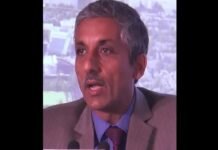
Former Chief Secretary Keshni Anand Arora expresses happiness over the current appointments, saying, “This is a big development for me as I was the first woman deputy commissioner.” Arora had made history in June 2019 when she became Haryana’s Chief Secretary. Arora, along with her sisters Meenakshi Anand Chaudhary (1969 batch) and Urvashi Gulati (1975 batch), held the state’s top administrative post. Bureaucrats noted that nowhere else in the country have three sisters ever risen to the position of chief secretary of a state.
The appointments of woman officers in leading field roles carry symbolic importance in a state that has been known for gender imbalance.
Officials say that initial postings for women officers were often limited to social welfare departments, while key portfolios such as Home and Town and Country Planning were rarely assigned to them. They also said that if these officers succeed in their tenures, more women may be entrusted with similar assignments.
Significantly, in 2025, Haryana’s sex ratio at birth stood at 923 females per 1,000 males, the highest in five years and a significant improvement from 910 in 2024.








 Get Latest Updates