

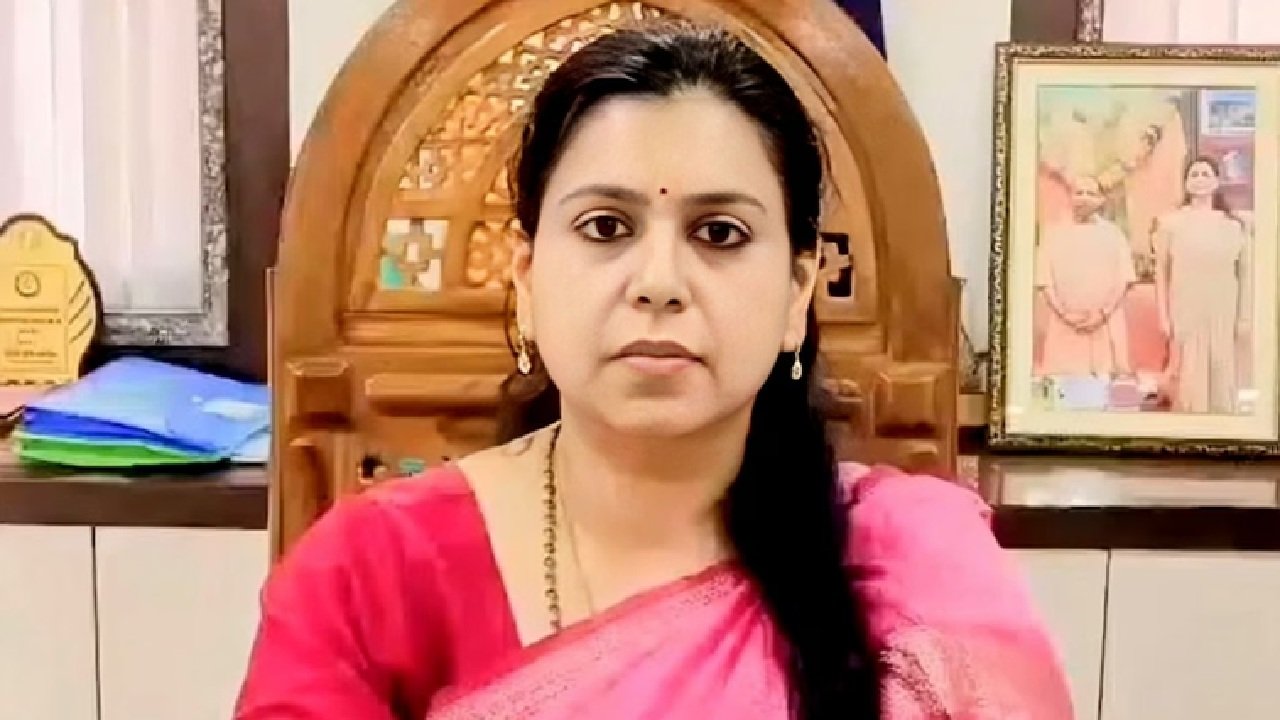
Uttar Pradesh cadre IAS officer Divya Mittal (IAS:2013:UP) has bid goodbye to her 13-year-long bureaucratic journey, which she describes as “unforgettable.” Divya announced her resignation through a social media post, but the reason she cites for resignation is heart-warming. She explains it, saying that her personal dreams have already been fulfilled, so she now wishes to realize the dreams she has for her people.
Divya was posted as Special Secretary in the Revenue Department when she resigned.
In a deeply-moving resignation note on Twitter, Divya draws a sketch of her life recounting how did it pass through different terrains she traversed and the experiences that shaped her thinking along the way. Yet, she largely remained unsatisfied, incomplete as she realized her life was not meant for what she was doing. She aspired to do more and more but the job of a bureaucrat was perhaps coming in her way. That is the reason why she says, with a sense of conviction, that while her position is gone, her dream to contribute to India’s well-being would remain alive.
Divya narrates her story that she had grown up in a humble environment with a dream of having a good and successful life. After studying from IIT Delhi and IIM Bangalore, she worked hard and landed a job in London but, as she writes, even after achieving “everything”, she felt incomplete as something was missing.
She says “not being in my own country used to trouble me.” She realized that her education, confidence and the strength to walk with her head held high anywhere in the world were all debts owed to India. And she decided to repay that debt.
The result: Divya returned to India and joined the elite IAS job thinking it would give her an opportunity to contribute to the country she had dreamt of.
She recalls what her postings taught her, like she says “Deoria taught her that standing with the right was not an option but a duty.” Similarly, Mirzapur taught her that “impossible is not a fact, but merely an opinion”.
That Divya has been a god-fearing, thorough humble bureaucrat is proved when she acknowledges the blessings of Maa Vindhyavasini and the trust of the people for teaching her that true strength does not come from a position.
She writes that the true satisfaction of public service comes from seeing the happiness of families receiving land rights for the first time or persons with disabilities gaining an opportunity to live with dignity and farmers getting water for their fields.
Her feelings for the common people become visible when she says, “walking with them in their struggles, I learned that behind every government file is a person, and maintaining their dignity is justice.”
She admits that she was initially “foolish” to think that she had joined the IAS to give something to people. In reality, she writes, she had received far more from them – their happiness, affection and trust gave her the courage to move forward even when she felt tired or broken.
Divya’s deep concerns for humanity and the country men come alive when she gives her parting remarks, saying, “Today, my eyes are moist with gratitude…. I may have lost my position today, but I will never forget the dream this land of our country has given me.”













 Get Latest Updates