

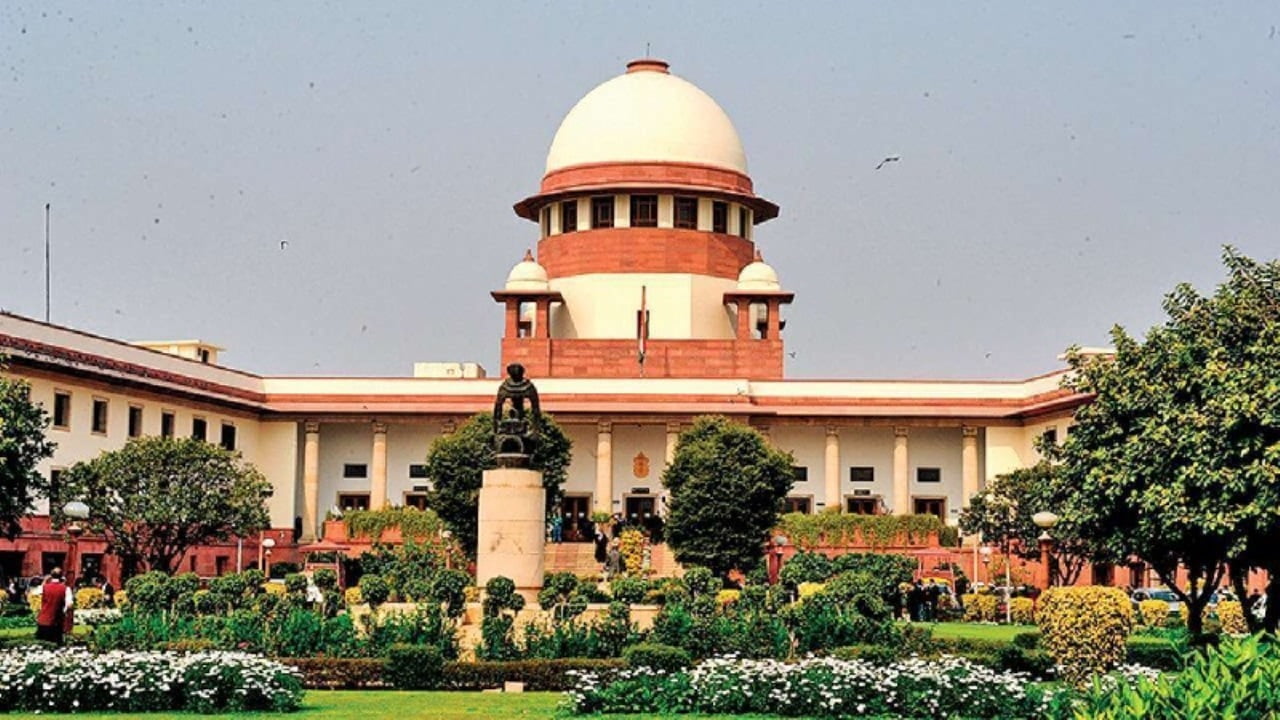
New Delhi: The Supreme Court on Wednesday questioned the Central government over a 1993 Ministry of Home Affairs (MHA) policy that bars pregnant IPS probationers from undergoing training. The Court observed that a rule meant to protect women should not be used to deny them training if they are medically fit.
Hearing a petition filed by Urvashi Sengar, a 2023-batch IPS officer of the Madhya Pradesh cadre, the Court asked the Centre to explain why a woman officer should be prevented from attending training if doctors have declared her fit. It also sought the Centre’s response by Thursday.
The Court observed that every woman’s health condition is different. While some women may be fit to resume training within a few months after childbirth, others may require more time. Therefore, such cases should be decided on the basis of individual medical fitness rather than a blanket rule.
What is the 1993 policy?
The case revolves around a 1993 Office Memorandum (OM) issued by the Ministry of Home Affairs.
Under this policy, if a woman IPS probationer becomes pregnant during training, her training has to be stopped immediately. She can resume training only one year after childbirth. The period is treated as extraordinary leave, though it does not affect her seniority.
What happened in Urvashi Sengar’s case?
Urvashi Sengar joined the Sardar Vallabhbhai Patel National Police Academy for Phase-I training in November 2023.
While undergoing Phase-II training in April 2025, she became pregnant and informed the academy. She delivered her child on September 20, 2025.
When the next Phase-II training was scheduled to begin on June 20, 2026, about nine months after childbirth, Sengar requested permission to join, stating that she was medically fit.
However, the academy refused her request, citing the 1993 policy, and asked her to join training with the next batch.
How did the case reach the Supreme Court?
Sengar first approached the Central Administrative Tribunal (CAT), which allowed her to participate in the training subject to medical fitness and other formalities.
Following the CAT’s order, the police academy initially issued a letter permitting her to join the training. However, the permission was withdrawn within two days after the Centre challenged the tribunal’s order before the Delhi High Court.
The Delhi High Court stayed the CAT’s order, after which Sengar approached the Supreme Court.
What is the Centre’s stand?
The Centre opposed any relaxation of the policy, arguing that allowing one officer to join training despite the rule could lead to similar requests from others.
However, Sengar’s counsel told the Court that exceptions had been made in two similar cases in the past, where women officers were allowed to continue or resume training despite the 1993 policy.
What is the Supreme Court examining?
The Supreme Court is examining whether a woman IPS probationer can be denied training solely because she became pregnant or gave birth, even if she is medically fit to undergo training.
The Court is also considering whether the 1993 policy, framed more than three decades ago, should continue in its present form or whether decisions should be taken based on the medical condition of each individual officer instead of applying the same rule to everyone.




















 Get Latest Updates