

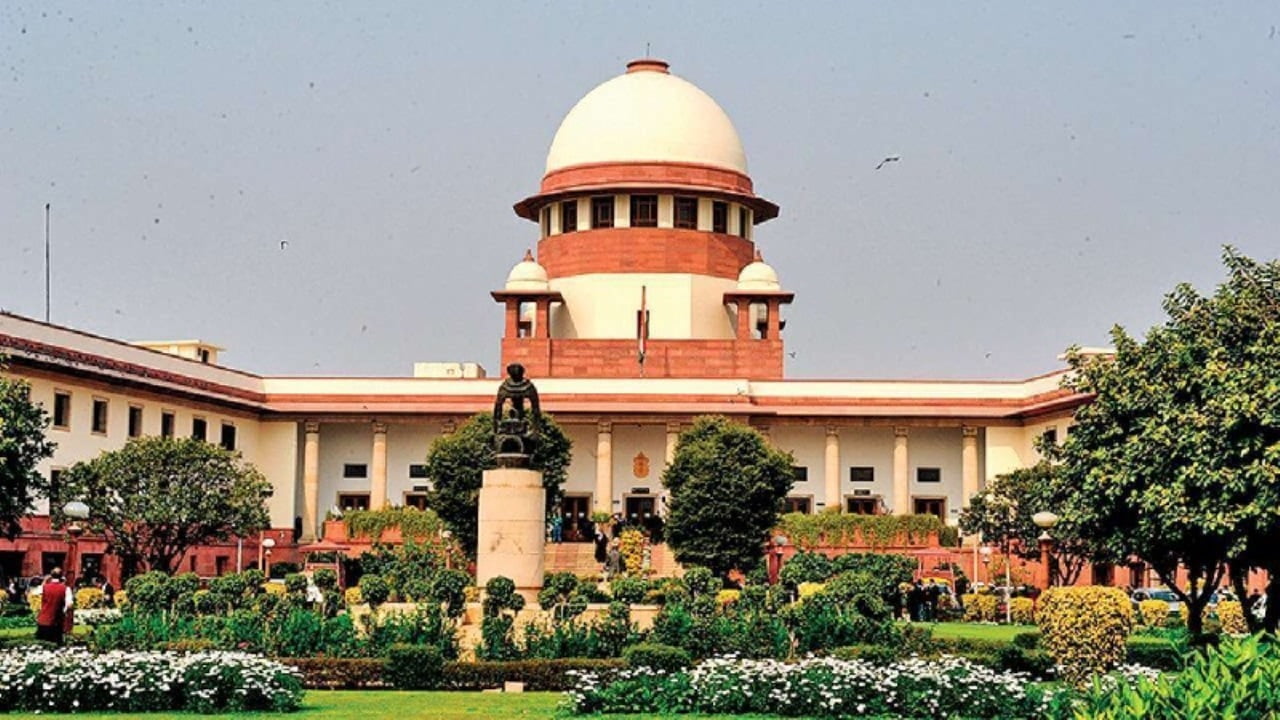
The Supreme Court gave a split verdict on the Union Government’s demand to refer the petitions challenging the appointment of Chief Election Commissioner (CEC) and Election Commissioners (ECs) to a five-judge Constitution Bench.
The Centre had passed an Act (Appointment, Conditions of Service and Term of Office Act), in 2023, replacing the Chief Justice of India (CJI) with a Cabinet Minister on the selection panel which appoints Election Commissioners. The 2023 Act was later challenged in the apex court.
A Bench of Justices Dipankar Datta and Satish Chandra Sharma had reserved its decision on the demand for reference on July 30.
While Justice Datta rejected the government’s request for reference, Justice Sharma supported the govt’s stand, saying that a substantial question of law was involved in the matter which should be decided by a larger bench.
In the light of the differing views the bench ordered that the matter be placed before the Chief Justice of India to consider whether a Constitution Bench must be formed to decide the issue.
Justice Datta was of the opinion that it was not enough for the Election Commission of India (ECI) to be independent. It must also appear to be independent.
He said that the minister, a PM’s nominee, on the selection panel cannot be expected to defy his own nominator (PM).
The petitions challenging the law contend that it violates the constitutional requirement of an independent Election Commission by excluding the CJI from the selection process.
The challenge to the act stemmed from a Supreme Court’s verdict in the Anoop Baranwal vs Union of India case in 2023. The top court in that case had directed that appointments to the Election Commission would be made by a committee comprising the Prime Minister, the Leader of Opposition and the CJI, unless a law is enacted in this regard by the parliament.
Solicitor General Tushar Mehta argued that the top court had merely filled the legislative vacuum in that case and once a law was enacted, the legislative wisdom should prevail over the temporary judicial verdict.
The bench also observed that two members on the selection panel are on the govt’s side and only one member remains on the other side.



















 Get Latest Updates