

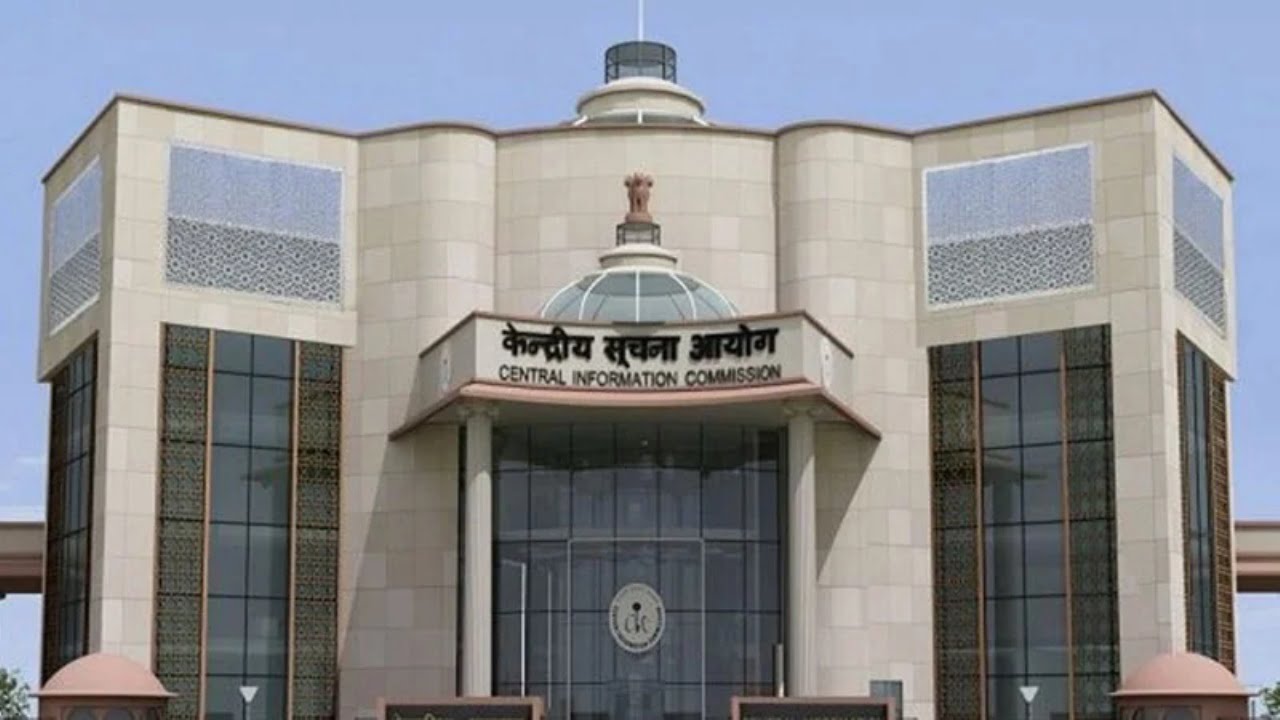
The Central Information Commission (CIC) has raised questions over the discontinuation of publication of paper-wise marks of successful candidates in the Civil Services Examination (CSE), while also pointing out contradictory positions taken by the Union Public Service Commission (UPSC) and the Department of Personnel and Training (DoPT) on the issue.
The matter came up during the hearing of a second appeal filed under the Right to Information (RTI) Act by UPSC aspirant Aniket Kumar Gupta, who sought disclosure of detailed marks secured by recommended candidates in General Studies papers, optional subjects, Essay and Personality Test for examinations conducted between CSE 2014 and CSE 2023.
The appellant argued that till CSE 2017, UPSC used to publicly disclose paper-wise marks of recommended candidates. However, from CSE 2018 onwards, only aggregate written marks and interview scores have been published, without any subject-wise breakup. According to him, this significantly reduced transparency in the examination process.
During the hearing, the applicant argued that the absence of official paper-wise data has created an information gap that is being exploited by coaching institutes. He submitted that several coaching centres allegedly make exaggerated and unverifiable claims regarding toppers’ performances and “high-scoring” optional subjects, influencing aspirants in their selection of optional papers. According to him, many candidates, particularly those from disadvantaged backgrounds, end up relying on promotional claims rather than verified information while making critical decisions about optional subjects.
Interestingly, the Department of Personnel and Training also expressed concern over the role of coaching institutes, though from a different perspective. DoPT argued that public disclosure of detailed subject-wise marks could itself be misused by coaching centres, which may selectively highlight performances in certain optional subjects and create misleading perceptions among aspirants regarding “high-scoring” subjects.
UPSC, meanwhile, defended the non-disclosure by stating that detailed paper-wise marks constitute “personal information” relating to individual candidates. DoPT also supported the continuation of the existing practice, arguing that such detailed information may be susceptible to misuse.
However, the CIC observed inconsistencies in the positions adopted by UPSC and DoPT. While DoPT submitted that subject-wise marks are maintained solely by UPSC, UPSC informed the Commission that all such information is shared with DoPT. The Commission also noted that neither authority was able to produce supporting circulars, policy documents or file notings explaining why publication of paper-wise marks was discontinued after 2017.
The Commission further observed that the basis for discontinuing the earlier practice had not been satisfactorily clarified and noted that several arguments raised by the appellant remained unanswered. Information Commissioner Anandi Ramalingam has now directed DoPT to submit comprehensive written submissions along with relevant records, policy decisions and supporting documents explaining the rationale behind discontinuing the publication of detailed marks.
The Commission has also asked DoPT to explain why it should not recommend reinstating the earlier practice of publishing paper-wise marks of recommended candidates in the Civil Services Examination.



















 Get Latest Updates