

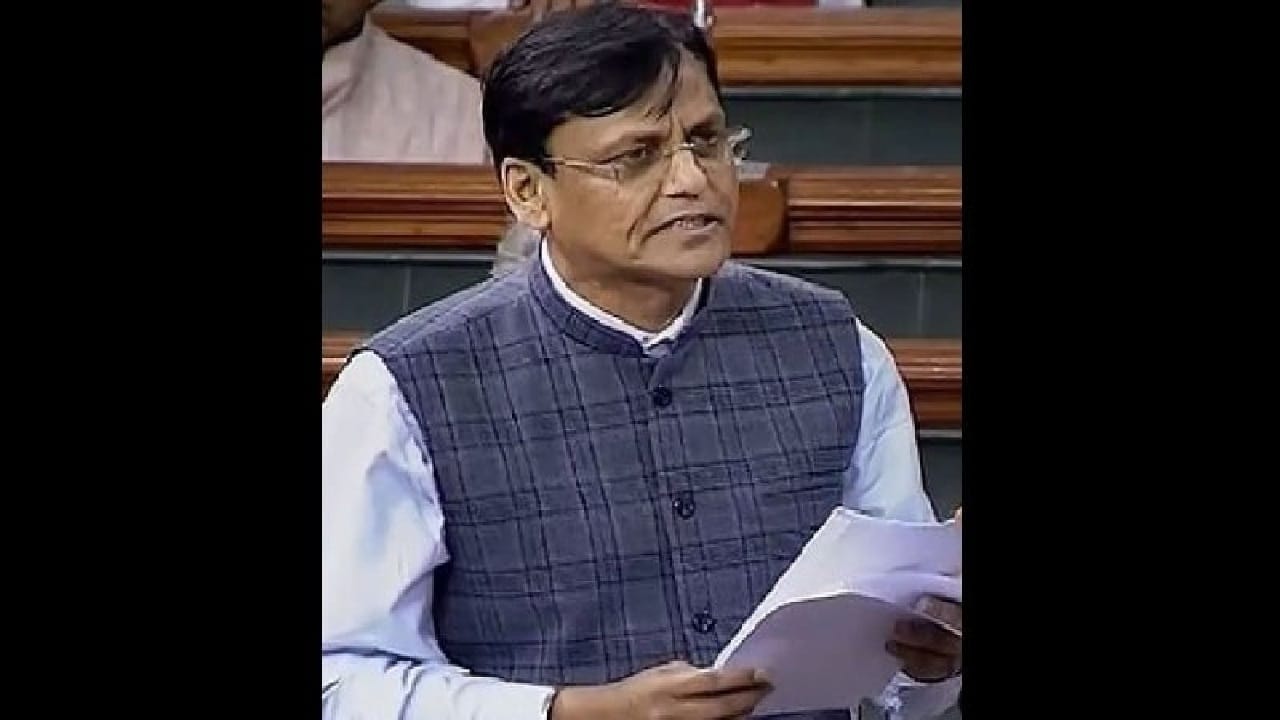
The Union Government finally tabled the Central Armed Police Forces (General Administration) Bill, 2026, in the Rajya Sabha on Wednesday. Union Minister of State (MoS) for Home Nityanand Rai tabled the bill despite objections from opposition members who submitted notices against its introduction.
The proposed legislation aims to create a unified legal framework for all five Central Armed Police Forces (CAPFs)—Central Reserve Police Force (CRPF), Border Security Force (BSF), Indo-Tibetan Border Police (ITBP), Central Industrial Security Force (CISF), and Seema Suraksha Bal (SSB). The bill formalizes the deputation of IPS officers at senior levels in the CAPFs, a move opposed by CAPF personnel.
The bill proposes to reserve 50% of IG posts, 67% of Additional Director General (ADG) posts, and all posts of Special DG and DG ranks in the CAPFs for IPS officers on deputation, with rules under the Act overriding any conflicting provisions.
The bill says IPS officers are essential for effective functioning of the central paramilitary forces and Centre–State coordination. However, the CAPF associations have opposed the proposals, citing career stagnation among cadre officers.
According to Rai, the objective of the bill is solely to clarify the administrative framework, recruitment processes, and service-related matters of the Central Armed Police Forces.
The opposition Congress opposed the bill, saying it contravenes the Supreme Court’s order and undermines multiple legal victories secured by former CAPF officials in various courts.
It needs to be mentioned here that the Supreme Court, in its verdict on May 23, 2025, had directed the Centre to “progressively reduce” IPS deputation to CAPFs and conduct a cadre review within six months.
The Centre later moved the petition in the apex court to review its decision, but it was dismissed by the top court, making its order final. It was when the Union Cabinet approved the draft bill to formalize the IPS deputation to CAPFs through statutory intervention.
Congress leader Ajay Maken, who also happens to be a former Minister of State for Home, opposed the bill, arguing that it is detrimental to cadre officers. Maken raised the issue of career stagnation, saying it takes nearly 30 years to become an ADG, 20 years to become a DIG, and 15 years to become a senior commandant. In contrast, an IPS officer can become an SP or DIG within seven years and outrank a senior commandant.
But YSRCP MP Golla Babu Rao supported it, saying the legislation would bring administrative clarity and operational efficiency through a unified framework. He, however, urged the govt. to refer the bill to a parliamentary committee with CAPF representation, as it would impact the careers of over a million personnel.
However, various opposition party MPs moved the notices against the introduction of the bill.



















 Get Latest Updates