Radha Katyal Narang (IRS-IT:2005), currently serving as Director in the Department of Official Language, has been prematurely repatriated to her parent cadre. According to an order issued by the Department of Personnel and Training (DoPT) on Monday (April 20, 2026), the competent authority approved the proposal of the Ministry of Home Affairs to repatriate her on personal grounds with extended cooling-off.
Narang had been serving in the Department of Official Language since June 2025. Her five-year central deputation tenure was scheduled to end in September 2027, but she has been repatriated nearly one year and five months earlier.
She began her central deputation as Director in the Department of Tourism in September 2022, initially up to February 29, 2024, corresponding with the functioning of the G-20 Secretariat.
In February 2024, she was appointed as Director in the Department of Justice for the balance period of her five-year tenure up to September 7, 2027. Subsequently, in June 2025, she was laterally shifted as Director to the Department of Official Language under the Ministry of Home Affairs for the remaining tenure.
Union Minister of State for Personnel, Public Grievances and Pensions, Dr Jitendra Singh, on Civil Services Day highlighted a sharp rise in citizen-centric governance initiatives and administrative reforms across the country.
He noted that participation in the Prime Minister’s Awards for Excellence has increased significantly, with applications rising from 1,216 in 2023 to 2,035 in 2025, while the iGOT Karmayogi platform has onboarded over 88 lakh officials, offering more than 2,000 courses for capacity building.
Grievance redressal through CPGRAMS has expanded from around 2 lakh cases annually in 2014 to nearly 25–30 lakh now, with over 95% disposal and resolution time reduced to about 12 days.
Highlighting reforms, Singh said governance is shifting from “individual-based to institutionalised delivery” and from “rule-based to role-based administration.” He cited removal of nearly 2,000 obsolete rules, expansion of digital governance, and restructuring of performance evaluation based on programme outcomes.
He also pointed to growing global interest in India’s governance models, with countries like Maldives, Mauritius, Bangladesh and South Africa studying systems such as CPGRAMS.
The reforms, he said, align with the theme of “Viksit Bharat: Citizen-Centric Governance and Development at the Last Mile,” aimed at preparing civil servants for future challenges and India’s 2047 vision.
The function was presided over by C. P. Radhakrishnan as the Chief Guest. It was attended by senior members of the government’s top administrative leadership. Also present on the dais were Principal Secretary to the Prime Minister PK Mishra, Principal Secretary to the Prime Minister Shaktikanta Das, Cabinet Secretary TV Somanathan and DARPG Secretary Nivedita Shukla Verma, reflecting the high-level institutional presence at the annual Civil Services Day gathering.
Droupadi Murmu, CP Radhakrishnan and Narendra Modi on Tuesday extended greetings to civil servants across the country on the occasion of Civil Services Day, acknowledging their contribution to governance and nation building.
In a message, President Murmu praised civil servants for strengthening governance and public institutions. She said their role—from policy formulation to effective implementation—significantly impacts the quality of life of millions. Emphasising integrity and empathy, she noted that civil servants play a key role in fostering inclusivity and strengthening trust between the State and citizens.
Vice-President Radhakrishnan said civil servants remain an enduring pillar of India’s administrative framework and highlighted their role in delivering public services. He called for strengthening the resolve towards good governance and nation building.
Prime Minister Narendra Modi said Civil Services Day is an occasion to reaffirm commitment towards good governance. He noted that civil servants—from grassroots to policy-making levels—touch countless lives and contribute to India’s progress, and urged them to continue serving with excellence, compassion and innovation.
Amit Shah said the dedication and integrity of civil servants play a vital role in nation-building, while Nitin Gadkari commended their contribution to governance and public welfare.
Civil Services Day is observed every year on April 21 to recognise the contribution of civil servants to governance and development. The day commemorates the historic address by Sardar Vallabhbhai Patel in 1947, when he described civil servants as the “Steel Frame of India.”
National Civil Service Day is observed every year on April 21 to celebrate Indian bureaucracy, to recognise the service of Indian civil servants. It is observed on this date, as it was April 21, 1947, when India’s first Home Minister, Sardar Vallabhbhai Patel, addressed the first batch of civil servants at the All India Services training school in Metcalfe House in Delhi.
It was when Patel described civil servants as the “steel frame of India,” underlining their importance in maintaining unity and administrative continuity.
The day acknowledges the role played by Indian civil servants in policy implementation, governance, and public service delivery. The day is observed to motivate civil servants to uphold transparency and accountability, to encourage innovation in governance, and to reinforce commitment to citizen-centric service.
National Civil Service Day virtually highlights the enduring relevance of this institutional backbone in a rapidly transforming nation.
Besides maintaining law and order, civil servants play a crucial role in implementing government schemes and welfare programmes, managing disaster response and crisis situations, as well as ensuring delivery of public services like healthcare, education, and infrastructure.
With digital governance and rising public expectations, the role of bureaucracy is evolving with a focus on data-driven decision-making and collaboration with the private sector and civil society.
The civil servants operate at central, state, and district levels, forming the backbone of governance.
The central government presents the Prime Minister’s Awards for Excellence in Public Administration on this day to recognise outstanding work by civil servants and districts in implementing innovative and impactful initiatives.
National Civil Service Day is a reminder of the critical role bureaucracy plays in shaping governance. Beyond policy-making, it is the administrative machinery that ensures continuity, stability, and delivery on the ground.
In what is considered an unprecedented development, the Samrat Choudhary-led new government in Bihar has again extended the tenure of former DGP K S Dwivedi (IPS:1984:BH) as Chairman of the Bihar Police Subordinate Services Commission (BPSSC). He will continue to hold that position until he reaches the age of 68. This move is significant for retaining consistency in decision-making.
The state Home Department has issued an official notification in this regard. According to the order, this extension will be effective until the age of 68 or until further orders.
By doing so, the govt intends to send a message that it values experience and trust both as crucial factors for those in key positions. This has been done to ensure continuity in the Commission’s work and also to emphasize stability in the recruitment process.
The govt’s decision to extend his term will have a direct impact on the recruitment process as the Bihar Police Subordinate Services Commission is a key institution involved in police recruitment. Therefore, having an experienced person in a leadership role is considered crucial for increasing its transparency and efficiency.
Having already served as the DGP, Dwivedi brings with him extensive experience and a deep understanding of administrative matters. That is the reason why his services are being utilized even after retirement by the Bihar govt. He was appointed as the Chairman of the commission on April 10, 2023. Now his term has been extended.
The government is working to strengthen the recruitment system, and this move is seen as a step in that direction.
This decision is being seen as a sign of confidence in him and reflects the government’s policy of retaining experienced leaders in administrative positions. The government virtually wants stability in key institutions, which can lead to consistency in decision-making and better outcomes.
Experts believe that such decisions may be seen in the future as well, with experienced officers being given responsibility where needed.
The government is said to be focusing on improving administrative efficiency as efforts are underway to improve areas such as recruitment and law and order.
The decision to extend Dwivedi’s tenure is seen as part of the govt’s strategy to accord priority to experience and integrity as the government believes that the contributions of experienced officers strengthen the quality of governance. This decision also clearly demonstrates the emphasis on continuity and stability.
In a disturbing development, allegations of harassment within the Police Department have surfaced in Karnataka, with an SP-rank officer writing to the state police chief seeking permission to expose alleged misconduct by certain IPS officers.
The complainant is posted as SP in the Directorate of Civil Rights Enforcement (DCRE) department. In the letter, the SP has alleged that some IPS officers in the state have been misusing their authority to harass subordinate staff. It has been claimed that a few IPS officers from outside the state were allegedly targeting Kannada-origin officers and misusing their positions to suppress them.
The SP has requested the DGP to facilitate a meeting with the Chief Minister, Home Minister, and Home Secretary to present detailed evidence regarding alleged harassment, abuse of power, and injustice within the department.
In a separate but similar incident, an inspector of the West DCRE police station, Srinivas, released a video accusing senior officers, including the SP and a DySP, of harassment and mental pressure.
In the video, he appealed to the state government to intervene and address the issue.
No official response has so far been issued by concerned authorities.
With the two-year-tenure of current DGP Y B Khurania (IPS:1990:OD) ending on August 16, Odisha has begun the process of finding his replacement in order to maintain continuity in top police leadership. The state police headquarters has prepared a panel of three top-ranking IPS officers and forwarded it to the state government for further action. The IPS officers included in the list are Sudhanshu Sarangi (IPS:1990:OD), Susanta Kumar Nath (IPS:1993:OD), and R P Koche (IPS:1992:OD).
While senior-most IPS officer Sudhanshu Sarangi is currently serving as Chairman-cum-Managing Director at Odisha State Police Housing and Welfare Corporation Limited, Susanta Kumar Nath is currently posted as DG (Prisons), and Koche is currently serving as the Director of Intelligence.
As per norms, the state government will submit the panel to the Union Public Service Commission (UPSC) next month for empanelment, which, in turn, will convene the Empanelment Committee Meeting (ECM) to assess the officers’ credentials. The committee evaluates service records, disciplinary history, and leadership experience before finalising the panel. The Odisha govt will then appoint the new DGP from the UPSC-approved list.
This appointment process is in accordance with established guidelines prescribed by the law to maintain transparency and merit-based selection of a state police chief.
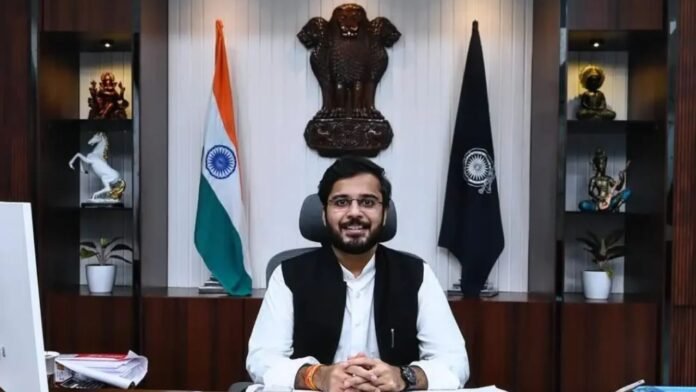
Amit Aseri IAS is an Indian Administrative Service officer from the Uttar Pradesh cadre. A 2016 batch officer, he has been in the news recently due to administrative changes and transfers in Uttar Pradesh, which has increased public interest in his profile. Known for his work at the district and municipal level, he has handled important responsibilities in governance and public administration.
This detailed amit aseri ias biography covers his career journey, postings, education background, and other important aspects of his life.
Early Life, Family & Background
There is limited publicly available information about ias amit aseri’s early life and family. Like many civil servants, he has maintained a low public profile regarding his personal life. Details about his parents and family background are not widely documented in official records or reliable public sources.
Similarly, information about his marital status or wife is also not publicly confirmed, and therefore it is advisable to rely only on verified administrative details.
Amit Aseri Education
Talking about amit aseri ias education, there is no officially detailed public record available regarding his academic qualifications in the public domain. However, as an IAS officer, it is understood that he has completed graduation and cleared the UPSC Civil Services Examination, which requires a strong academic foundation and competitive preparation.
UPSC Journey & Rank
The journey of amit aseri ias into the civil services began with clearing the UPSC examination. He belongs to the 2016 batch of the Indian Administrative Service (IAS) and is allocated to the Uttar Pradesh cadre.
While the exact amit aseri ias rank in UPSC is not publicly available, his selection itself reflects high merit in one of India’s toughest competitive examinations. He is an alumnus of the Indian Institute of Technology (IIT) Delhi.
Amit Aseri
Amit Aseri Career & Key Postings
After joining the IAS, Amit Aseri has served in various administrative roles in Uttar Pradesh. His career mainly revolves around district administration and urban governance.
District Magistrate (DM), Banda: He assumed this role in April 2026, succeeding J. Reebha during a major administrative reshuffle in Uttar Pradesh.
Special Secretary, Public Works Department (PWD): Before his appointment as DM, he served in the state secretariat as Special Secretary for PWD starting in August 2024.
Municipal Commissioner, Aligarh: From September 2022 to August 2024, he led the Aligarh Municipal Corporation. During this tenure, he focused on urban sanitation and engaged with local traders to improve city cleanliness.
Early Career & Foundational Roles
Earlier in his career, Amit Aseri held several field-level positions that established his administrative foundation:
Chief Development Officer (CDO), Chitrakoot: He served as CDO in 2020, overseeing rural development and local infrastructure projects.
Chief Development Officer (CDO), Azamgarh: He also held the CDO position in Azamgarh, where he managed social welfare and development programs.
Joint Magistrate: His early postings included serving as a Joint Magistrate in various districts of Uttar Pradesh.
Amit Aseri IAS Current Posting
As part of a major administrative reshuffle, the Government of Uttar Pradesh has transferred several IAS officers. In this reshuffle, Amit Aseri IAS has been appointed as the new District Magistrate of Banda.
Before this appointment, he was serving as Special Secretary in the Public Works Department (PWD), Uttar Pradesh Government.
Amit Aseri is a 2016 batch IAS officer of the Uttar Pradesh cadre. Earlier in his career, he also served as the Municipal Commissioner of Aligarh, where he handled key responsibilities related to urban administration. In August 2024, he was transferred and posted as Special Secretary in the PWD.
During his early administrative career, he worked in important roles such as Joint Magistrate and Chief Development Officer (CDO). Notably, in 2020, he was posted as the Chief Development Officer of Chitrakoot, where he was involved in implementing development projects and government schemes at the district level.
Role & Responsibilities
As an IAS officer, Amit Aseri has been involved in:
Urban governance and municipal administration
District-level administration
Policy implementation at the state level
Infrastructure and public works management
His transition from district roles to a state-level position reflects career progression within the administrative system.
FAQs – Amit Aseri
Q1. What is Amit Aseri current posting?
As of April 2026, amit aseri ias current posting is District Magistrate (DM) of Banda, Uttar Pradesh, where he is responsible for overall district administration.
Q2. Which batch and cadre does Amit Aseri belong to?
Amit Aseri is a 2016 batch IAS officer of the Uttar Pradesh cadre, and he has served in various administrative roles within the state.
Q3. What is Amit Aseri IAS education?
He completed his education from IIT Delhi, which reflects a strong academic background before entering the civil services.
Q4. What are the key roles held by Amit Aseri?
He has served as Municipal Commissioner of Aligarh, Special Secretary in PWD, and Chief Development Officer (CDO) in districts like Chitrakoot and Azamgarh.
Q5. What is Amit Aseri rank in UPSC?
The exact amit aseri ias rank is not publicly available, but he was selected for the IAS in 2016, which typically requires a high All India Rank.
The Uttar Pradesh Government on Monday (April 20, 2026) issued another round of transfers, shifting 24 IAS officers within 24 hours.
The reshuffle includes the appointment of new District Magistrates in 10 districts—Aligarh, Etah, Banda, Farrukhabad, Hapur, Ambedkar Nagar, Sonbhadra, Ghazipur, Ayodhya and Barabanki.
As part of the changes, Shashank Tripathi, District Magistrate of Barabanki, has been transferred and appointed as District Magistrate of Ayodhya. The move comes a day after a major reshuffle involving 40 IAS officers.
The names of the officers and their postings are as follows:
Avinash Kumar (IAS:2013:UP), District Magistrate of Ghazipur, has been transferred and posted as District Magistrate, Aligarh.
Arvind Singh (IAS:2015:UP), Additional Land Settlement Commissioner, Revenue Board, has been transferred and posted as District Magistrate, Etah.
Amit Aseri (IAS:2016:UP), Special Secretary, Public Works Department, has been transferred and posted as District Magistrate, Banda.
Dr Ankur Lather (IAS:2016:UP), Vice Chairman, Bulandshahr-Khurja Development Authority, has been transferred and posted as District Magistrate, Farrukhabad.
Kavita Meena (IAS:2016:UP), Vice Chairman, Muzaffarnagar Development Authority, has been transferred and posted as District Magistrate, Hapur.
Eesha Priya (IAS:2016:UP), Special Secretary, Tourism Department, has been transferred and posted as District Magistrate, Ambedkar Nagar.
Charchit Gaur (IAS:2016:UP), Additional Chief Executive Officer, Uttar Pradesh State Industrial Development Authority, Kanpur Nagar, has been transferred and posted as District Magistrate, Sonbhadra.
Anupam Shukla (IAS:2016:UP), District Magistrate of Ambedkar Nagar, has been transferred and posted as District Magistrate, Ghazipur.
Shashank Tripathi (IAS:2016:UP), District Magistrate of Barabanki, has been transferred and posted as District Magistrate, Ayodhya.
Ishan Pratap Singh (IAS:2017:UP), Special Secretary to the Chief Minister and Civil Aviation Department and Director, Civil Aviation, has been transferred and posted as District Magistrate, Barabanki.
Nikhil Tikaram Funde (IAS:2014:UP), District Magistrate of Ayodhya, has been transferred and posted as Special Secretary to the Chief Minister.
Prem Ranjan Singh (IAS:2014:UP), District Magistrate of Etah, has been transferred and posted as Additional State Project Director, Samagra Shiksha Abhiyan, and Director, Mid Day Meal Authority (MDMA).
Abhishek Pandey (IAS:2016:UP), District Magistrate of Hapur, has been transferred and posted as Additional Land Settlement Commissioner, Revenue Board, Uttar Pradesh.
Sanjeev Ranjan (IAS:2013:UP), District Magistrate of Aligarh, has been transferred and posted as Special Secretary, Agriculture Department.
J Reebha (IAS:2015:UP), District Magistrate of Banda, has been transferred and posted as Special Secretary, Geology and Minning Department.
Arun Kumar (IAS:2012:UP), Special Secretary, Geology and Minning Department, Uttar Pradesh Government, and Additional Director, Geology and Minning Department, has relieved of the charge of Special Secretary.
Ashutosh Kumar Dwivedi (IAS:2014:UP), District Magistrate of Farrukhabad, has been transferred and posted as Special Secretary, Public Works Department.
Badrinath Singh (IAS-SCS:2014), District Magistrate of Sonbhadra,has been transferred and posted as Special Secretary, Higher Education Department.
Diksha Jain (IAS:2019:UP), Chief Development Officer, Kanpur Nagar, has been transferred and posted as Additional Chief Executive Officer, Uttar Pradesh State Industrial Development Authority, Kanpur.
Dr Aparajita Singh Sinsinwar (IAS:2019:UP), Chief Development Officer, Shahjahanpur, has been transferred and posted as Vice Chairman, Bulandshahr-Khurja Development Authority.
Prranata Aishwarya (IAS:2019:UP), Chief Development Officer, Sitapur, has been transferred and posted as Vice Chairman, Muzaffarnagar Development Authority.
Utkarsh Dwivedi (IAS:2021:UP), Joint Magistrate, Sonbhadra, has been transferred and posted as Chief Development Officer, Shahjahanpur.
Abhinav J Jain (IAS:2022:UP), Joint Magistrate, Mathura, has been transferred and posted as Chief Development Officer, Kanpur Nagar.
Diksha Joshi (IAS:2022:UP), Joint Magistrate, Meerut, has been transferred and posted as Chief Development Officer, Sitapur.
After finding the project cost escalating from Rs 50.71 crore to Rs 126 crore, more than doubling the initial estimate for the construction of an IAS residential complex at Akkulam, the Kerala govt has granted revised sanction for it. The revised amount includes GST, percentage charges, and related components.
The revised sanction was granted through an order passed on March 12. It follows a detailed project report submitted by the public works department (PWD), based on estimates prepared by ULCCS, the agency entrusted with executing the project.
Due to the steep rise in cost, the state govt has opted for a phased execution strategy. As per the order, construction will initially be limited to the extent of the present administrative sanction as Phase I, with the remaining portion to be taken up as Phase II, subject to availability of funds and fresh approvals.
The project, located in Cheruvakkal village near Akkulam, was first sanctioned in 2021, following which a managing committee was formed and a special officer appointed to oversee the development of the complex.
The revised estimate of Rs 126 crore was submitted by the chief engineer (buildings), PWD, along with the detailed project report. While the govt has granted its approval, the order does not specify factors that led to such a steep escalation.
The IAS quarters project traces back to 2021—a period when the govt. simultaneously cleared a set of housing initiatives under the LIFE Mission.
The IAS residential complex will continue to be executed by ULCCS under the supervision of the PWD, in accordance with the PWD Manual and prevailing govt norms. The chief engineer (buildings) has been directed to take further necessary steps.
With Phase I now cleared under the revised sanction, the project is set to move forward.