

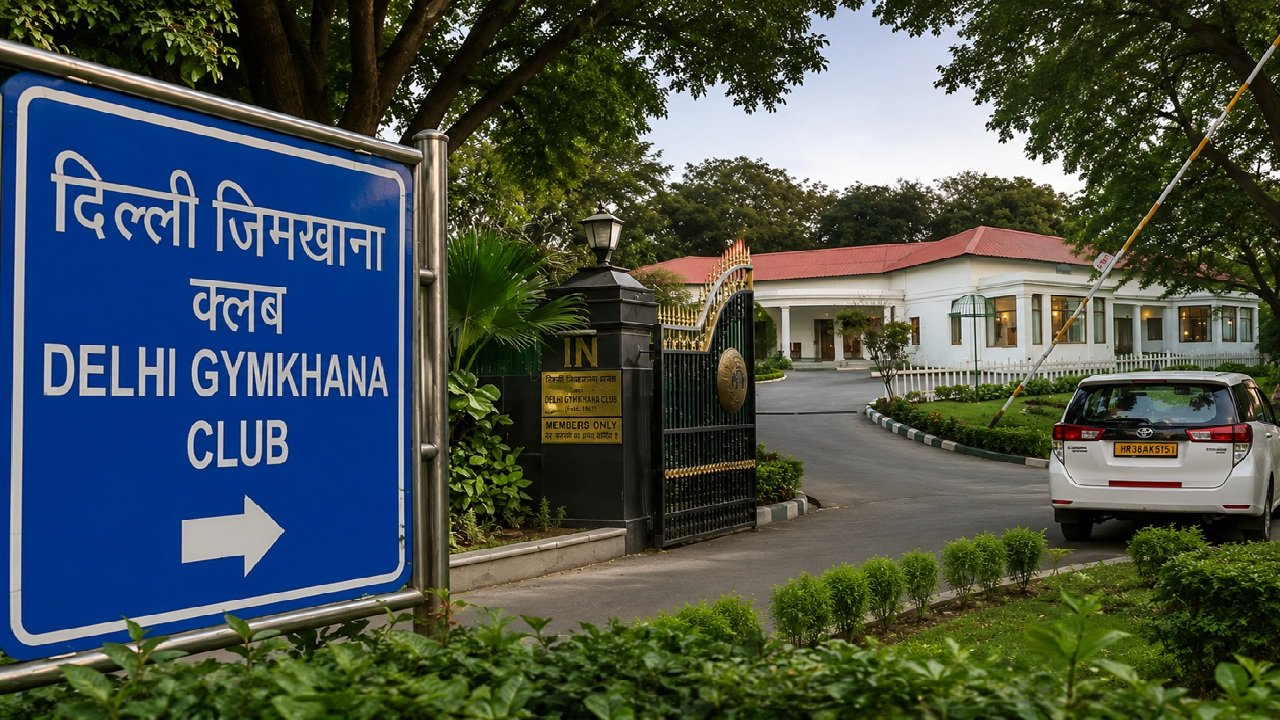
The entire controversy over the iconic 113-year-old Delhi Gymkhana Club, one of India’s oldest and most prestigious institutions, is going to be put to rest on June 5, the deadline set by the Centre following its decision to take back the club’s premises spread over 27.3 acres of prime land on Safdarjung Road in Lutyens’ Delhi.
The club, which has been at the centre of a major controversy, is thus on the brink of an imminent eviction, with the Ministry of Housing and Urban Affairs ordering the elite, members-only club to vacate the premises by June 5, citing clause four of the lease, which permits the government to re-enter land for “public purposes.”
The club has faced criticism for occupying massive amounts of public land while catering strictly to a highly exclusive, multi-generational elite network with membership waitlists spanning decades. The land is reportedly valued at roughly ₹27,000 crore.
The central government has cited the reason behind this move, saying that the land is located in a highly sensitive and strategic area and is critically required for strengthening defence infrastructure and for public interest purposes.
The govt’s action triggered a legal battle with club members challenging the eviction order in the Delhi High Court, arguing that the move is arbitrary and threatens a historic institution that has been an important social and cultural landmark of the capital.
The Delhi High Court has, however, so far refused any interim relief while directing that any action by the government must follow due process. The Centre assured the High Court that it will not forcefully possess the property without following due legal process.
The controversy has also revived allegations of financial irregularities and governance failures within the club. Forensic audits and investigations have reportedly pointed to billing irregularities, membership-related discrepancies, and significant financial losses, leading to increased scrutiny by government agencies.
Besides, the club also faces allegations of failing to pay arrears, with pending dues amounting to ₹47 to ₹48 crore.
Founded during the colonial era, the Delhi Gymkhana Club has long symbolised power, exclusivity, and the influence of India’s political, bureaucratic, and corporate elite. The government’s move has therefore sparked a wider debate on whether colonial-era elite institutions should continue to enjoy privileged access to prime public land.
The dispute has sparked a wider national debate on legacy entitlements versus the use of prime public land. However, the issue goes beyond the question of land. The Delhi Gymkhana Club controversy has become a larger symbol of the clash between heritage and redevelopment, elitism and public interest, and the changing power dynamics in contemporary India.

















 Get Latest Updates