

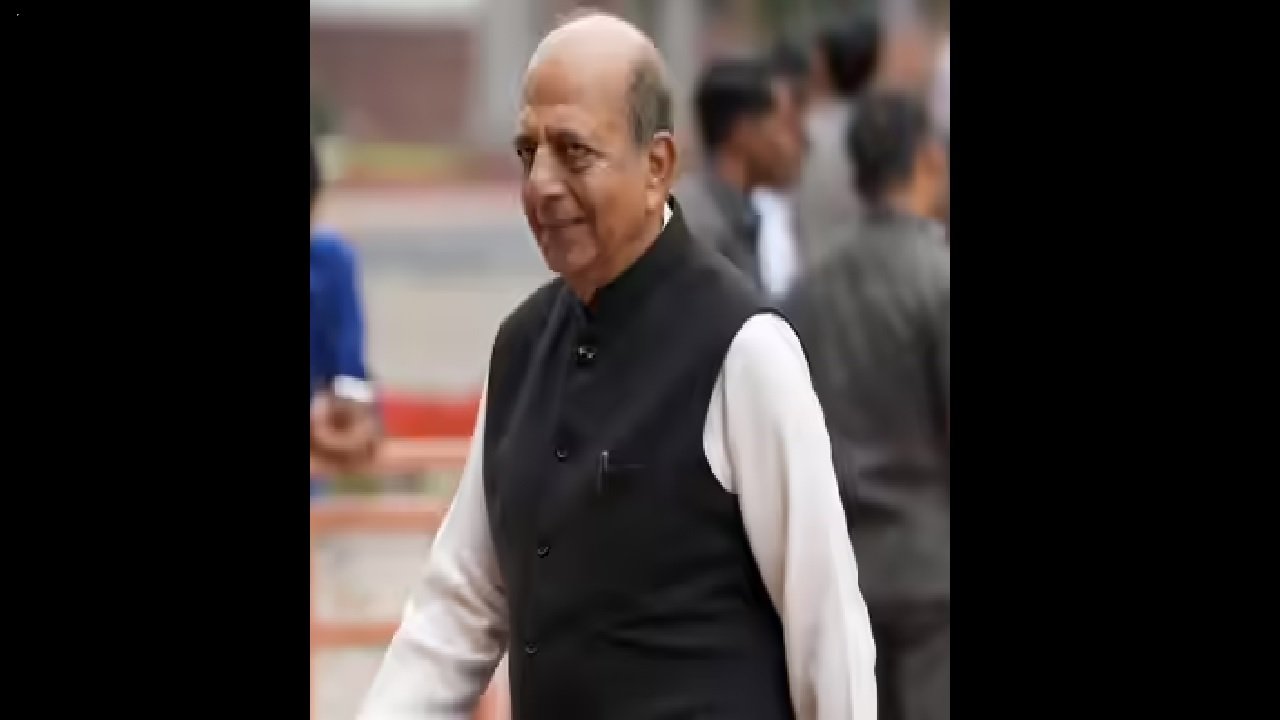
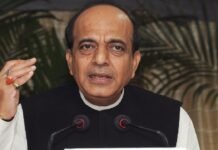
In a development that may lead to far-reaching consequences in the Indian subcontinent, former Union Minister Dinesh Trivedi has been appointed as India’s High Commissioner to Bangladesh. Trivedi, a 75-year-old veteran politician and an MP from Barrackpore in West Bengal, is the first political appointee in the neighbourhood after a long time.
He will be replacing Pranay Verma, a career diplomat. Verma is said to be moving to Brussels as the Indian ambassador to the European Union (EU).
A former Trinamool Congress (TMC) leader, Trivedi first became an MoS for Health and Family Welfare during the UPA regime and later a Union Minister for Railways before joining the BJP on March 6, 2021.
The appointment of a hardcore politician as a diplomat in a neighbouring country with which India has had strained relations after the coup of Prime Minister Sheikh Hasina and installation of the Mohammed Yunus regime is a significant step. During the tenure of US-backed Yunus, the India-Bangladesh ties deteriorated, with the chief advisor unable to contain sectarian violence against the minority Hindu community in Bangladesh.
Against this background, Trivedi’s appointment is a clear signal that India is not averse to sending political leaders as India’s envoys to key countries, and these much sought-after postings are not merely a preserve of Indian Foreign Service officers.
A section of even career diplomats describes Trivedi’s appointment as a commendable move, as it feels politicians have distinct working styles not fettered by protocols as happens with professional diplomats.
That was perhaps the reason why veteran journalist Kuldeep Nayar had been appointed as India’s High Commissioner in the UK by the then VP Singh govt in 1989-90.
Similarly, former Army Chief Gen Dalbir Singh Suhag also served as Indian High Commissioner to Seychelles from 2019 to 2022.
Thus, the Trivedi’s posting to Dhaka should be interpreted as India’s fresh diplomatic recalibration to position political heavyweights to the neighbourhood as envoys. It also indicates that in the changing global geopolitics, the era of an ambassador for good times needs to be redefined at least in the Indian subcontinent.















 Get Latest Updates