Home Blog Page 20

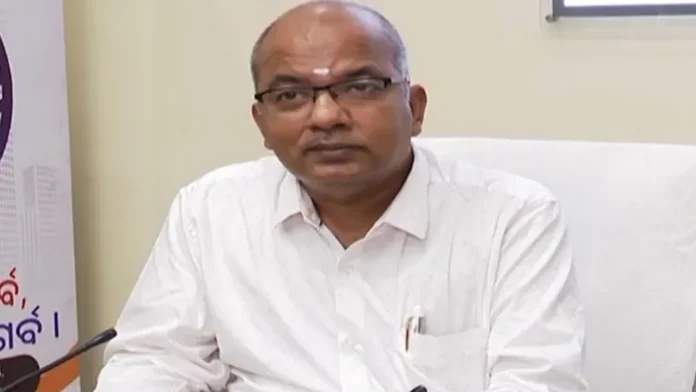
Punjab govt grants sanction to prosecute DIG Inderbir Singh in drugs and graft cases

Inderbir Singh IPS


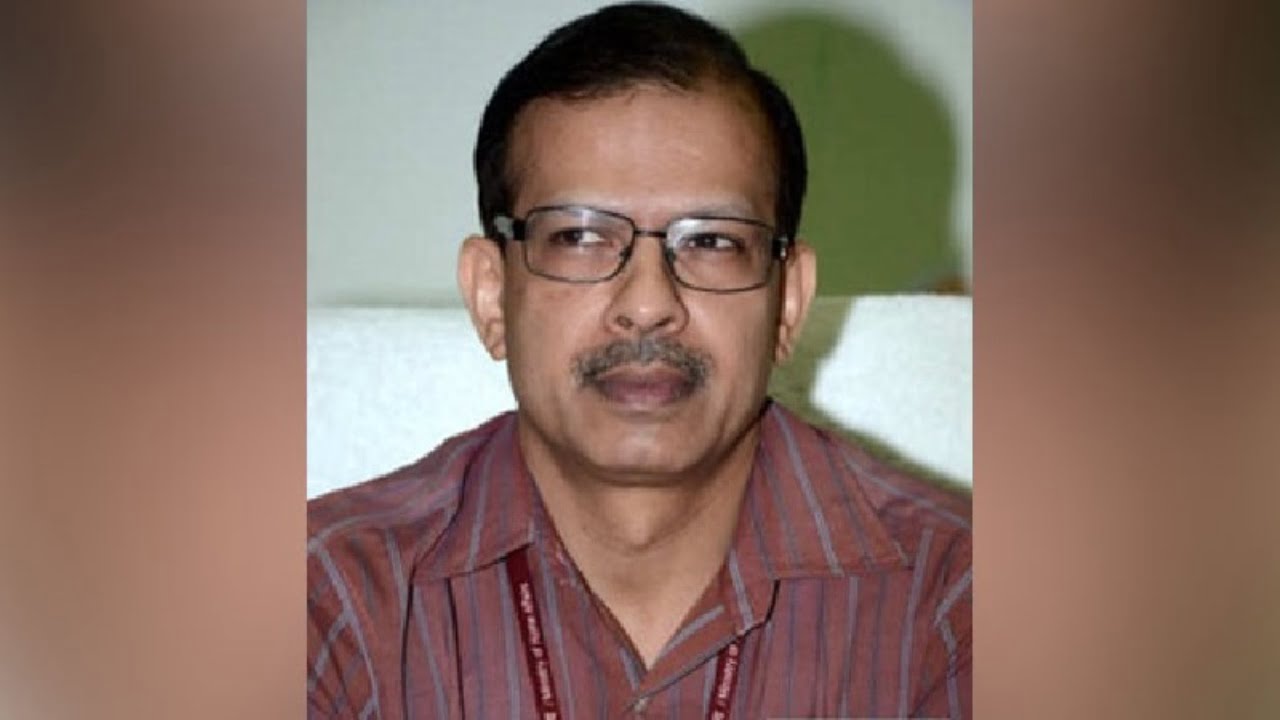
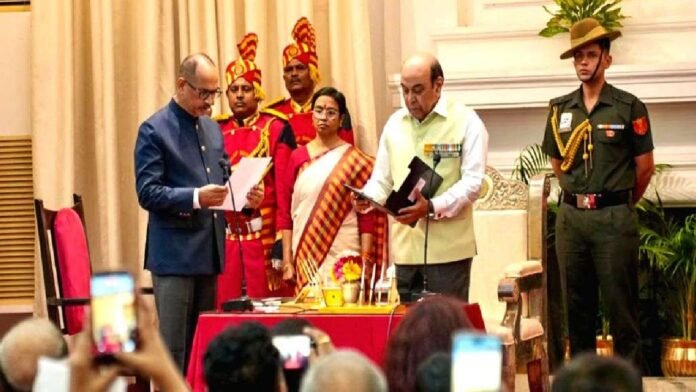
In an important development, the Punjab government has granted sanction to prosecute DIG Inderbir Singh (IPS:2007:PB) in drug and corruption cases. With this approval, the legal proceedings in the long-pending case against him will soon proceed in court.

Singh is currently posted as DIG in the Punjab Armed Police (PAP) headquarters in Jalandhar. He is the IPS Officer of Batch 2007 of the Punjab cadre.

The case against him has been pending for trial in the absence of the govt’s sanction. The Vigilance Bureau had already filed a charge sheet against him after an investigation. However, the trial could not proceed because of a lack of government approval to prosecute him.

With the obstacles removed, the Vigilance Bureau is now able to present the case in court.

The case is linked to two separate cases filed in 2022 in which the IPS officer faces serious charges, including involvement in a drug-related network and accepting bribes as part of corruption.

Tamil Nadu DGP Sandeep Rai Rathore directs SPs not to take instructions from unauthorized officers

Tamil Nadu DGP

In an intriguing development, newly appointed Tamil Nadu DGP Sandeep Rai Rathore (IPS:1992:TN) has warned district Superintendents of Police (SPs) against taking instructions from police officers not in the chain of command.

According to police sources, the DGP raised his concern over the issue through a note to senior police officers, saying SPs and those in Special Units have been receiving instructions related to their official work from unauthorized officers. The DGP has formally asked the supervisory officers to report such incidents of transgressions to him.

Not only this, but Rathore has also instructed police officers heading Special Units and law & order to immediately communicate to him any important issue developing within their jurisdictions. They have even been directed to drop a message through messaging platforms if they have a paucity of time or connectivity issues.

Tamil Nadu DGP Sandeep Rai Rathore held a video-conference with all Zonal Inspector-Generals (IGs), Commissioners of Police (CPs), and SPs to instruct them to take all steps in compliance with the Model Code of Conduct to ensure a free and fair election. Rathore also stressed the need for making elaborate security arrangements in the run up to the elections, more so with VIPs travelling across the state. 

As the state is going to the polls on April 23, the DGP reviewed the preparedness of the force for it and the May 4 counting of votes.

According to sources, Rathore also called for intensified vigil along interstate borders to prevent the movement of suspicious individuals, the transport of liquor, and cash flow as well as in places that have a history of violence during elections.

DoPT indicates policy push to integrate AI into core governance

DoPT's policy push

The Department of Personnel and Training (DoPT) seems to be working on a policy drive to integrate artificial intelligence (AI) into the core of governance. The DoPT Secretary, Rachna Shah (IAS:1991:KL), gave a clear hint about it on Monday while addressing a Samuhik Charcha on “AI in Public Governance” as part of Mission Karmayogi’s National Learning Week (SADHANA Saptah).

Shah referred to emerging AI-enabled solutions such as automated salary processing, anomaly detection in reimbursements, chatbot-based grievance handling, and real-time note generation, while noting that tools like AI Medha, Bhashini and AI Coach are already being explored within government systems.

According to a statement released by the Personnel Ministry, Shah stressed the need for AI adoption to improve “accuracy, transparency, uniformity and cost efficiency” in governance but cautioned that safeguards around privacy, ethical use and cybersecurity must be there into systems, keeping in mind the sensitive nature of government data.

She also emphasized the need for capacity-building through AI courses on the iGOT (integrated government online training) platform to ensure effective and responsible utilisation of these technologies.

DoPT’s Joint Secretary (Training) and Karmayogi Bharat CEO Chhavi Bhardwaj (IAS:2008:MP) talked about the DoPT’s structured approach across three key dimensions—capacity building, data-driven decision support, and workforce management.

She said that AI is already being used to reduce the cost and time required to develop training content on the iGOT platform—from months to about a week and at a fraction of earlier costs—while future efforts will focus on hyper-personalised learning pathways and competency-based assessments.

Bhardwaj highlighted the potential of AI in analysing performance appraisal data, improving cadre management, and enabling intelligent decision-support systems, while underlining that all such deployments must prioritise data confidentiality through on-premise or government cloud solutions.

Additional Secretary Manoj Kumar Dwivedi (IAS:1997:AGMUT) concluded the discussion, emphasizing the need to move towards institutionalised, system-wide integration within DoPT’s ecosystem.

According to him, there are three priority areas—training, policy formulation, and data-driven human resource management—where AI can deliver tangible gains, including intelligent query systems and decision-support frameworks.

Dwivedi flagged data confidentiality as a critical concern requiring dedicated protocols and training while saying that unless AI tools are embedded into routine workflows, adoption would remain limited.

He warned that failure to keep pace with technological advancements could widen the efficiency gap between government and the private sector.


Uttar Pradesh leads India in recording highest shortfall of IAS officers

Shortage of IAS

It is intriguing to find that the country’s largest state, Uttar Pradesh, is suffering from the highest shortfall of IAS officers, threatening to compromise the quality of its governance. UP currently faces the shortage of 81 officers, topping all other states in terms of numerical shortfall.

The comparison with other states shows the wider national trend of cadre crunch, as almost every state in the country is facing a shortage of bureaucrats at this moment. But its impact is most glaring in UP, considering its sheer size.

The figure is the highest in UP, followed by Maharashtra with a deficit of 76 officers, West Bengal with a shortage of 75 officers, and Kerala, where the figure of shortage stands at 74.

Such a significant shortage complicates problems for the governance, compelling many officers to shoulder multiple responsibilities, resulting in a dilution of focus. As officers are often required to divide time between district responsibilities, departmental reviews, field inspections, and state-level coordination meetings, increasing administrative pressure across the system.

Being India’s most populous state, UP needs a strong and fully staffed administrative cadre to manage its governance effectively in terms of district administration, revenue administration, delivery of welfare schemes, urban and rural development, disaster management, infrastructure monitoring, and electoral responsibilities, among many others.

Against this background, even a limited shortage can put visible pressure, and a shortfall of 81 officers clearly means straining multiple layers of governance. The large departments require continuous supervision, but increased workload on officers can gradually affect execution quality at the grassroots level.

UP is not alone in dealing with this crisis. There are several states that are reeling under the severe cadre pressure. Madhya Pradesh provides a classic example, which at present is grappling with the shortage of around 156 IAS officers because many officers are on central deputation and busy in election duties in the five states going to the polls shortly, thus shaking their effective availability sharply.

Punjab govt finally sends panel of 14 IPS to UPSC for appointment of full-time DGP

Punjab DGP appointment

Despite trying its best to scuttle the move to appoint a regular DGP for about four years, the Punjab govt finally buckled under legal pressure and sent a panel of 14 top-ranking IPS officers to the UPSC on Monday for appointing a full-time DGP.

The Punjab govt’s move comes after the Supreme Court slamming several states, including Punjab, for continuing with “acting” DGPs and directing the UPSC to initiate the appointment process and take punitive action against the erring states.

Acting on its order, the UPSC asked the state govt on Feb 18 to send its proposal within 10 days and later issued a reminder after the state failed to do so. The Bhagwant Mann govt then took shelter of the Punjab Police (Amendment) Bill, 2023, but the Supreme Court rejected its plea on March 12 to rely on that Bill, which is reported to be lying for the President’s approval.

The current dispensation had appointed Gaurav Yadav (IPS:1992:PB) in July 2022 as an acting DGP to replace Viresh Kumar Bhawra (IPS:1987:PB), who was a regular DGP, by superseding several officers senior to him.

The UPSC earlier accepted the Punjab govt’s request to replace him with the state Home Secretary in the empanelment committee in which the DGP and Chief Secretary of the concerned state are members.

The UPSC will now shortlist three officers and forward the panel to the Punjab govt to choose one of them as the regular DGP.  The selected officer will get a minimum tenure of two years, irrespective of the date of retirement.

The panel of the 14 IPS officers sent by the state govt to the UPSC for shortlisting three names also includes Punjab’s acting DGP Gaurav Yadav and he is considered among the top contenders.

Besides Yadav, the officers whose names have been included in the state govt’s proposal from the 1992-batch IPS officers are Special DGP (Punjab Police Housing Corporation) Sharad Satya Chauhan, Special DGP (Anti-Narcotics Task Force) Kuldeep Singh, and Harpreet Singh Sidhu (awaiting posting).

Among the 1993-batch IPS officers in the panel are Special DGP (Community Affairs division and Women Affairs) Gurpreet Kaur Deo, Special DGP (Punjab State Power Corporation Ltd) Jitendra Kumar Jain, and Special DGP (Railway) Shashi Prabha Dwivedi.

Among the 1994-batch officers included in the panel are Special DGP (Headquarters) Sudhanshi Shekhar Srivastava, Special DGP-cum-Chief Director (Vigilance Bureau) Praveen Kumar Sinha, Special DGP (Traffic and Road Safety) Aamardeep Singh Rai, Special DGP (Cyber Crime) Voruvuru Neeraja, Special DGP-cum-Director of the Maharaja Ranjit Singh Punjab Police Academy (MRSPPA) Anita Punj, Special DGP (Human Rights) Naresh Kumar, and Special DGP (Technical Support Services) Ram Singh.

Telangana HC directs state govt to appoint full-time DGP by April 13 and inform it

Telangana CS Ramakrishna Rao

Taking a cue from the Supreme Court’s tough stance on the appointment of a regular DGP, the Telangana High Court has now set the deadline for the state government to name a full-time DGP within a week. The HC has set April 13 as the deadline to select a regular DGP from the panel shortlisted by the UPSC and inform the High Court of its decision.

Despite the strict warning from the apex court against delaying the appointment of a regular DGP, the Telangana government continues to retain B Shivadhar Reddy (IPS:1994:TG) as an acting DGP. Reddy was appointed acting DGP in September last year. The fact is this adhocism has continued since 2017.

The Supreme Court, in its order on February 5 this year, had slammed states for avoiding to appoint full-time DGPs with a fixed two-year tenure as mandated. The top court had even authorized the UPSC to initiate contempt proceedings against the states delaying the appointment of full-time DGPs.

It was after the apex court’s ruling that the UPSC submitted a panel of three IPS officers on March 12 to the state govt to pick one of them as a regular DGP. These officers include CV Anand (IPS:1991:TG), currently posted as Special Chief Secretary (Home); Vinayak Prabhakar Apte (IPS:1994:TG), currently serving as Special Director of the Intelligence Bureau; and Soumya Mishra (IPS:1994:TG), currently posted as DG Prisons

The matter will be taken up on April 13.

Punjab police reshuffle: Sharad Satya Chauhan appointed Vigilance Chief, PK Sinha moved

Punjab Police

The Punjab government on Monday (April 6, 2026) carried out minor yet significant changes in police administration, effecting key shifts at the senior level. Senior IPS officer Dr Sharad Satya Chauhan (IPS:1992:PB) has been appointed as Special DGP-cum-Chief Director, Vigilance Bureau, replacing PK Sinha (IPS:1994:PB), who has been shifted to Law & Order.

PK Sinha has been posted as OSD (Law & Order) till April 30 and will take over as Special DGP, Law & Order from May 1 following the superannuation of Arpit Shukla (IPS:1993:PB).

The names of the officers and their postings are as follows;

  1. Dr Sharad Satya Chauhan (IPS:1992:PB), Special DGP-cum-Managing Director, Punjab Police Housing Corporation, has been transferred and posted as Special DGP-cum-Chief Director, Vigilance Bureau.
  2. Ram Singh (IPS:1994:PB), Special DGP, Technical Support Services, has been transferred and posted as Special DGP, Technical Support Services, with additional charge of Special DGP-cum-Commandant General, Home Guards and Director, Civil Defence.
  3. PK Sinha (IPS:1994:PB), Special DGP-cum-Chief Director, Vigilance Bureau, has been transferred and posted as OSD (Law & Order) till April 30. He will take over as Special DGP, Law & Order from May 1 after the superannuation of Arpit Shukla (IPS:1993:PB) on April 30.
  4. Arun Pal Singh (IPS:1997:PB), ADGP, Jails, has been transferred and posted as Managing Director, Punjab Police Housing Corporation.
  5. RK Jaiswal (IPS:1997:PB), ADGP, NRI, has been given additional charge of ADGP, Jails.
  6. Gurmeet Singh Chauhan (SPS:2011), DIG, AGTF, has been placed at the disposal of the DGP, Punjab, till further orders, with his posting to be proposed subsequently.

Punjab transfers 12 IAS officers; Vikas Pratap gets posting after 2 months

Map Of Punjab

The Punjab government on Monday (April 6, 2026) issued transfer and posting orders for 12 IAS officers, effecting changes across key administrative positions.

Notably, senior IAS officer Vikas Pratap (IAS:1994:PB) has been given a posting after nearly two months. He has been appointed as Additional Chief Secretary, Technical Education & Industrial Training after remaining without posting since his transfer from the Social Security Department.

Several other officers have been assigned new roles, including postings at the level of Principal Secretary, Director and Deputy Commissioner.

The names of the officers and their posting are as follows;

  1. Vikas Pratap (IAS:1994:PB), available for posting, has been posted as Additional Chief Secretary, Technical Education
    & Industrial Training.
  2. Sumer Singh Gurjar (IAS:1998:PB), available for posting, has been posted as Principal Secretary, Defence Services Welfare.
  3. Kanwal Preet Brar (IAS:2007:PB), Secretary, Health & Family Welfare with additional charge of Commissioner, Food & Drug Administration, has been given additional charge of in addition Commissioner, Faridkot Division, Faridkot.
  4. Babita (IAS:2009:PB), Commissioner, Agriculture, has been given additional charge of Commissioner, Ferozepur Division, Ferozepur.
  5. Harpreet Singh Sudan (IAS:2013:PB), Director, Sports & Youth Services, has been given additional charge of the posts of Managing Director, Punjab Small Industries Export Corporation and Managing Director, Punjab State Industrial Development Corporation.
  6. Jaspreet Singh (IAS:2014:PB), available for posting, has been posted as Director, Industries and Commerce.
  7. Himanshu Aggarwal (IAS:2014:PB), Deputy Commissioner, Jalandhar, has been transferred and posted as Deputy Commissioner, Patiala.
  8. Abhijeet Kaplish (IAS:2015:PB), Deputy Commissioner, Sri Muktsar Sahib with additional charge of Director, Mines & Geology, has been transferred and posted as Director, Mines & Geology.
  9. Amit Kumar Panchal (IAS:2016:PB), Deputy Commissioner, Kapurthala, has been transferred and posted as Deputy Commissioner, Sri Muktsar Sahib.
  10. Varjeet Walia (IAS:2018:PB), Deputy Commissioner, Patiala, has been transferred and posted as Deputy Commissioner, Jalandhar.
  11. Jasbir Singh-II (IAS:2018:PB), Additional Deputy Commissioner (Urban Development), Jalandhar, has been posted as Additional Secretary, General Administration & Coordination with additional charge of Director, Hospitality.
  12. Akash Bansal (IAS:2019:PB), Additional Deputy Commissioner (Rural Development), Mansa, has been transferred as
    Deputy Commissioner, Kapurthala.
  13. Tejdeep Singh Saini (PCS:2012), Joint Secretary, General Administration and Coordination with additional charge of Director,
    Hospitality, has been transferred as Additional Deputy Commissioner (Urban Development), Jalandhar.

Also Read: Punjab suspends two IAS officers; administrative reshuffle follows

Chhattisgarh soon to get regular DGP; Arundev Gautam leads the race

DGP appointment

Chhattisgarh is soon going to have a full-time DGP. The names of two top IPS officers, acting DGP Arundev Gautam (IPS:1992:CG) and Himanshu Gupta (IPS:1994:CG), are said to be the top contenders for the post, with Gautam leading the race.

Following the Supreme Court’s directions, the Union Public Service Commission (UPSC) had asked the state government to appoint a full-time DGP, but the state govt has been sitting on it despite getting a panel from the UPSC. The state government is now expected to take a final call soon.

The UPSC issued a notice to the state government, citing a Supreme Court order dated July 3, 2018, which clarified that no state should have an “in-charge” DGP. Despite the ruling, no permanent appointment has been made in the state.

It is pertinent to mention here that on May 13, 2025, the UPSC had submitted a panel of two IPS officers, Arun Dev Gautam and Himanshu Gupta, to the state govt to pick one as DGP. Usually, the UPSC sends a panel of three names, but due to limited options, only two names were included in it this time. Yet the state govt sat on the decision.

The Chhattisgarh govt had appointed Arun Dev Gautam as acting DGP after former DGP Ashok Juneja retired on February 4, 2025. However, the Supreme Court’s decision in the Prakash Singh vs. Union of India case of 2006 clearly mandates that the DGP’s appointment must be made according to a regular and established procedure.

On February 5, 2026, the Supreme Court had taken a strict stand on the issue of acting DGP and asked the UPSC to initiate punitive action against such states in case of delay in appointing a regular DGP, which led the state govt to act.

Serving IAS, IPS now to join BPSC interview panels

BPSC interview panels

In order to align state civil services recruitment standards with the UPSC, the Bihar Public Service Commission (BPSC) has included IAS and IPS officers in its interview panels. The inclusion will be effective for the 70th Combined Competitive Examination (CCE) interview phase, which started in January and will conclude this month.

In a three-tier exam system comprising prelims, mains, and an interview, BPSC members and subject experts currently form the panel. The new panels feature a mix of academicians and serving high-ranking bureaucrats.

The move is considered part of broader structural reforms undertaken between 2023 and 2026. A BPSC source states that the inclusion of serving bureaucrats enhances their ability to assess a candidate’s on-ground decision-making skills and temperament for managing administrative crises. The panel will also continue to have subject experts.

BPSC source points out that an IAS officer helping choose a state-level administrator and an IPS officer having a say in selecting a Deputy Superintendent of Police (DySP) would add value to the panel.

An official said, like the UPSC, the current system now operates on a strict annual calendar.  After clearing the 150-mark prelims, candidates must take the 900-mark mains—General Studies-I, General Studies-II, and Essay papers of 300 marks each—and a 120-mark interview or personality test. The mains also include a 100-mark optional paper, which is qualifying and does not count toward the total.

According to him, candidates are now expected to demonstrate mental agility and a profound understanding of Bihar’s specific socio-economic challenges.


Latest News