

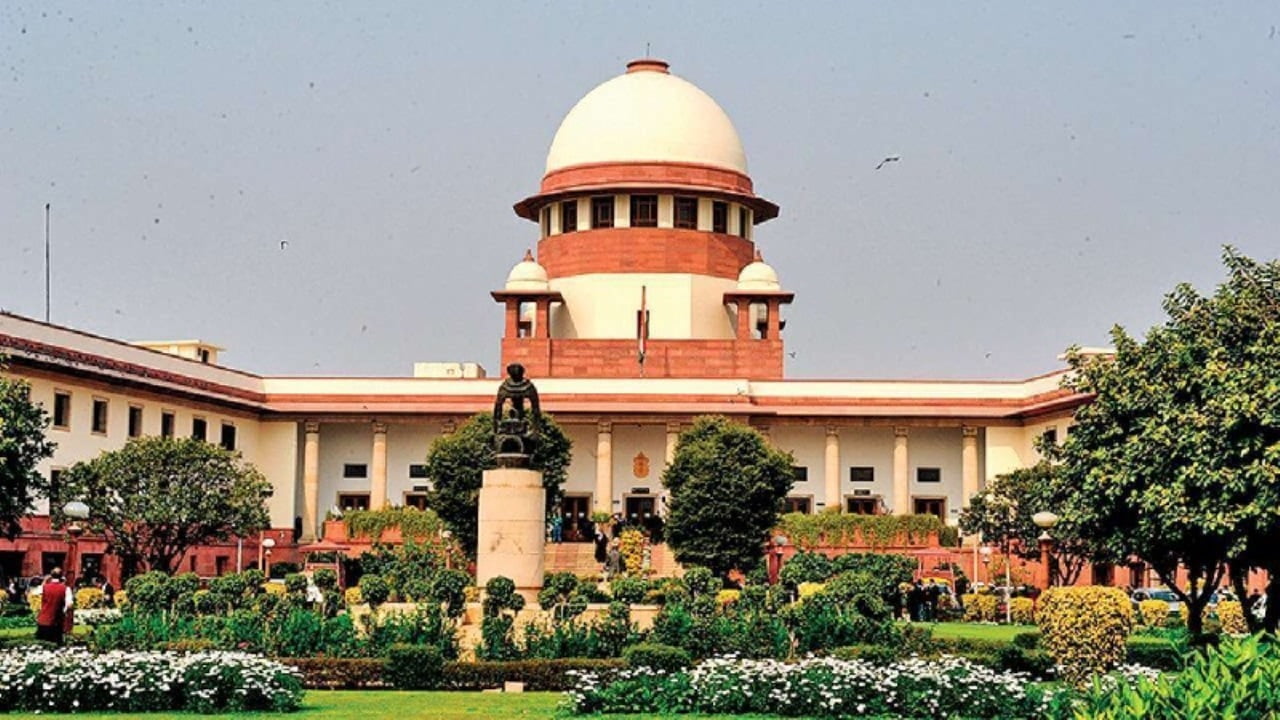
The Supreme Court on Thursday questioned the rules framed by the Jharkhand government for DGP appointment, while seeking incumbent DGP Tadasha Mishra (IPS:1994:JH)’s response.
The top court said the Jharkhand govt’s rules appeared to conflict with its directions issued in the Prakash Singh case.
IPS officer Tadasha Mishra was appointed DGP a day before her retirement despite the apex court’s directions laying down six-month residual service requirement for the DGP appointment. The court said her appointment could have to be set aside if the rules removing that clause were struck down.
A bench of Chief Justice Surya Kant and Justices Joymalya Bagchi and V Mohana was told that the Jharkhand govt would revisit the rules.
The bench said it was giving DGP Tadasha Mishra an opportunity to file her response as she would be affected if the rules were set aside.
The matter arose after the Centre challenged the “Selection and Appointment of Director General and Inspector General of Police, Jharkhand (Head of the Police Force) Regulation, 2025” and appointments made under it.
Chief Justice Kant said that if any appointment had been made in contradiction of the Supreme Court’s decision, “then it has to go”.
Solicitor General Tushar Mehta, appearing for the Centre, said the Union Govt had repeatedly told the Jharkhand govt that its rules conflicted with the Prakash Singh judgement and that if any other state had framed such rules they too must go.
The Centre contended that the state govt amended the regulation removing the six-month residual service clause on December 29, 2025, and on December 30 appointed Mishra as DGP despite her scheduled retirement the next day.
The Centre added that by appointing Mishra as DGP 24 hours before her retirement, the state govt effectively granted her a two-year extension.
The Centre’s plea also refers to the earlier appointment of Anurag Kumar Gupta (IPS:1992:JH) as DGP on February 2, 2025, saying that Gupta had only about three months of service left at the time of his appointment.
The Centre urged the top court to declare illegal the appointments of DGP made in Jharkhand under the 2025 regulation.
The top court also asked its amicus curiae, senior advocate Raju Ramachandran, to assist it on the validity of the rules framed by the Jharkhand govt for the DGP appointment. The apex court also asked Ramachandran to examine statutes or regulations and consequential appointments made by other states.

















 Get Latest Updates