Home Blog Page 96

PESB recommends V Packirisamy as Director (Commercial) of PFC

PFC Limited

The Public Enterprises Selection Board (PESB) has recommended V Packirisamy for appointment as Director (Commercial) of Power Finance Corporation Limited (PFC). The recommendation was made following interviews conducted by the PESB on February 9, 2026. He is currently serving as Executive Director (Entity Appraisal and IT), Power Finance Corporation Limited.

The position will fall vacant upon the retirement of the incumbent Director (Commercial), Manoj Sharma, on March 31, 2026. Sharma has been holding the post since August 26, 2022, after being selected by the PESB from a panel of eight candidates and subsequently approved by the Appointments Committee of the Cabinet (ACC).

A total of ten candidates were considered for the post of Director (Commercial) at PFC. These included

  1. Rajeev Kumar Chaturvedi, Executive Director, Power Finance Corporation Limited
  2. V Packirisamy, Executive Director (Entity Appraisal and IT), Power Finance Corporation Limited
  3. Ali Shah, Executive Director (Entity Appraisal-II, Learning and Development and Rajbhasha), Power Finance Corporation Limited
  4. Hemant Kumar Das, Executive Director (Projects), Power Finance Corporation Limited
  5. Pawan Kumar, Executive Director and Chief Compliance Officer, Power Finance Corporation Limited
  6. Saurabh Rastogi, Executive Director and Chief Executive Officer, REC Power Development & Consultancy Limited
  7. Jasneet Guram, Executive Director, Power Finance Corporation Limited
  8. Surendra Kumar Sharma, Executive Director (Finance), Indian Renewable Energy Development Agency Limited
  9. Ragini Advani, Director (Finance), IRCON International Limited
  10. Pravin Dongre, Executive Director (SDNZ & HSE), Indian Oil Corporation Limited

With the PESB recommendation now in place, the appointment of V Packirisamy will be subject to further approvals from the competent authority.

Punjab not in hurry despite SC ruling for action against states with acting DGPs

Punjab DGP appointment

The recent Supreme Court directive authorizing the Union Public Service Commission (UPSC) to initiate action against states delaying the appointment of regular DGPs has led Punjab to wait for how other states respond to it. The state govt had appointed IPS officer Gaurav Yadav (IPS:1992:PB) as an acting DGP in July 2022 and is continuing with him in the post without any hurry to initiate the process for the appointment of a regular DGP.

The Bhagwant Mann government is reported to be keenly watching the response and approach of the other states, especially BJP-ruled Uttar Pradesh, before taking a call on the issue.

According to government sources, the state govt is in no mood to initiate the process for the appointment of a regular DGP until the UPSC formally communicates its response to the Supreme Court’s latest order.

The apex court on February 5 came down heavily on states working with acting DGPs and authorized the UPSC to initiate contempt proceedings against states that fail to submit timely proposals for the appointments of DGPs.

A bench of Chief Justice Surya Kant and Justice Joymalya Bagchi gave its ruling in a case involving Telangana. The top court fully endorsed the concern expressed by the UPSC regarding the inordinate delay on the part of several states in sending proposals for the appointment of DGPs.

The UPSC told the court that several states keep on delaying sending proposals for the appointment of DGP in total disregard of its directions. These states instead prefer an ad-hoc arrangement by appointing an acting DGP in place of a regular appointment, the top court was told.

The bench granted four weeks to the UPSC to convene a meeting and make a recommendation for the appointment of a regular DGP for Telangana, where the last regular DGP retired in 2017.

The top court virtually asked the UPSC to play a proactive role, as it is empowered to write to states, demanding compliance and flagging delays to the court.

Punjab also happens to be among the key states that are not adhering to the laid-down procedure.

The state government, however, passed a bill proposing an alternative mechanism for appointing the DGP in 2023, but the governor referred the bill to the President. And in the absence of presidential assent, it has not become a law.

Meanwhile, a state govt functionary indicated that if the UPSC adopts a firm stance, Punjab may proceed with sending a panel of eligible officers. Under the present rules, Gaurav Yadav is now likely to figure among the top three of the list.

Currently, only two officers are senior to Yadav—1989-batch IPS officers Sanjeev Kalra and Parag Jain. But Kalra is retiring on February 28, while Jain is serving as RAW chief, effectively ruling both out of contention.

Within the 1992 batch, Sharad Satya Chauhan (retiring March 31, 2028) and Harpreet Singh Sidhu (retiring May 31, 2027) are senior to Yadav, who occupies third place in seniority and is due to retire on April 30, 2029. What goes in Yadav’s favour is the fact that he is the only officer of his batch currently empaneled as DGP at the Centre.

Chhattisgarh’s governance facing grim scenario due to acute shortage of bureaucrats

DGP appointment

The governance in Chhattisgarh is facing a bizarre predicament, as despite suffering from an acute shortage of IAS and IPS officers, 30 more officers are to be sent for election duties as poll observers. Against the sanctioned cadre strength of 202 IAS posts in the state, only 173 officers are currently working. This shortage of 29 officers has been further complicated by the fact that 21 IAS officers are currently posted on central deputation, including senior officers like Amit Agarwal and Nidhi Chhibber.

Recently, S. Harish and Dr. Priyanka Shukla have also gone on central deputation. These officers are serving in the central government in key areas such as policymaking, internal security, agriculture, health, digital identity, AYUSH, and investment. Due to this shortage, many officers have been given additional responsibility for important departments.

The problem is not confined to IAS officers alone; the situation is no different for the IPS officers as well. The total sanctioned posts for IPS officers in the state are 153, while only 129 officers are currently serving. In December, the state received five new IPS officers. Thus, there are now a total of 134 IPS officers posted there. This means that 19 posts are still vacant.

Like the IPS officers, the state also has 153 IFS officers posted, but only 118 officers are currently working. Thus, 35 posts of IFS officers are vacant in the state.

Against this background, 30 IAS and IPS officers have been assigned poll duties for the assembly elections in five states. The Election Commission appointed 25 secretary-level IAS and five senior IPS officers of the Chhattisgarh cadre as election observers for assembly elections in Bengal, Tamil Nadu, Kerala, Assam, and Puducherry.

The IAS officers selected for poll duties include Ritu Sen, Siddharth Komal Pardeshi, Neelam Ekka, S Prakash, Bhuvnesh Yadav, S Bharathidasan, Ankit Anand, Shammi Abidi, Avneesh Sharan, and Saransh Mittal, among others.

21 IAS officers who hold key positions at the Centre currently include Gaurav Dwivedi, Maninder Kaur Dwivedi, Amit Agarwal, Harish S, Richa Prakash Chaudhary, Namrat Gandhi, Shiv Anant Tayal, Saurabh Kumar, Tamboli Ayyaz Fakirbhai, Dr Priyanka Shukla, Neeraj Kumar Bansod, KC Dev Senapati, Alex Paul Menon, Shruti Singh, Alarmel Mangai D, P Amblangan, Prasanna R, Sangeeta P and Ritu Sain.

Who is USISPF’s new Chair of its Global Value Chains Committee & Advisor to Board—Rohit Kumar Singh?

IAS Rohit Kumar Singh

After the US–India Strategic Partnership Forum (USISPF) announced the appointment of Rohit Kumar Singh as Chair of the Global Value Chains Committee and Advisor to the USISPF Board of Directors on Monday, people have been asking, “Who is he?” Singh virtually is a 1989-batch IAS officer of the Rajasthan cadre, who served as a Union Secretary before retirement.

The purpose of his selection to the post is to strengthen U.S.–India trade linkages and enhance the resilience and efficiency of global supply chains. He is known for modernizing India’s consumer protection landscape and integrating digital governance into public administration.

Singh’s key responsibilities include streamlining supply chains by collaborating with USISPF’s global members and government stakeholders. He will be responsible for leading initiatives to diversify trade and investment flows, integrating India more deeply into global value networks with focus on regulatory alignment, infrastructure readiness, and public-private cooperation. Besides, he will be promoting innovation, resilience, and competitiveness, with an aim to boost manufacturing, exports, and GDP growth.

The USISPF emphasized that strengthening global value chains is crucial for improving efficiency, reducing costs, and reinforcing India’s position in international trade.

The reason behind his selection for this crucial role is based on his decades of experience across economic governance, consumer markets, infrastructure, digital governance, public health, and public-private partnerships.

He is credited with having pioneered India’s first AI-enabled grievance redressal system while serving as Secretary of the Department of Consumer Affairs under the Union Government.

He played a crucial role in digitizing consumer courts nationwide, enabling e-filing, case tracking, and multilingual video hearings, leading to a historic milestone in 2023, when more cases were disposed of than filed.

His achievement includes expanding the National Consumer Helpline into a 17-language, omni-channel platform, enhancing accessibility and responsiveness. After retirement, he also served briefly as a member at the National Consumer Disputes Redressal Commission (NCRDC).

An Electrical Engineering graduate from the Indian Institute of Technology (IIT), BHU, Singh did his Master’s in Computer Engineering from Clarkson University, New York and a master’s in Public Administration (MPA) at the Harvard University

What makes Singh highly suitable for this new role at USISPF is his expertise in digital transformation, infrastructure, and public policy.

Union Govt introduces scorecard for top civil servants to assess their performance

Scorecard for IAS

In a landmark development, the Union Government has introduced a unique system of performance-linked reform to assess the performance of top-ranking civil servants working with the central government. According to a media report, the new system introduces a comprehensive scorecard through which the top government officers will be awarded marks out of a hundred. The accountability of civil servants will be judged on dozens of parameters and there will also be a provision of discretionary and negative marking.

The report says that the new system has been devised to replace the earlier method of subjective assessment with a quantitative evaluation where merit and lapse will be judged on well-defined criteria.

The move is virtually aimed at incentivising the bureaucracy, often called the Iron Frame, to be more innovative and agile in finding solutions.

According to that report, file disposal carries the highest weightage of 20 marks in the evaluation parameters. It is followed by output and activities, and expenditure on schemes and capital projects, each allotted 15 marks. Other criteria involve preparation of Cabinet notes, timely completion of projects monitored by the Project Monitoring Group (PMG), public grievance redressal, and prompt clearance of bills by the Pay and Accounts Office (PAO) and the Chief Controller of Accounts (CCA).

The report card carries 12 negative marks. Excessive spending on foreign visits or events will invite negative marking. Similarly, longer pendency of files at the level of the secretary and above and delayed payments to Micro, Small, and Medium Enterprises (MSME) will also bring negative marks. The discretionary marks have a provision of 5 marks, which a Cabinet Secretary can award for exceptional work or contribution made by a secretary or department.

This new system of objective evaluation is expected to fast-track the process of acquiring permissions, grants, and other such licenses for citizens, businesses, and startups.

The report says that these measures were devised after Prime Minister Narendra Modi often emphasised the need to remove delays at various levels of government.

The seriousness of this move can be understood by the fact that Cabinet Secretary T V Somanathan has already sent the first set of administrative report cards for September, October, and November 2025 to the Secretaries in January 2026.

ACC grants Apex pay scale to DG NSG B Srinivasan and IB Special Director Sapna Tewari

B Srinivasan IPS+Sapna Tewari IPS

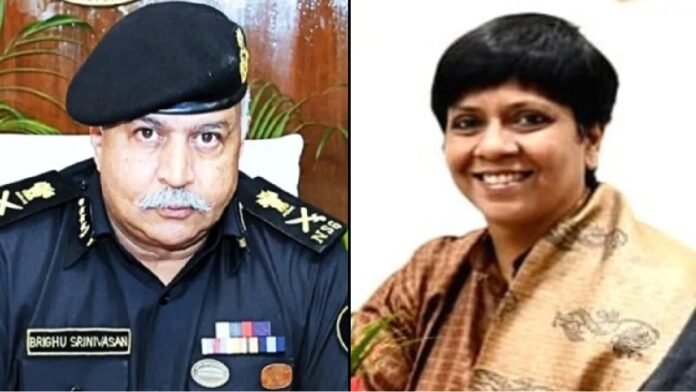
The Appointments Committee of the Cabinet (ACC) on Saturday (February 7, 2026) approved the proposal of the Ministry of Home Affairs for the grant of Apex pay scale, i.e., Level-17 in the pay matrix, to two senior IPS officers.

The officers are B Srinivasan (IPS:1992:BH), who is serving as Director General of the National Security Guard (NSG), and Sapna Tewari (IPS:1992:OD), who is currently posted as Special Director in the Intelligence Bureau (IB).

ECI approves appointment of Ashok Kumar as Chief Electoral Officer of Delhi

Election Commission of India

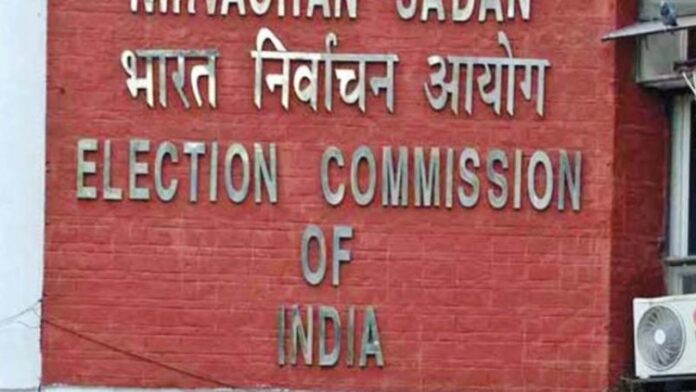
In a key development, the Election Commission of India on Monday (February 9, 2026) approved the appointment of IAS officer Ashok Kumar (IAS:2006:AGMUT) as the Chief Electoral Officer (CEO) of the National Capital Territory of Delhi. He is currently serving as Secretary in the General Administration Department (GAD).

According to an official communication, Ashok Kumar will take over the post from incumbent R Alice Vaz (IAS:2005:AGMUT), who had been transferred to Delhi on January 4, 2026. The Delhi government had forwarded a panel of three names for the position, from which the Commission approved Ashok Kumar’s appointment.

The Commission has issued the formal notification and requested that it be republished in the NCT of Delhi Gazette. Kumar has also been directed to assume charge of the office immediately and submit a compliance report within a week.

REC Limited wins prestigious ICC Green Urja and Energy Efficiency Award

REC Wins ICC Green Urja Award

New Delhi (09.02.2026): REC Limited, a Maharatna Central Public Sector Enterprise under the Ministry of Power and one of India’s leading non-banking financial companies (NBFCs), has been honoured with the Indian Chamber of Commerce (ICC) Green Urja and Energy Efficiency Award.

The company received the Gold Award in the category “Excellence Award for Financial Institutions in Green Energy and Energy Efficiency” during the 14th Green Energy Summit organised by the Indian Chamber of Commerce in New Delhi.

The award was accepted on behalf of REC by Kuldeep Rai, Executive Director (Renewables), and Arun Kumar Chaturvedi, Head of Department (Renewables).

This recognition reaffirms REC Limited’s leadership and commitment to accelerating India’s clean energy transition. It highlights the organisation’s continued focus on expanding renewable energy capacity, supporting energy efficiency initiatives, and promoting energy-efficient practices within its own operations.

REC’s Corporate Office further reflects this commitment, having achieved GRIHA 5-Star certification and operating as a Net-Zero Energy Building, demonstrating high standards of sustainability and operational energy efficiency.

Through innovative and strategic financing solutions, REC continues to support projects of national importance and remains a key enabler in India’s journey towards Viksit Bharat 2047 and global sustainability goals.

Tamil Nadu DGP orders revocation of ‘eligible’ suspension of police personnel in state

Tamil Nadu DGP appointment

The Tamil Nadu government seems to have taken a decisive move to discourage extended suspensions of police personnel facing disciplinary or criminal proceedings without conclusion of cases in the state. In an effort to enforce the government guidelines, Tamil Nadu DGP in-charge G  Venkataraman (IPS:1994:TN) ordered officials on Friday to review all such cases. The DGP also instructed all unit officers to revoke eligible suspensions after review and submit reports before February 13.

As per a Government Order (G.O), issued on February 6, a total of 439 personnel were undergoing suspension across the state in vigilance, criminal, and departmental cases as of December 31, 2025. Of them, 202 have been under suspension for more than one year.

The order admonishes the high officials against resorting to suspension unless the competent authority records a reasoned conclusion after considering all relevant factors.

Accordingly, the DGP has directed unit officers to review suspension cases under their jurisdiction on a case-by-case basis and take a decision on revocation.

Taking into consideration the financial implications arising out of prolonged suspension, the order stressed that suspension should be exercised with care and caution and only in the public interest.

The order also favours prioritizing the revocation of suspension, according to which priority should be given to cases where there is no grave delinquency, where delays are not attributable to the personnel concerned, or where criminal cases involve complicated questions of law and fact that prevent early conclusion.

K’taka IPS Vartika Katiyar allegedly threatening officials even after transfer

IPS Vartika Katiyar

The controversial Karnataka IPS officer, Vartika Katiyar (IPS:2010:KN), is at the centre of a fresh controversy for allegedly threatening a lower-level official in Ballari even after her transfer from the post of Deputy Inspector General (DIG), Ballari range, on January 7. The latest controversy erupted after a video, which has been widely shared on social media, surfaced showing Katiyar threatening Ballari zonal administrator Basavaraj, asking him not to hand over documents to the newly posted DIG.

Virtually, Katiyar was transferred from the Ballari DIG post following the incident of a violent clash killing a Congress worker, Rajashekar Reddy, on January 1 there. The state govt transferred her to the Directorate of Civil Rights Enforcement as DIG from the post of DIG, Ballari.

Katiyar later moved the Central Administrative Tribunal (CAT), challenging her transfer. The case is being heard by the CAT. Meanwhile, Katiyar is allegedly exerting pressure on officials not to hand over files that were under her charge to other officers.

In the video, Katiyar allegedly warned Basavaraj on the phone, saying the case of her transfer is being heard by CAT and threatens to implicate him in the case if he hands over the files to anyone (read new DIG). Basavaraj is said to have recorded the conversation.

Following the alleged threatening call, Basavaraj wrote to Katiyar accusing her of obstructing him from discharging his duties.  Basavaraj reportedly asked her not to call him or send letters or verbal instructions. This purported letter, too, has been shared widely on social media platforms.

The clash that led to her transfer took place in Ballari on Jan 1 between supporters of Congress MLA Bharath Reddy and BJP legislator G Janardhan Reddy, in which a Congress worker was killed. Following the incident, Katiyar was transferred on Jan 7.

Latest News