Home Blog Page 71

Delhi HC reserves order on Centre’s Plea against IRS Sameer Wankhede

HSCC MD's removal

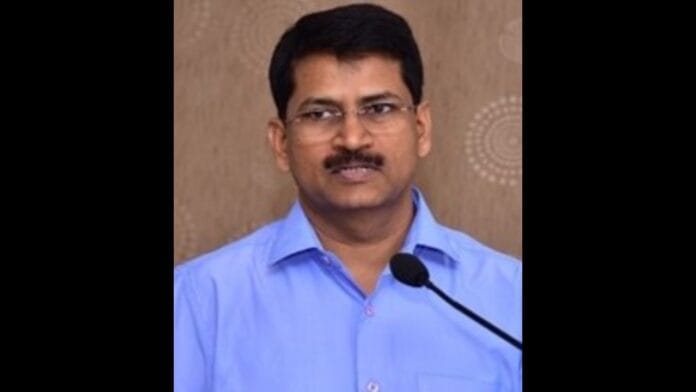
The Delhi High Court on Monday reserved its verdict on a petition filed by the Centre challenging the quashing of disciplinary proceedings initiated against Indian Revenue Service (IRS) officer Sameer Wankhede in the Cordelia cruise drug seizure case. The proceedings against Wankhede had been quashed by the Central Administrative Tribunal (CAT).

The Union Govt moved the Delhi High Court challenging the CAT’s January 19 order giving relief to Wankhede and seeking revival of the disciplinary proceedings against him.

A Division Bench comprising Justice Anil Kshetarpal and Justice Amit Mahajan heard the matter and reserved its verdict.

It is pertinent to mention here that the High Court had earlier directed the tribunal to decide the Wankhede’s case urgently in mid-January. Following it, the CAT on January 19 set aside the disciplinary charge framed by the Central Board of Indirect Taxes and Customs (CBIC) against Wankhede. The tribunal also slammed the board for acting with malice and vendetta against Wankhede and restrained it from proceeding further on the basis of the charge memorandum.

Wankhede had approached the tribunal after disciplinary proceedings were initiated against him following his exit from the Narcotics Control Bureau (NCB) in Mumbai amid controversy over the investigation of the case.

The disciplinary action against Wankhede stemmed from allegations linked to the Cordelia cruise drug bust, which had led to actor Shah Rukh Khan’s son Aryan Khan’s arrest in 2021.

Finance Commission recommends immediate closure of inactive Public Sector Enterprises

Inactive PSUs

The Union Budget 2026-27, presented by Finance Minister Nirmala Sitharaman, signals an intensified push to close or privatize “dead” and loss-making Public Sector Undertakings (PSUs) to reduce fiscal strain on the government.

According to media reports, it was based on the 16th Finance Commission’s report that has recommended the immediate closure of inactive public sector enterprises (PSEs) to reduce fiscal strain on central and state governments while emphasizing the need for the deployment of their valuable land and buildings to alternative uses.

The panel has remarked in its report that its detailed review of central and state PSEs revealed considerable scope for reforming them to enhance their contribution to economic growth.

While shedding light on the New Public Sector Enterprise Policy, adopted in Feb 2021, the commission has also revealed in its report that the new policy commits to closing or privatising central PSEs (CPSEs) in nonstrategic sectors. The panel report says that while the closure of loss-making enterprises has gathered speed, action on privatisation is yet to take off the way it should have.

The report further adds that based on the experience of CPSEs privatised from 1999 to 2004, significant efficiency gains can be reaped through the privatisation of CPSEs and SPSEs in non-strategic sectors.

The panel headed by noted economist Arvind Panagariya cited the Public Enterprise Survey 2023-24 to share the details that there are 17 CPSEs under liquidation, 24 approved for closure by the government, and 31 nonoperational as of Mar 31, 2024. “Altogether, assets of 72 CPSEs have been unproductive,” the commission disclosed, as per reports.

The panel’s report highlights a similar problem in states, saying that 308 of a total of 1,635 state PSEs (SPSEs) have ceased operations.

According to its report, almost one-third of CAG-audited CPSEs incurred losses ranging from Rs 36,213 crore to Rs 51,419 in each of the last four years. In states, 489 of 1,055 SPSEs incurred losses totalling Rs 1.14 lakh crore in 2022-23.

The report stressed the need for the concerned department to mandatorily take to the Cabinet any enterprise incurring losses in three out of four consecutive years for consideration for closure, privatisation or continuation, as reported by media.

In this way, the government will be actively fast-tracking the closure of permanently closed or unproductive entities in the days to come. 

Bihar Govt to promote non-administrative gazetted officers to IAS cadre; recommends 2 for induction

Bihar IAS using charter plane

In a landmark policy decision to change the contour of the state bureaucracy, the Bihar government has expanded opportunities for its non-administrative gazetted officers for induction into the most coveted career of the Indian Administrative Service (IAS). The govt is said to have already recommended two such officers for induction into the IAS, breaking the traditional barrier of promoting only administrative cadre officers of the state service.

The decision marks a complete departure from the conventional practice of selecting officers exclusively from traditional administrative cadres, as it opens the doors for professionals such as doctors, engineers, and other gazetted officers to join the highest echelons of the country’s bureaucracy.

The uniqueness of this move lies in the fact that officers from the Bihar Administrative Service (BAS), Bihar Police Service (BPS), and Bihar Forest Service (BFS) will be completely excluded from it. Instead, officers from all other gazetted cadres, including doctors, engineers, and officers from technical and specialized services, will be eligible for promotion to the IAS cadre.

The General Administration Department (GAD) has formally issued instructions to heads of all state govt’s departments, directing them to identify and nominate officers who demonstrate exceptional service records, integrity, and contributions to governance. The recommended names will be forwarded to the Union Government, which has to take a final call on their induction into the IAS cadre.

The eligibility criterion includes a wide range of services like Medical and Health Services (Doctors), Engineering Services, Information Service, Finance Service, Labour Service, Cooperative Service, and other gazetted cadres.

The aim behind this move is to reward merit, experience, and domain expertise beyond conventional administrative streams.

According to the eligibility criterion laid down by the govt, only those officers will be considered for inductions who have at least 8 years of service as a gazetted officer and are below 56 years of age as of January 1, 2025. Besides, they must possess an outstanding service record along with impeccable character and integrity.

The Bihar govt is said to have already recommended two officers for induction, and once it is approved by the Centre, they will join the elite IAS cadre, marking a major milestone in their careers.

The move is highly commendable but unusual, but there is a need for caution as the recommendation will be based on a highly selective process involving the heads of the govt departments. Otherwise, the move is pathbreaking, which will strengthen decision-making processes by involving domain experts in bureaucratic roles.

Dr Kajal’s central deputation as DPIIT Director extended

Dr Kajal IAS

The central deputation tenure of Dr Kajal (IAS:2008:UP) as Director in the Department for Promotion of Industry and Internal Trade (DPIIT) has been extended by two years. According to an order issued by the Department of Personnel and Training (DoPT) on Monday (February 2, 2026), the Appointments Committee of the Cabinet has approved the proposal of DPIIT to extend her deputation tenure for a period of two years beyond April 12, 2026 up to April 12, 2028, or until further orders, whichever is earlier.

Dr Kajal has been serving in the post since January 2023. Her tenure was earlier due to expire on April 12, 2026, but has now been extended for another two years.

SAIL, RITES sign MoU to boost rail logistics at steel plants and mines

SAIL & RITES

Steel Authority of India Limited (SAIL) has signed a Memorandum of Understanding (MoU) with Rail India Technical and Economic Service (RITES) to strengthen logistics and improve operational efficiency across SAIL’s steel plants and mining locations.

SAIL, a Maharatna Central Public Sector Enterprise, operates a dedicated internal rail network within its plant and mine premises to facilitate the movement of raw materials, in-process transfers and dispatch of finished steel. The upkeep and reliability of its diesel locomotive fleet, supported by wet-leased locomotives, play a critical role in sustaining uninterrupted operations and supporting future capacity expansion.

With Indian Railways progressively shifting towards electric traction, RITES continues to retain specialised expertise in diesel locomotive operations and maintenance, an area crucial for SAIL’s existing rail infrastructure. Leveraging access to Indian Railways’ facilities, spare parts and a skilled workforce, RITES is well placed to support SAIL in maintaining operational reliability across its captive rail network.

The collaboration is expected to help both organisations focus on their core strengths, optimise costs, enhance operational efficiencies and contribute to reducing the overall carbon footprint through better asset utilisation and planning.

The MoU was signed by P K Baisakhiya, Executive Director (Operations), SAIL, and Sandeep Jain, Executive Director (Technical Services), RITES, in the presence of senior officials from both organisations.

Punjab IAS A K Sinha’s retirement without promotion sparks discontent within bureaucracy

IAS A K Sinha

Senior IAS officer A.K. Sinha (IAS:1996:PB) finally retired from his bureaucratic career on January 31, but not without sparking discontent within the Punjab bureaucracy. There is a palpable sense of silent resentment and disappointment in the bureaucratic circles due to his retirement sans promotion or a posting.

This sense of sadness for him stemmed more from the treatment meted out to him before and during his retirement than from any personal popularity.

As a matter of fact, he was due to be promoted to the rank of Additional Chief Secretary (ACS) from January 1, 2026, according to the rules, but he was not granted this promotion.

Worse, in the last three months before his retirement, the Bhagwant Mann government did not even give him any new posting. It should not be forgotten that Sinha was among the officers who held the crucial Finance Department for the longest tenure under the current Aam Aadmi Party (AAP) government, yet he retired forlorn.

Sources say there was once strong talk about Sinha being tipped to be appointed as a permanent chairman of Powercom after his retirement. The common perception was that the state government would like to utilize his extensive experience in financial and administrative matters. However, things suddenly changed after the new Power Minister, Sanjiv Arora, took charge.

The speculation for the Powercom chairman post fell through, and Sinha was neither given any responsibility nor the expected promotion. This is being viewed as a negative message within the bureaucracy.

Officials believe that such a treatment not only affects the morale of a senior officer but also creates a sense of insecurity and uncertainty throughout the administrative system.

Many bureaucrats say that while A.K. Sinha may have avoided controversy, letting him retire without postings and promotions is against administrative traditions.

IHMCL, NFSU sign MoU to strengthen Cybersecurity in National Highway Systems

NHAI

To strengthen digital security and data protection in national highway operations, Indian Highways Management Company Limited (IHMCL) has signed a Memorandum of Understanding (MoU) with the National Forensic Sciences University (NFSU) for collaboration in research, training and consultancy, particularly in the areas of cyber forensics and digital evidence integrity.

IHMCL, a company promoted by the National Highways Authority of India (NHAI), entered into the agreement with NFSU, an Institution of National Importance under the Government of India, headquartered in Gandhinagar, Gujarat. The MoU was signed by A R Chitranshi, Chief Operating Officer, IHMCL, and Dr S O Junare, Campus Director, NFSU Gandhinagar, in the presence of NHAI Chairman Santosh Kumar Yadav, IHMCL Chairman and Managing Director Vishal Chauhan, and other senior officials.

The agreement aims to promote academic and research-driven cooperation between the two organisations to enhance technological resilience, cybersecurity frameworks and institutional capacity building in critical national highway systems and digital platforms.

Under the MoU, NFSU will provide technical guidance and support to IHMCL for setting up state-of-the-art laboratories, including facilities for CCTV analysis, multimedia and audio-video examination, and advanced digital and cyber forensics. The university will also assist in strengthening cyber resilience and evidence integrity through specialised training programmes in cyber and digital forensics, multimedia analysis and allied domains.

The collaboration will focus on key technology-driven highway initiatives such as Multi-Lane Free Flow (MLFF), Advanced Traffic Management Systems (ATMS), Automatic Number Plate Recognition (ANPR), Traffic Management Systems (TMS) and Weigh-in-Motion (WIM). Other identified areas include secure camera-based imaging systems, encrypted data storage and retrieval, cybersecurity audits of critical applications, forensic validation, scientific enhancement of imaging accuracy, and the establishment of Security Operations Centre (SOC) services.

Both organisations will also undertake joint research, development and consultancy projects in mutually agreed areas. A coordinator from each side will oversee implementation and periodically review the progress of activities under the agreement.

The MoU will remain valid for a period of three years and reflects NHAI’s emphasis on building a secure and robust digital ecosystem to support India’s rapidly expanding national highway infrastructure.

25 promotee IAS from Karnataka skip Induction Training Programme at LBSNAA, Mussoorie

In an intriguing development, 25 promotee IAS officers from Karnataka skip the Induction Training Programme (ITP) at Lal Bahadur Shastri National Academy of Administration (LBSNAA) at Mussoorie. These officers are from the State Civil Service (Karnataka Administrative Service and others) grade who were promoted to the Indian Administrative Service (IAS).

This is the 128th ITP being organized at LBSNAA from February 2, to March 13, 2026. It is a six-week training programme comprising four weeks of in-house training and two weeks of study tour.

A total of 26 promotee IAS officers from the State had been nominated for the programme, but only one officer attended it, while the remaining 25 did not even submit a request to the government for permission to go.

According to Jagadeesha K.G., Secretary of the Department of Personnel and Administrative Reforms (DPAR), all the officers on the list sent by LBSNAA were asked to participate in the ITP. However, only one officer took permission to go there.

Among 26 such officers, seven officers were promoted in 2016, two in 2018, four in 2019, eight in 2020 batch, three in 2021, and two in 2022.

It is important to mention here that the induction programme is mandatory training for promotee officers (SCS and Non-SCS Officers) to be confirmed into IAS as per IAS (Probation) Rules, 1954. Besides, as the LBSNAA letter says, this is a one-time opportunity for these officers who have been inducted into IAS to undergo this training.

As mentioned in the LBSNAA letter, it is compulsory for officers of the SCS promoted to the IAS cadre to undergo ITP, as its aim is to equip the officers with an all-India perspective of governance issues and to develop certain core skills and attitudes required for administrators in the current context of public management.

Organized by the Department of Personnel and Training (DoPT), a total of 547 officers from across the country, including direct recruits as well as the promotees, were nominated to participate in it this year. Around 150 officers from different states are expected to participate in this training programme on a first-come-first-served basis.

Promotee IAS officers have often been found reluctant to attend ITP due to an intriguing reason. A top-level IAS officer tries to reason it out by attributing reluctance to go to ITP to paranoia that they will lose their posts, as after being promoted to IAS, many officers get good posts. Most officers do not go for ITP, as they are worried that the government may transfer someone else to that post, as ITP lasts for about one and a half months.

The result of this collective paranoia is that many promoted IAS officers in the state retire without attending ITP, which is mandatory for confirmation into the IAS cadre. As a result, many of the promoted IAS officers really end up not being IAS officers at all.

UP’s Chitrakoot DM leads by example; enrolls 3-yr-old daughter in Anganwadi Centre

Chitrakoot DM Pulkit Garg

Symbolism plays a significant role in public life. Perhaps keeping it in mind, and with an aim to boost public confidence in the government-run education system, the District Magistrate of historic Chitrakoot in Uttar Pradesh, Pulkit Garg (IAS:2016:UP), got his three-year-old daughter, Siya, enrolled in a government Anganwadi Centre instead of any top private school.

Garg admitted his daughter to the playgroup at the anganwadi attached to a government composite school in Karvi’s Naya Bazaar area of Chitrakoot.

He made the occasion special by personally visiting the school and completing the admission process like an ordinary parent around four days ago. Officials believe the move reflects the administration’s efforts to encourage enrollment in government-run institutions.

Since joining the anganwadi, Siya has been seen happily participating in classroom activities. Her videos, now circulating on social media, show her playing with toys, engaging in educational activities, and dancing with other children to poems, drawing widespread attention online.

This move is being widely viewed as a noble act by the DM. Incidentally, Chitrakoot is Pulkit Garg’s first posting as district magistrate, where he has completed only four months. During this short time, he has earned recognition for notable work in the field of water conservation. The young IAS officer wants the public perception about the government-run institutions to change, saying the situation is changing now as the quality of education has improved continuously in government institutions. “If an IAS officer can educate his child in a government institution, ordinary parents should not hesitate,” he averred.

Garg pointed out that perceptions around government schools and anganwadi centres have changed significantly in recent years.

He stressed that nutrition, health, values, and a safe environment are the most important needs in a child’s early years, and anganwadi centres are effectively fulfilling this responsibility.

The Chitrakoot DM exhorted parents, villagers, and officials to move beyond social perceptions and place trust in government schools and anganwadi centres. He opined that children at govt centres receive education along with values, safety, and care, and the public education system will become stronger only when people show faith in it.

SC reprimands RBI Governor, IT Dept. for ‘systematically harassing’ IRS officer, imposes 5 lakh fine

SC to have more judges

The RBI Governor and the Income Tax Department were severely reprimanded by the Supreme Court for ‘systemically harassing’ an Indian Revenue Service (IRS) officer, Pramod Bajaj. Bajaj is an ex-serviceman who was commissioned as an army officer in 1980 but was retired as a captain due to injuries sustained during an operation. He later cleared the civil services examination and was appointed to the Indian Revenue Service (IRS) in 1990.

The Supreme Court, while hearing a case on January 30 against the then Revenue Secretary for allegedly harassing an officer of his department, made significant comments regarding the ‘systematic harassment’ Bajaj was subjected to for over a decade.  The apex court reprimanded the Income Tax Department and the former Revenue Secretary and now RBI Governor, in this case and imposed a fine of ₹5 lakh on the officials.

A bench of Justices Vikram Nath and Sandeep Mehta noted that despite his promotion to the position of Income Tax Commissioner and the possibility of further promotion, he was issued a fabricated memorandum. This memorandum was eventually rescinded. However, using this pretext, the petitioner was forcibly retired. The court ultimately set aside the forced retirement order in the previous round of litigation in its March 3, 2023, judgment, which strongly criticized the department’s arbitrary and improper actions.

The Supreme Court did not name the former Revenue Secretary, who is now the RBI Governor, but said that the ‘officer’ now holding a sensitive position played a crucial role in the entire incident that led to the litigation. The bench imposed a fine of ₹5 lakh on the officials in the case and directed the selection of new members of the Income Tax Appellate Tribunal (ITAT), including Bajaj.

Bajaj’s troubles began in 2014 when he applied for appointment to the position of Member (Accountant) of the Income Tax Appellate Tribunal. A search-cum-selection committee headed by a sitting Supreme Court judge ranked him at All India Rank 1. However, the department did not appoint him to the position, citing the flimsy reason of an ongoing legal battle with his estranged wife.

On the CAT’s instructions, the department’s objections were presented to the Search-cum-Selection Committee, which rejected them and upheld his All India Rank 1. Appeals against the CAT order were dismissed by the Allahabad High Court and then the Supreme Court, but it failed to deter the department from initiating a vigilance investigation against Bajaj and listing him as an officer of doubtful integrity. Bajaj was finally forcibly retired months before his superannuation in 2019 even though the Appointments Committee of the Cabinet (ACC) had empanelled him for the post of Joint Secretary.

In a landmark judgment on March 3, 2023, the Supreme Court quashed the proceedings against Bajaj and also set aside the forced retirement order.

Pramod Bajaj filed a contempt petition against the Revenue Secretary in 2024, and the court summoned him for willful disobedience of Supreme Court orders, following which the Revenue Secretary tendered an unconditional apology on August 4, 2024. The court also ordered the release of all resulting benefits to Pramod Bajaj.

Latest News