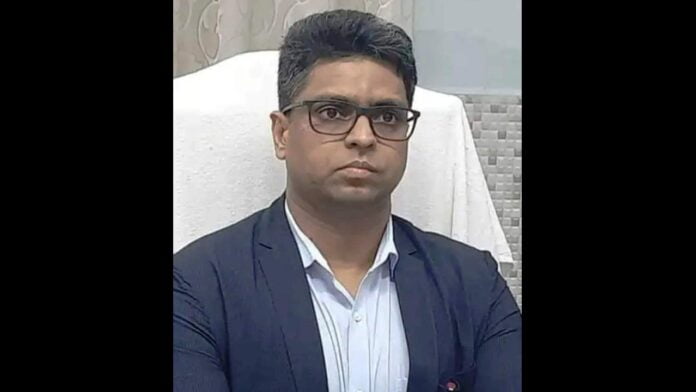
IAS officer Ashutosh Niranjan (IAS:2010:UP) has been prematurely repatriated to his parent cadre Uttar Pradesh. He was serving as Private Secretary to Union Minister Virendra Kumar in the Ministry of Social Justice and Empowerment.
An order issued by the Department of Personnel and Training on Tuesday (March 17, 2026) said the Appointments Committee of the Cabinet has approved his repatriation. The move has been cleared so that he can get the benefit of promotion in his cadre.
Niranjan had been working as Private Secretary to the Minister since June 2024.
He had come on central deputation earlier as Deputy Secretary in the Ministry of Micro, Small and Medium Enterprises on September 18, 2023.
Ashutosh Niranjan was appointed for a four-year deputation. However, his tenure has been cut short so that he can move ahead in his career in the state.
The West Bengal government on Wednesday (March 18, 2026) reassigned 19 IPS officers who were earlier removed from their posts by the Election Commission, placing them in new roles outside the election process.
The move was taken in line with the Commission’s directive that none of these officers should be given any election-related responsibilities during the ongoing Model Code of Conduct.
Among key changes, Indira Mukherjee (IPS:2013:WB), who was serving as Deputy Commissioner (Central) in Kolkata Police, has been posted as Special Superintendent in the Criminal Investigation Department (CID).
Rajeev Mishra (IPS:1996:WB), earlier ADG South Bengal, has been shifted as ADG (Reform and Coordination), while Praveen Kumar Tripathi (IPS:2004:WB), former Barrackpore Police Commissioner, has been appointed Inspector General in the Special Task Force (STF).
In a notable development, Sunil Kumar Choudhary (IPS:2004:WB), who was removed as Police Commissioner of Asansol-Durgapur, has been assigned the same responsibility again.
Similarly, Sukesh Kumar Jain (IPS:2005:WB), earlier IG North Bengal, has been posted as IG in the Intelligence Branch (IB). Akash Magharia (IPS:2009:WB) and Koteswara Rao (IPS:2011:WB), removed as Police Commissioners of Howrah and Chandannagar respectively, have been appointed as Deputy Inspector Generals in the IB.
At the mid-level, six officers—Joby Thomas (IPS:2012:WB), Abhijit Banerjee (IPS-SPS:2013), Amandeep (IPS:2014:WB), Kamnashis Sen (IPS:2014:WB), Dhritiman Sarkar (IPS:2014:WB) and Hossain Mehedi Rahman (IPS:2016:WB)—have been appointed as Special Superintendents in the Intelligence Branch after being removed from district SP posts.
Further, the removed Superintendents of Police—Parijat Biswas (IPS-SPS:2013), Bishop Sarkar (IPS:2014:WB), Sandeep Karra (IPS:2016:WB), Arish Bilal (IPS:2016:WB) and Palash Chandra Dhali (IPS:2017:WB)—have been appointed as SPs in the State Police Special Task Force.
In another posting, Priyabrata Roy (IPS:2014:WB), former SP of Barasat, has been appointed Deputy Commissioner (Traffic) in Kolkata Police.
Meanwhile, Laxmi Narayan Meena (IPS:1998:WB) will continue as ADG (Prisons) and has been given additional charge of ADG (Records Bureau).
The reshuffle reflects the state government’s effort to comply with the Election Commission’s restrictions while ensuring administrative continuity during the election period.
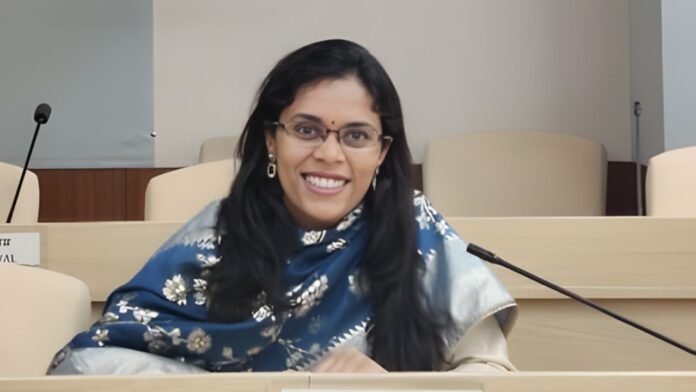
Simmi Chaudhary (IES:1996), currently serving as Economic Advisor in the Ministry of Micro, Small and Medium Enterprises(MSME), has been granted an extension to continue holding additional charge as Financial Adviser (FA) at Joint Secretary level in the Khadi & Village Industries Commission (KVIC), Mumbai. According to an order issued by the Department of Personnel and Training (DoPT) on Tuesday (March 17, 2026), the Appointments Committee of the Cabinet (ACC) has approved the proposal of the Ministry of MSME to extend her additional charge for a further period of six months.
The extension is effective from January 12, 2026, or until the appointment of a regular incumbent to the post, or until further orders, whichever is earlier.
Notably, Chaudhary has been holding the additional charge since July 12, 2025, when she was initially assigned the responsibility.
The Appointments Committee of the Cabinet (ACC) on Tuesday (March 17, 2026) approved the empanelment of 15 officers of the Indian Railway Personnel Service (IRPS) for promotion to the Higher Administrative Grade (HAG) in Pay Level-15 for the panel year 2026.
According to an order issued by the Department of Personnel and Training (DoPT), the empanelment will be effective from the date of assumption of charge of the post and will remain valid until further orders.
The officers empanelled include;
Suresh Chandra Srivastava
Deepak Kumar Gupta
Navin Agarwal
Anand Madhukar
Surya Prakash
Siddharth Kati
LVS Satyanarayana Patrudu
Lily Pandeya
Anurag Tripathi
Rajiv Gandhi
Additionally, five officers have been placed on the extended panel. These are;
Sanjay Kumar
Mahendra Kumar Gupta
Manoj Kumar
Anil Kumar Chhapolia
Jagdish Alagar
Meanwhile, the ACC has not approved the empanelment of Vaibhav Chauhan for promotion to HAG for the panel year 2026.
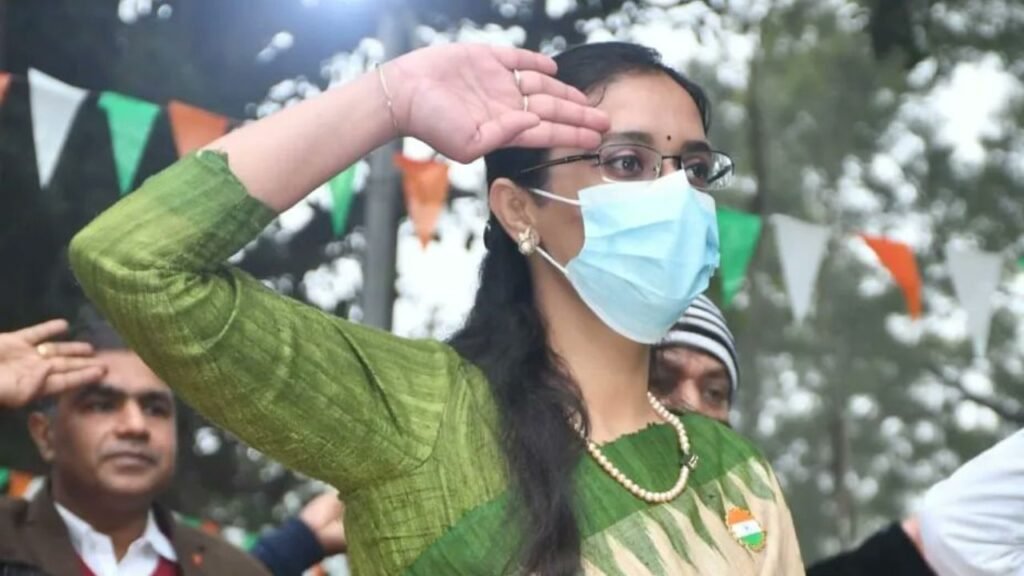
Khushboo Gupta is a 2019-batch IAS officer. Currently, she is serving as the Collector and District Magistrate of Mahabubnagar. Khushboo Gupta primarily belongs to the Bihar cadre.
Gupta was later transferred to the Telangana cadre after her marriage to fellow IAS officer Deepak Tewari. The cadre transfer was approved by the Department of Personnel and Training in August 2022.
Khushboo Gupta Early Life and Education
Khushboo Gupta belongs to Bhadaur village in the Barnala district of Punjab, Born on November 11, 1994, she is 31 years old as of March 2026. She is the daughter of Vipan Kumar Gupta and Manju Bala. She completed her B.Tech in Computer Engineering from IIT Delhi and began her journey toward civil services during her college years.
Key Highlights
Name: Khushboo Gupta
Date of Birth: November 11, 1994
Age: 31 years old (As of March 2026)
Hometown: Bhadaur, Barnala, Punjab
Education: B.Tech in Computer Engineering from IIT Delhi
UPSC 2018 Rank: AIR 223
UPSC 2019 Rank: AIR 80
Service: Indian Administrative Service (IAS)
She studied at Baba Gandha Singh Public School in Bhadaur and scored 92 percent marks in her Class 10 board examinations. Known as a bright student, she later cleared the entrance examination for the Indian Institute of Technology and moved to Delhi to pursue Computer Engineering. During her engineering studies, she began preparing for the civil services examination.
Khushboo Gupta IAS
UPSC Journey & Career Details
Khushboo Gupta first cleared the Union Public Service Commission Civil Services Examination in 2018 with an All India Rank of 223.
Determined to improve her performance, she appeared again in the examination and secured All India Rank 80 in 2019, earning a place in the IAS.
Administrative Career
After joining the service, Gupta was allotted the Bihar cadre and began her field training as Assistant Collector in Muzaffarpur in May 2020. She later served as Sub-Divisional Officer (SDO) in Munger from September 2021.
Following her cadre transfer to Telangana in August 2022, she served in several administrative roles including Project Officer of the Integrated Tribal Development Agency (ITDA). She also worked as Additional Collector (Local Bodies) in Nalgonda and later held the same position in Adilabad.
Khushboo Gupta IAS Current Posting
In February 2026, the Government of Telangana appointed her as Collector and District Magistrate of Mahabubnagar. Khushboo Gupta’s journey is a great example of how consistency and self-belief can lead to success. Instead of settling after her first success, she chose to improve herself and achieved an even better result. Her story motivates many UPSC aspirants to keep pushing forward, even after initial setbacks or average performance.
IAS officer Ajit Kumar (IAS:2006:KL), currently serving as Joint Secretary in the Ministry of Electronics & Information Technology (MeitY), has been entrusted with the additional charge of Chief Executive Officer (CEO), MyGov.
According to an order issued by the Department of Personnel and Training (DoPT) on Tuesday (March 17, 2026), the Appointments Committee of the Cabinet (ACC) approved the proposal of the Ministry of Electronics & Information Technology to assign him the additional responsibility for a period of six months with effect from November 24, 2025, or until the appointment of a regular incumbent, or until further orders, whichever is earlier.
Prior to this, the additional charge of CEO, MyGov was held by IAS officer Nand Kumarum (IAS:2008:MP), President & CEO of the National e-Governance Division (NeGD). The ACC has granted ex-post facto approval for his holding of the additional charge for the period from July 9, 2025 to November 23, 2025.
With this, Kumarum’s tenure in the additional role has formally concluded, and Ajit Kumar has taken over the charge of CEO, MyGov.
IRS Officer Vimal Anand (IRS-IT:2003), currently serving as Joint Secretary in the Department of Commerce, has been given additional charge of Development Commissioner of Noida Special Economic Zone.
An order issued by the Department of Personnel and Training on Tuesday (March 17, 2026) said the Appointments Committee of the Cabinet has approved the decision. He will hold this charge for six months from the date he takes over. It may end earlier if a regular officer is appointed or if further orders are issued.
Earlier, the additional charge was with Deen Bandhu Singh (CSS). He is Development Commissioner of Falta Special Economic Zone in Kolkata. His additional charge of Noida SEZ has now been withdrawn. With this, Vimal Anand will take over the responsibility of the post.
IAS officer Nidhi Kesarwani (IAS:2004:MN) has been given a two-year extension in her central deputation as Joint Secretary in the Department for Promotion of Industry and Internal Trade (DPIIT).
An order issued by the Department of Personnel and Training on Tuesday (March 17, 2026) said the Appointments Committee of the Cabinet has approved the extension. She will continue in the post beyond June 6, 2026 for two more years or until further orders.
Kesarwani has been serving as Joint Secretary since May 2025.
She came on central deputation in June 2021. At that time, she joined as Deputy Director at the National Institute of Health & Family Welfare.
Her five-year deputation was earlier set to end on June 6, 2026. Now, she will continue for a longer period.
Under pressure from the Assembly Speaker, the Karnataka government has picked up the issue of pending questions raised by MLAs and pulled up IAS officers for delay in answering them.
To deal with this issue, the State Chief Minister, Siddaramaiah, and Chief Secretary Shalini Rajneesh (IAS:1989:KN) have now set a deadline for IAS officials to send replies to questions raised by MLAs.
They went on to warn the bureaucrats against such delays, as they have caused “great embarrassment” to the government.
Not only this, but even departmental secretaries have been asked to explain the delays immediately. The govt has also directed concerned ministers to write separately to MLAs explaining the reason for the delay while giving a timeline.
The Chief Secretary had earlier issued show-cause notices to seven senior IAS officers, including an Additional Chief Secretary, over the same issue. Her letter stated that delays in sending replies embarrassed the government.
Among the IAS officers who were issued show-cause notices are Rajendra Kumar Kataria (IAS:1996:KN), currently serving as Additional Chief Secretary (Revenue); Amalan Aditya Biswas (IAS:1997:KN), posted as Principal Secretary in the Public Works Department; R. Girish (IAS:2010:KN), serving as Horticulture Secretary; N V Prasad (IAS:2004:KN), working as Executive Director of the Transport Department; Mohan Raj K P (IAS:2007:KN), posted as Housing Secretary; Shamla Iqbal (IAS:2002:KN), serving as Secretary in the Minority Welfare Department; and R. Vinoth Priya (IAS:2010:KN), current Secretary of the Animal Husbandry Department.
According to sources, between 2023 and 2026, the maximum questions raised by MLAs that remain pending are related to departments like Revenue, Public Works, Minority Welfare, Haj and Wakf, Transport, Housing, Animal Husbandry and Fisheries, as well as Horticulture and Sericulture.
This situation arose after it was found that only 90 out of a total of 245 questions have been answered so far, which the CM said has caused inconvenience to MLAs, undermining their rights as well as the dignity of the House.
The issue reached a flashpoint after Speaker U. T. Khader walked out from the Assembly, citing the government’s failure to respond to MLAs’ questions.
It was his protest that led to immediate administrative action, with delays seen as undermining the dignity of the House.
The Speaker warned of action against the secretaries if anything is delayed again. He said that the Chief Secretary will take action against any delays.
Senior IRS officer Amit Mohan Govil (IRS-IT:1990), Director General of the Central Economic Intelligence Bureau(CEIB) under the Department of Revenue, has been given an extension to continue holding additional charge as Director of the Financial Intelligence Unit-India(FIU-India).
An order issued by the Department of Personnel and Training on Tuesday (March 17, 2026) said the Appointments Committee of the Cabinet has approved the extension. He will continue in the additional role for six more months.
The extension will be effective from February 11, 2026. It will remain in place until a regular appointment is made or till the six-month period ends.
Govil has been holding this additional charge since August 2025. He was first given the role for six months. Since no regular officer has been appointed yet, his tenure has now been extended.













 Get Latest Updates