Home Blog Page 72

Parliamentary panel favours expanding 360-degree empanelment process for all central services officers

360-degree empanelment process

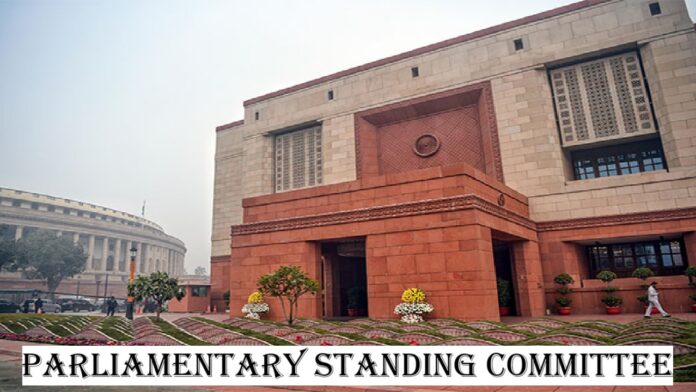
In a significant development, a Parliamentary Committee has asked the Union Government to examine expanding the 360-degree empanelment process for all central services officers, instead of only IAS officers. The Committee, in its report submitted on Monday, asked the government to examine the feasibility of institutionalising a structured 360-degree review mechanism for empanelment for Joint Secretary and other higher posts under the Union Government.

This issue has been raised in the 160th report of the Parliamentary Standing Committee on Personnel, Public Grievances, Law and Justice on Demands for Grants (2026-27) pertaining to the Department of Personnel and Training (DoPT).

The panel has advocated that this approach would bring parity in evaluation standards across services, strengthen merit-based selection at senior levels, and enhance confidence in the objectivity and robustness of the empanelment process.

Under the current situation, the IAS officers are empanelled for appointment at the Joint Secretary level at the central government through a structured process conducted by the Department of Personnel & Training (DoPT).

This process involves evaluation of officers on the basis of their service records, annual performance appraisal reports (APARs), vigilance status, and overall career profile.

According to the panel report, over the past several years, the empanelment process for IAS officers has incorporated a 360-degree assessment mechanism, under which multi-source feedback is obtained from senior officers, peers and other stakeholders who have worked with the officer concerned.

This process supplements formal performance records with qualitative inputs regarding leadership qualities, domain expertise, integrity, decision-making capacity, and overall suitability for senior policy-making roles in the Government of India.

The panel said that it is of the view that the principles underlying the assessment mechanism, namely holistic evaluation, multi-source feedback, and qualitative assessment of leadership attributes, are relevant not only for IAS officers but also for officers from other services considered for empanelment as Joint Secretaries and other higher posts in the Govt. of India.
Tamil Nadu govt appoints B Bala Naga Devi as DGP (Intelligence)

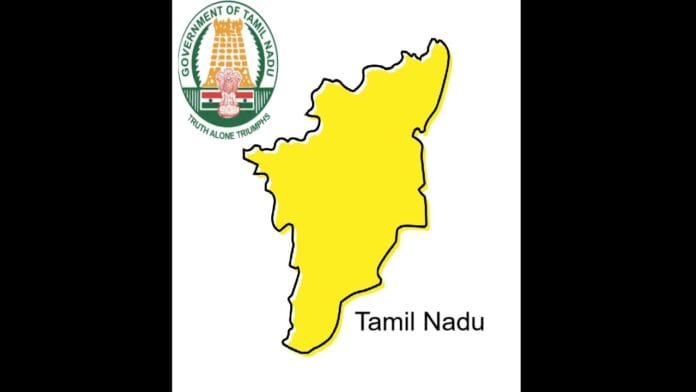
The Government of Tamil Nadu on Saturday (March 14, 2026) appointed B Bala Naga Devi (IPS:1995:TN) as Director General of Police (Intelligence).

Prior to this posting, Bala Naga Devi was serving as Director General of Police, Economic Offences Wing, while also holding the additional charge of Additional Director General of Police, Civil Supplies CID.

According to an order issued by the state Home Department, Santhosh Kumar (IPS:2002:TN), currently Inspector General of Police in the Economic Offences Wing, has been assigned the additional charge of Additional Director General of Police, Economic Offences Wing.

The order further stated that Rupesh Kumar Meena (IAS:2005:TN), Inspector General of Police, Civil Supplies CID, will hold the additional charge of Additional Director General of Police, Civil Supplies CID.

Santosh Gopal Ajmera gets 2-year extension in UPSC

Tamil Nadu DGP appointment

The central deputation tenure of Santosh Gopal Ajmera (IInfoS:2008) as Joint Secretary (Director level) in the Union Public Service Commission (UPSC) has been extended for two years. According to an order issued by the Department of Personnel and Training (DoPT) on Monday (March 16, 2026), the competent authority has approved the proposal of UPSC to extend his deputation tenure for two years, beyond February 25, 2026 and upto February 25, 2028 or until further orders, whichever is earlier.

ECI orders transfer of five IPS officers in Assam ahead of assembly elections

Election Commission of India

The Election Commission of India on Monday (March 16, 2026) ordered the transfer of several police officers in Assam. The move is part of its preparations for the upcoming Assembly elections. The order was issued through an official communication after the Commission reviewed election preparedness in the state.

Somalin Shubhdarshini (IPS:2019:AM) has been posted as Superintendent of Police of Majuli. R Sheetal Kumar (IPS:2020:AM) will serve as SP South Salmara. Anchal Chauhan (IPS:2020:AM) has been appointed SP Sadiya.

Sudhakar Singh (IPS:2013:AM) has been posted as SP Chirang. Mohan Lal Meena (IPS:2016:AM) will take charge as SP Dhemaji.

The Commission has asked the state government to implement the orders immediately. It has also asked for a compliance report after the officers join their new posts. The report has to be submitted by 11:00 AM on March 17, 2026.

The Commission also said that officers who have been transferred out should not be given election duties until the poll process is over.

This order comes hours after the Commission carried out a major administrative reshuffle in West Bengal. In that case, the Chief Secretary, Home Secretary and several senior police officers were replaced soon after the Assembly election schedule was announced.

MNVS Prabhakar selected as next CMD of RINL

The Ministry of Steel has selected MNVS Prabhakar as the next Chairman and Managing Director of Rashtriya Ispat Nigam Limited, the corporate entity of Visakhapatnam Steel Plant. According to the sources, the decision was taken after a meeting of the Search-cum-Selection Committee in New Delhi on March 14, 2026.

Prabhakar now works as Executive Director and Head of the Nagarnar Integrated Steel Plant at NMDC Steel Limited. He was selected for the top post in the Schedule ‘A’ public sector company.

The committee interviewed five senior executives before taking the decision.

The other candidates were S Subbaraj, Executive Director at the Alloy Steels Plant of SAIL. Bipin Kumar Giri, Executive Director (Mines Development) at SAIL. Munna Prasad Singh, Executive Director (Mines) OGOM CMLO at SAIL. Rakesh Kumar, Executive Director (Works) at Bhilai Steel Plant of SAIL.

After the recommendation of the committee, the proposal will go to the Appointments Committee of the Cabinet. The ACC will take the final decision before the appointment is officially notified.

ECI changes Chief Secretary, Home Secretary and DGP of Bengal in unprecedented move

In a major decision, the Election Commission of India on Sunday ordered the removal of West Bengal’s Chief Secretary, Home Secretary and several senior police officers. The order came within hours of the announcement of the Assembly election schedule.

The action followed the enforcement of the Model Code of Conduct after the poll announcement.

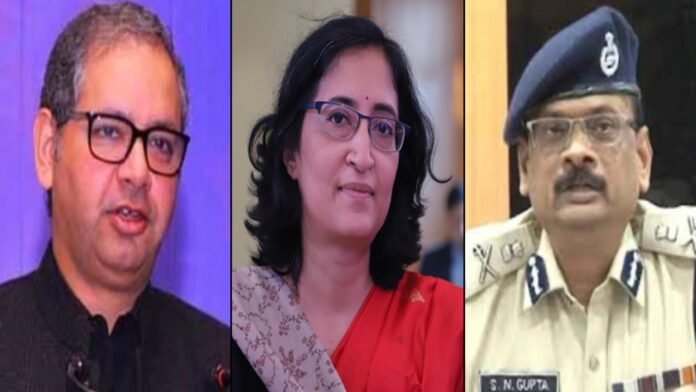
Chief Secretary Nandini Chakraborty (IAS:1994:WB) has been replaced by Dushyant Nariala (IAS:1993:WB). Sanghamitra Ghosh (IAS:1997:WB) has been appointed the new Home Secretary. She replaces Jagdish Prasad Meena (IAS:2004:WB). With this appointment, Ghosh becomes the first woman Home Secretary of West Bengal.

The Election Commission sent its order to Chakraborty late on Sunday night. It also said that Chakraborty and Meena should not be given any work related to the election process until the polls are over.

Changes have also been ordered in the police leadership. Director General of Police Peeyush Pandey (IPS:1993:WB) and Kolkata Police Commissioner Supratim Sarkar (IPS:1997:WB) have been replaced.

The state government has been asked to appoint Siddh Nath Gupta (IPS:1992:WB) as Director General and Inspector General of Police in-charge. Natarajan Ramesh Babu (IPS:1991:WB) will serve as Director General of Correctional Services.

Ajay Mukund Ranade (IPS:1995:WB) has been posted as Additional Director General and Inspector General of Police (Law and Order). Ajay Kumar Nand (IPS:1996:WB) has been appointed Commissioner of Kolkata Police.

The Election Commission has asked the state government to implement these changes immediately and send a compliance report by 3 pm on Monday.

Earlier in the day, the Commission announced that the West Bengal Assembly elections will be held in two phases. The polling dates are April 23 and April 29.

Telangana HC rejects State Police officer’s plea against promotion process to IPS

Telangana CS Ramakrishna Rao

The Telangana High Court rejected the plea challenging the promotion process from the State Police Service to the Indian Police Service (IPS).

The HC decision was delivered by a two-judge panel comprising Chief Justice Aparesh Kumar Singh and Justice G.M. Mohiuddin while hearing a writ petition filed by L.S. Chowhan, a State Police Service officer.

The petitioner had questioned the Central Administrative Tribunal (CAT) order refusing to interfere with the IPS selection process for the panel years 2009 and 2010.

Chowhan, who also served as Superintendent of Police (SP), contended that the state authorities adversely affected his consideration for inclusion in the IPS select list by withholding his integrity certificate and hence described the selection process as arbitrary.

He went on to allege procedural irregularities and possible bias in the functioning of the Selection Committee.

The panel held that the non-issuance of the integrity certificate did not vitiate the independent assessment undertaken by the Selection Committee. The panel did not find any material to substantiate the allegation of bias.

The panel said the Selection Committee independently evaluates eligible officers on the basis of their service records and Annual Confidential Reports through a comparative assessment of merit.

The HC panel also noted that the petitioner had been graded “Good,” whereas several officers in the zone of consideration were graded “Very Good,” and therefore his non-inclusion in the select list was a consequence of the statutory limitation on the number of vacancies and the comparative grading assigned by the Committee.

The court concluded that the Tribunal’s order did not suffer from any jurisdictional error warranting interference and dismissed the writ petition.

Whistleblower IFS Sanjiv Chaturvedi emerges as Standard Ethics Case Study for GS-4 UPSC material

Sanjiv Chaturvedi IFS

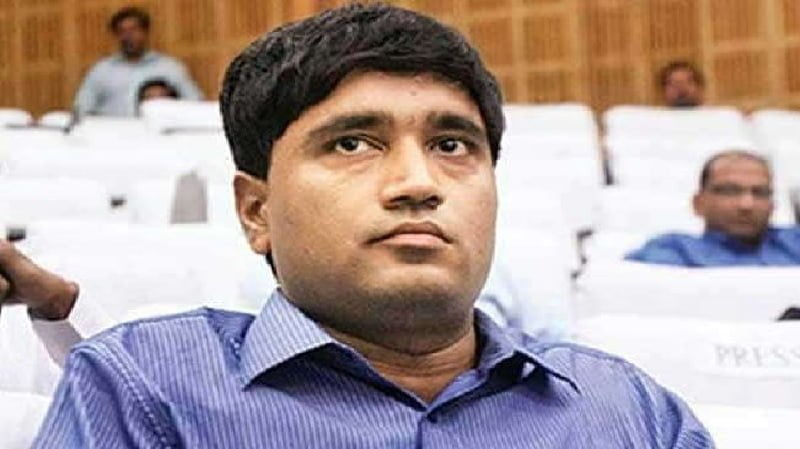
In a rare achievement, noted whistleblower bureaucrat Sanjiv Chaturvedi (IFS:2002:HY) has emerged as one of the most cited real-life administrative examples in ethics preparation material for the Civil Services (Mains) Examination.

Thanks to his illustrious service record, Chaturvedi is now being presented as a practical case study under themes such as integrity, accountability, ethical courage, whistleblower protection, and administrative resistance to corruption. Leading General Studies Paper IV includes Ethics, Integrity, and Aptitude modules for UPSC Main preparation.

The fact that his name appears multiple times across various coaching ecosystems indicates that his administrative journey has moved beyond public controversy into the structured teaching framework used by thousands of civil service aspirants.

It is commendable for any serving civil servant whose service record features as a standard ethics illustration for study material prepared by several leading civil service coaching institutes.

Sanjiv Chaturvedi remains a nationally acclaimed name for the anti-corruption crusade that earned him the Ramon Magsaysay Award for public service and integrity.

That is the reason why his name is increasingly cited alongside widely used ethics references such as Vinod Rai for auditing integrity and Kiran Bedi for administrative courage.

The institutes that have included his case in their study materials include IASbaba, Vision IAS, Drishti IAS, Insights IAS, Sleepy Classes, and Rau’s IAS Study Circle.

These institutes use contemporary examples to help candidates strengthen answer-writing in ethics papers. The focus of the study is on how institutional mechanisms must protect officers who report wrongdoing within government systems.

Material attributed to IASbaba places Chaturvedi under the theme “Upholding Integrity,” emphasizing that ethical resistance often invites institutional backlash but strengthens long-term public trust.

Similarly, Insights IAS reportedly uses his case in modules discussing whistleblower safeguards.

Vision IAS illustrates Chaturvedi’s administrative interventions linked to public accountability, integrity in office, anti-corruption vigilance

The material refers particularly to his roles in Haryana administration and later institutional assignments.

While Drishti IAS uses his case while discussing ethical dilemmas where officers must choose between exposing systemic irregularities and facing transfers or professional pressure, the Sleepy Classes describe Chaturvedi as a contemporary whistleblower whose conduct reflects conflict between personal integrity and institutional expectations.

The institutes coaching students for the Civil Services exam note that Chaturvedi’s career aligns closely with major UPSC ethics themes because it touches almost every recurring GS-4 keyword, like integrity despite institutional pressure, accountability in public office, courage of conviction, whistleblower vulnerability, public interest over career security, and ethical leadership under adversity.

These are the aspects of Chaturvedi’s illustrious career as a civil servant that make him a highly adaptable case in ethics answers.

Two U’khand IPS move HC against central deputation to lower rank

IPS central deputation

Two senior Uttarakhand IPS officers have approached the High Court against their central deputation, claiming they were assigned positions lower than their current positions. Both of the officers are currently serving as Inspector Generals (IGs) in the Uttarakhand Police, but they have been deputed to the DIG rank in the central forces, which they claim violates the service rules.

A division bench comprising Chief Justice Manoj Kumar Gupta and Justice Subhash Upadhyay heard the petition and sought a response from the government.

According to the plea, the Union Home Ministry issued orders deputing IPS officer Neeru Garg (IPS: 2005:UK) as DIG in the Indo-Tibetan Border Police (ITBP) and IPS officer Arun Mohan Joshi (IPS: 2006:UK) as DIG in the Border Security Force (BSF).

The two officers have contended that their central deputation is improper, as they neither applied for it nor gave their consent to it, and that assigning them to the rank of DIG amounts to a posting at a lower rank, which violates service rules.

Moreover, the two officers have also argued that despite expressing their unwillingness to go on central deputation, the state government forwarded their names to the Centre on February 16, 2026, following which the deputation orders were issued.

The state govt, during the hearing, submitted that if the officers had objections to the decision, they should approach the Central Administrative Tribunal.

However, the petitioners contended that since the proposal was given by the state govt., it was proper to raise the matter before the High Court.

After hearing the submissions from both sides, the bench directed the state government to submit its response on the issue.

The matter is likely to be taken up for further hearing after the state govt submits its reply.

A Amarnath appointed OSD in Petroleum Ministry

A Amarnath IFS Officer

IFS Officer A Amarnath (IFS:2006) has been appointed as Officer on Special Duty (Joint Secretary level) in the Ministry of Petroleum & Natural Gas for a period of three years. According to an order issued by the Department of Personnel and Training (DoPT) on Saturday (March 14, 2026), the Appointments Committee of the Cabinet has approved his appointment to the post for three years from the date of assuming charge of the post or until further orders, whichever is earlier.

Latest News