Pending the outcome of corruption proceedings against him, the Odisha government has reinstated suspended IAS officer Dhiman Chakma (IAS:2021:OD) in service. He has been posted to the Revenue and Disaster Management department as deputy secretary.
Chakma was arrested while serving as sub-collector of Dharmagarh in the Kalahandi district on June 8, 2025, by the state Vigilance Department. He is said to have been allegedly caught red-handed while accepting a bribe of Rs 10 lakh from a businessman operating a stone crusher unit.
After his arrest, Vigilance officials conducted searches at his official residence and reportedly recovered Rs 47 lakh in cash, following which he was placed under suspension in June last year and departmental proceedings were initiated against him. Chakma, however, got bail on July 24, 2025, from the Orissa High Court.
According to reliable sources, Chakma’s reinstatement is in accordance with service rules governing prolonged suspension periods. However, both the departmental inquiry and the criminal case being heard by the Vigilance Court will continue independently, and the outcome of the ongoing judicial and departmental proceedings will determine his future service.
Officials say the state govt will take further action after the final verdict of the court comes.
A Government Order (G.O.), issued by the Tamil Nadu government on December 24, 2025, promoting seven senior IAS officers to the Chief Secretary grade, has been challenged in the Madras High Court through a Public Interest Litigation (PIL) petition.
The petitioner, one M. Balakrishnan of Anna Nagar in Chennai, claimed the G.O. ought not to have been issued without concurrence/approval of the Centre and had listed the Union Ministry of Personnel, Public Grievances and Pensions as well as the Union Cabinet Secretary as respondents to the case.
The First Division Bench of Chief Justice Sushrut Arvind Dharmadhikari and Justice G. Arul Murugan began the hearing and later adjourned it to June 10, 2026, after questioning as to how a PIL petition could be entertained by the court on an issue related to officers in government service.
The judges cited the Supreme Court’s ruling, in a catena of decisions beginning from Dr. Duryodhan Sahu versus Jintendra Kumar (1998), that government service matters could not be generally raised before the constitutional courts by way of PIL petitions.
The court further stated that concerns related to officers in government service could be raised only before the CAT or by way of filing writ petitions before a single judge of the High Court. The Bench also added that the top court had time and again clarified that PILs should not be used as a shortcut.
It was after the officers’ counsel sought time for the appearance of his senior to argue the matter that the judges adjourned the hearing to June 10. The court took note that Additional Solicitor General A.R.L. Sundaresan, assisted by central government senior panel counsel C. Kulandaivelu, had entered appearance on behalf of the Centre.
The December 2025 G.O. had been issued for promoting IAS officers M.A. Siddique, R. Jaya, P. Senthilkumar, Sandhya Venugopal Sharma, Udhayachandran, Hitesh Kumar S. Makwana, and B. Chandra Mohan to the Chief Secretary grade of IAS with effect from January 1, 2026.
The G.O. also accorded sanction for creating temporary posts of Additional Chief Secretary in the departments of Economics and Statististics, Health and Family Welfare, and School Education so that IAS officers R Jaya, Senthilkumar, and Chandra Mohan could continue to occupy those positions at that point in time.
The order also stated Makwana shall stand promoted to the Chief Secretary cadre without prejudice to his central deputation as Surveyor General of India. Then, Siddique and Udhayachandran were serving as Managing Director of Chennai Metro Rail Limited and Finance Secretary respectively. Sharma was the chairperson of Tamil Nadu Industrial Development Corporation.
The petitioner has also sought a court’s direction to the Principal Accountant General’s office in Tamil Nadu not to pay a higher salary, allowances, perquisites, arrears, or other pensionary/monetary benefits to the seven IAS officers on the basis of the G.O. under challenge.
The Chandigarh Administration is awaiting clearance from the Home Ministry to appoint a new IAS officer from the Punjab cadre, as the ministry is yet to select a candidate. The UT administration had forwarded a panel of four names to the Home Ministry over a month ago to take the final decision.
The choice has technically narrowed to three contenders: two, Harpreet Sudan and Amit Talwar, from the 2013 batch, and Jaspreet Singh from the 2014 batch.
All three candidates possess extensive administrative experience in Punjab, having previously served in key positions such as deputy commissioners. Among them, Amit Talwar holds unique prior experience within the UT administration, having served there as a Punjab Civil Services (PCS) officer before being promoted to the IAS cadre.
Because inter-cadre deputation requests must pass through multiple administrative channels before receiving final clearance from the Prime Minister-led Appointments Committee of the Cabinet (ACC), no official decision has been communicated to Chandigarh Administration yet.
The problem is not with the Punjab cadre officer alone. The Chandigarh administration is also facing delays in securing state officers from Haryana. A panel of Haryana Civil Services (HCS) officers, sent earlier, was rejected by the UT administration a few months ago due to technical reasons. While the UT administration requested a fresh panel, the Haryana govt has yet to provide one.
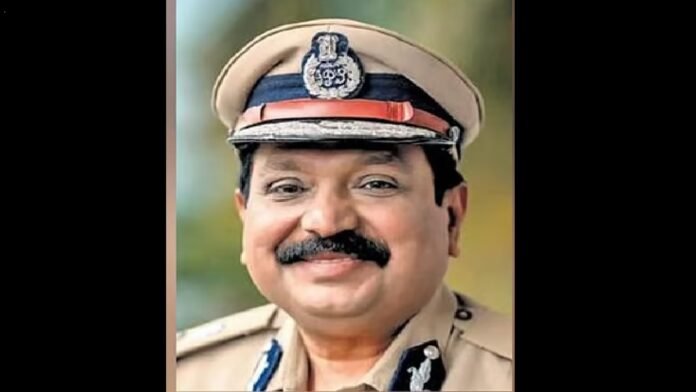
In a surprising move, Ahmedabad Police Commissioner Gyanender Singh Malik (IPS:1993:GJ) has been appointed as the new chief of the Gujarat police force. The state Home Department issued a notification to this effect on Saturday. Malik has been appointed to the top post over his senior and acting DGP Dr K L N Rao (IPS:1991:GJ).
According to Home Department sources, three names were considered for this top post, including Rao, Malik, and one Neerja Gotru (IPS:1993:GJ). Gotru is currently posted as DGP, Police Recruitment Board. But Malik was finally picked for the post. Rao is going to retire in Oct 2027.
If sources are to be believed, Rao was not favoured to be confirmed in the DGP role, as he reportedly did not enjoy the full confidence of the political bosses.
It should be recalled here that Rao was appointed Gujarat’s acting DGP after the retirement of Vikas Sahay (IPS:1989:GJ) from the DGP post after serving for more than two years. Now with Malik appointed to the post, Rao is likely to be appointed DGP, Civil Defence, or is deputed as the Police Housing Board chief. He is also in charge of CID (crime) and Railways.
The fact is it was widely speculated that Rao would be appointed DGP owing to his seniority and stature, on the basis of which he was considered the frontrunner for the post. Plus, he had been chosen as the DGP in charge over his senior Shamsher Singh (IPS: 1991:GJ), who was still in service. Singh’s retirement in March led to the strong speculation that Rao would surely be made full-time DGP.
However, Malik walked away with the cake. Malik’s appointment also continues the trend of Ahmedabad Police Commissioners being elevated to the top state police post. Sahay was the only recent exception, having been elevated from his position as DGP (training), Gandhinagar.
Malik has a wide range of policing experience. During his tenure on central deputation as IG of the Gujarat Frontier and Border Security Force (BSF), he supervised a heliborne operation in Harami Nala in Kutch that led to the seizure of 11 Pakistani boats and the capture of six Pakistani intruders. Besides, he also served with the United Nations Peacekeeping Mission in Kosovo in 2002.
As the Ahmedabad Police Commissioner, Malik oversaw the clearance of nearly 4 lakh square metres of govt land around Chandola Lake and the removal of more than 10,000 illegal structures.
Now, with Malik’s elevation to the top post, the search for his successor as Ahmedabad Police Commissioner has begun. Several names are reported to be under consideration, including CBI’s Special Director Manoj Sashidhar (IPS:1994:GJ), Vadodara Police Commissioner Narsimha Komar (IPS:1996:GJ), and Surat Police chief Anupam Singh Gehlot (IPS:1997:GJ).
But, interestingly, the name being cited within sections of the state police fraternity is Anti-Corruption Bureau (ACB) Director Piyush Patel (IPS:1998:GJ). In between, police sources say that Joint Police Commissioner (crime) Sharad Singhal (IPS:2006:GJ) may be appointed the in-charge Ahmedabad Police Commissioner.
The Karnataka government on Sunday (June 7, 2026) carried out a reshuffle in the bureaucracy and issued transfer and posting orders for senior IAS officers. Notably, Munish Moudgil has been entrusted with the concurrent charge of the newly created post of Principal Secretary to Chief Minister (Programme and Project Implementation).
The names of the officers and their postings are as follows;
Anjum Parwez (IAS:1994:KN), who was awaiting posting, has been posted as Additional Chief Secretary to Government, Forest, Ecology and Environment Department, Bengaluru.
Munish Moudgil (IAS:1998:KN), Special Commissioner (Administration, Revenue and IT), Greater Bengaluru Authority, Bengaluru, has been given concurrent charge of the post of Principal Secretary to Chief Minister (Programme and Project Implementation), Bengaluru.
Deepa Cholan (IAS:2008:KN), Secretary, Urban Development Department (UD and Municipalities), Bengaluru, has been transferred and posted as Secretary, Transport Department, Bengaluru.
Cauvery BB (IAS:2008:KN), awaiting posting, has been posted as Secretary, Urban Development Department (UD and Municipalities), Bengaluru.
Dr Venkatesh MV (IAS:2009:KN), Secretary, Planning, Programme Monitoring and Statistics Department, Bengaluru, has been transferred and posted as Registrar for Co-operative Societies, Bengaluru.
Dr Selvanani R (IAS:2013:KN), Managing Director, Karnataka Urban Water Supply and Drainage Board, Bengaluru, has been transferred and posted as Commissioner for Transport and Road Safety, Bengaluru.
Dr Raju Narayana Swamy, IAS, popularly known as Kerala’s anti-corruption crusader and a firebrand bureaucrat, said that the Indian freedom movement served as a powerful ideological incubator that shaped the core values of modern India.
Speaking at a function organised in Mahe (Puducherry) to felicitate students for academic excellence in memory of freedom fighter Sri Kummaya Mukundan, Dr Swamy said the struggle against British imperialism nurtured enduring civilisational values such as secularism, democracy, socialism and self-reliance, which continue to define India’s socio-political fabric and constitutional identity.
According to him, the freedom movement promoted fundamental principles including democracy, liberty and equal respect for all faiths and communities. He observed that the movement cultivated the belief that the nation must treat all citizens equally irrespective of religion.
Dr Swamy noted that the later phases of the freedom struggle, particularly during the 1930s, advanced an egalitarian vision focused on social justice, economic fairness and the welfare of marginalised sections of society.
Highlighting the significance of the Swadeshi movement, he said the boycott of foreign goods was closely linked to the idea of economic self-reliance and helped build national pride while encouraging sustainable local development.
He further said that the freedom struggle championed Ahimsa and Satyagraha as instruments of non-violence and truth, demonstrating the strength of mass mobilisation and proving that moral conviction could challenge even the most powerful empires.
Calling upon the younger generation to uphold these universally accepted principles, Dr Swamy said the ideological evolution of the freedom movement ultimately laid the foundation of independent India and permanently enshrined the values of justice, liberty, equality and fraternity in the Preamble of the Constitution.
In a significant development, the Kerala government has revoked the suspension of IAS officers B Ashok (IAS:1998:KL) and N Prasanth (IAS:2007:KL) with immediate effect.
According to separate orders issued on Friday (June 6, 2026) by Chief Secretary A Jayathilak (IAS:1991:KL), both officers have been reinstated. However, the ongoing disciplinary proceedings against them will continue in accordance with the applicable service rules.
N Prasanth had been placed under suspension on November 11, 2024 after he levelled serious allegations against then Additional Chief Secretary and present Chief Secretary A Jayathilak as well as former Chief Secretary Sarada Muraleedharan. His suspension was extended several times, with the latest extension issued in May 2026.
B Ashok, who was serving as Vice Chancellor of Kerala Agricultural University and Principal Secretary, Sainik Welfare, was suspended in April 2026 following criticism of government policies through social media posts.
Ashok had earlier also remained in the spotlight over differences with the Left Democratic Front (LDF) government regarding his postings and administrative assignments.
The central government on Friday (June 6, 2026) re-appointed Swaminathan Janakiraman as Deputy Governor of the Reserve Bank of India (RBI) for another two years.
In a statement, the RBI said, “The Central Government has re-appointed Swaminathan Janakiraman as Deputy Governor, Reserve Bank of India, for a period of two years with effect from June 26, 2026, or until further orders, whichever is earlier.”
Swaminathan was originally appointed as RBI Deputy Governor in June 2023 for a tenure of three years. Before joining the central bank, he served as Managing Director at State Bank of India (SBI).
As Deputy Governor, he oversees several important functions of the RBI, including the Department of Supervision and Inspection Department, among others.
Under the RBI Act, 1934, the central bank has four Deputy Governors — two from within the RBI ranks, one commercial banker and one economist overseeing monetary policy.
At present, RBI Governor Sanjay Malhotra is assisted by four Deputy Governors — Swaminathan Janakiraman, Poonam Gupta, Shirish Chandra Murmu and Rohit Jain.
Senior Maharashtra cadre IPS officer Abdur Rahman (IPS:1997:MH) may finally get his long-awaited VRS after waging a nearly eight-year-long legal and administrative battle and filing three separate applications for it.
Even this could be possible only after he approached the Supreme Court challenging the central government’s order rejecting his VRS plea. The relief came from the apex court on Wednesday, which set aside a 2019 Central government order rejecting Rahman’s VRS plea.
While calling the refusal of VRS to him a case of “non-application of mind,” the top court directed the Union Home Ministry to re-examine Rahman’s notice afresh within three months.
Rahman, an IIT-Kanpur civil engineering graduate, first applied for VRS in 2017 after being overlooked for promotion to the special IG post. He later withdrew the plea.
His second application was rejected in March 2018 for lack of vigilance clearance, and the third time, the Maharashtra govt cleared his VRS in October 2019, but the Centre blocked it again, citing disciplinary proceedings.
Rahman challenged the VRS denial before CAT, but it was dismissed. He then moved the Supreme Court and now has got relief.
Haryana Chief Secretary Anurag Rastogi (IAS:1990:HY)’s rehabilitation after retirement seems imminent as he is considered the strongest contender for the post of the Chief Commissioner of the Haryana Right to Service (RTS) Commission.
The state government has already assigned him the additional charge of the post, pending a regular appointment. A govt order, issued on June 3, placed the RTS Commission under Rastogi’s command with immediate effect.
The post fell vacant after IAS officer T C Gupta (IAS:1987:HY) completed his tenure on May 27, 2026.
The Chief Commissioner holds office for five years or until attaining the age of 65 years. Although Rastogi was originally due to retire on June 30, 2025, he was granted a one-year extension in service, and now he is to retire on June 30 this year.
An expert says Rastogi fulfills every statutory qualification prescribed for the post, and unless he receives another extension in service beyond June 30, his appointment as Chief Commissioner appears a strong possibility.