Home Blog Page 56

258 complaints filed against Uttarakhand judges in last five years

Complaints against U'khand judges

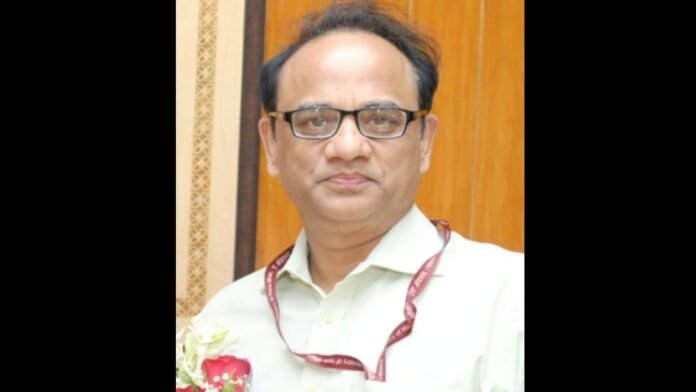
In a landmark development toward transparency and accountability in judicial administration, the Uttarakhand High Court has disclosed that 258 complaints were filed against judges and judicial officers of the state between January 2020 and April 2025. The data was obtained through an RTI filed by none other than a whistleblower, Magsaysay Award-winning Indian Forest Service officer Sanjiv Chaturvedi (IFoS:2002:HY).

The High Court’s vigilance cell released the information after directions from the State Information Commission.

Under the Right to Information Act, the Public Information Officer of the High Court said that formal action has been initiated against four judicial officers out of these 258 complaints.

The disclosure is being interpreted as a rare instance of a High Court sharing information about complaints related to judicial misconduct because this is an area that is usually kept confidential.

Chaturvedi’s first RTI application was filed in May 2023, seeking details about which authorities handle corruption complaints and how many such complaints were received. The request was initially rejected by the Public Information Officer (PIO) of the High Court, who cited “confidentiality” and “third-party information” as reasons. Even after a first appeal, the information was not provided.

But it was the intervention by State Chief Information Commissioner Radha Raturi that changed the scenario, and the matter moved forward. During a hearing, the High Court’s PIO said specific details could not be shared but agreed that overall figures could be disclosed with approval from the Chief Justice.

It was in January this year that the Commission directed the PIO to obtain clearance and provide the data, ruling that the “aggregate number” of complaints should be made public to maintain a balance between privacy and the public’s right to know.

Legal experts say the decision could set an important example. They say this step is a significant milestone, as several other High Courts, including those in Delhi, Chennai, and Chhattisgarh, have previously refused to share similar data.

The ramification of the disclosure apart, the development marks another successful effort by Chaturvedi, who has been working to bring in transparency and fight corruption in public institutions.

Punjab’s first anti-drug STF chief waiting for posting for 5 months

Sometimes, reality contradicts relevance. At least it holds true for the 1992-batch IPS officer, Harpreet Singh Sidhu. The man, who headed the first anti-drug Special Task Force (STF) in Punjab, has been waiting for a posting for the last five months under the government that boasts of fighting a relentless war against drugs.

It was in Sept last year when he was repatriated to his home cadre from the central deputation, where he served as Additional Director General (ADG) with the Indo-Tibetan Border Police (ITBP).

Sidhu’s contribution to tackling the drug menace is not limited to the role he played as an STF chief; rather, he played an instrumental role in introducing key measures to combat the disease in the state.

He had been appointed as Special DGP by the former Chief Minister, Captain Amarinder Singh, to head the anti-drug STF under the Congress-led govt in March 2017. Captain especially assigned him this task by securing his premature repatriation from his central deputation.

He worked meticulously with US-based drug therapist and consultant Dr Kanwar Ajit Singh Sidhu to introduce the Outpatient Opioid Assisted Treatment (OOAT) clinics to provide free OPD-based treatment to drug addicts. The therapy marked a shift from sole “abstinence” to a substitution strategy, where addicts are put on alternate medicine to wean them off drugs and substances like heroin.

While heading the anti-drug STF, Sidhu also came up with a comprehensive action against drug abuse (CADA) strategy, focusing on a 3-pronged strategy of enforcement, de-addiction, and prevention (EDP). He introduced community initiatives like drug abuse prevention officers (DAPOs) and the ‘buddy’ programme in educational institutes to prevent drug abuse among youth through peer pressure.

But unfortunately, Sidhu was removed from his post amid differences with the then DGP, Suresh Arora, and posted as Special Principal Secretary to the CM. He was, however, brought back as STF chief in July 2019. Later, he also held charge as ADGP (Prisons) before going on central deputation with the ITBP in 2022 for 4 years.

While his central deputation was to end in October 2026, Sidhu was prematurely repatriated to the parent cadre at his request in September last year, after his junior from the West Bengal cadre, Praveen Kumar (IPS:1993:WB), was appointed as Director General (DG) of the ITBP.

But Sidhu is not alone in remaining without posting in Punjab. There are several others. A 1997-batch IPS officer with ADGP rank, Naunihal Singh, remained without posting for about 10 months before he got posted in Sept 2024. Another officer, Gurpreet Singh Bhullar, the 2004-batch IPS officer who is currently serving as Amritsar Police Commissioner, remained without a posting for nearly two months before being posted as IG (Provisioning) on Aug 2, 2024.

Why Tata Sons is betting on ex-bureaucrat Pradeep Kharola to lift Air India from nadir?

IAS Pradeep Singh Kharola

In a strategic move, Tata Sons has appointed former Civil Aviation Secretary Pradeep Singh Kharola as a senior advisor to the airline. It is part of a broader leadership reshuffle that also saw its Global Head of Corporate Communications being reassigned.

These moves are basically designed to lift the reputation of the Air India from the lowest ebb following the AI 171 plane crash in Ahmedabad in June 2025 and to supplement the airline’s renewed focus on governance, regulatory compliance, and crisis management.

There is no doubt that Air India is currently passing through its most difficult phase since its privatization in 2022 following the Ahmedabad plane crash that claimed about 260 lives, and to add insult to injury, its CEO Campbell Wilson reportedly used a condolence message that was allegedly plagiarized from a statement by American Airlines.

To cap it, the airline bore regulatory penalties of Rs. 1 crore from the Directorate General of Civil Aviation (DGCA) for operating an Airbus A320 eight times without a valid airworthiness review certificate, resulting in the DGCA citing “eroded public trust” and holding senior leadership accountable.

Further complications might be in store for Air India, as the Aircraft Accident Investigation Bureau (AAIB) is to release its final report on the AI 171 disastrous crash soon. The report could trigger further legal and regulatory liabilities for the airline. Besides, Tata Sons Chairman N. Chandrasekaran is reportedly searching for a potential successor to Wilson ahead of his 2027 term end.

If viewed from this background, Kharola’s induction on its board appears to be a fool-proof strategy as he knows the intricacies of running Air India first as its CMD and later as Aviation Secretary overseeing its privatisation in 2022. In this way Kharola brings unmatched experience in both regulatory and operational aspects of the aviation sector.

Industry experts believe that Kharola might be seen leading sensitive negotiations with the government and regulatory authorities, including the DGCA, as Air India desperately needs to restore its compliance credibility and public trust.

Similarly, its CEO Campbell Wilson’s condolence message fiasco that brought ignominy to the airline prompted the Tata Sons to replace its veteran executive Partha Ghosh, who looked after communication, as part of this strategic overhaul.

Kharola has a distinguished career as an administrator, who was currently posted as the Director General of the National Testing Agency (NTA), appointed to restore the sagging public trust in the national examination system after irregularities in exams sullied its image.

An M.Tech. from IIT Delhi, Kharola, a 1985 batch IAS of the Karnataka cadre, brings with him vast experience gained after holding several key positions in his career. Besides having served as CMD of Air India and Secretary in the Ministry of Civil Aviation, he was also the Director General of NTA, CMD of India Trade Promotion Organisation (ITPO), MD of Bangalore Metro Rail Corporation (BMRCL), and MD of BMTC, apart from the senior roles he played in Karnataka’s state administration.

Thus, Kharola’s induction underscores Tata Sons’ desperate move to navigate the airline through one of its toughest times by reposing faith in a tested leadership with sound regulatory experience.

India AI Impact Summit 2026: REC showcases first live P2P energy trading demo under India Energy Stack

REC Limited, a Maharatna Central Public Sector Enterprise under the Ministry of Power, today showcased the first live demonstration of India’s Peer‑to‑Peer (P2P) energy trading pilot program under the India Energy Stack at the India AI Impact Summit 2026, held at Bharat Mandapam. The demonstration was presented during a strategic session titled “India Energy Stack (IES) and the AI‑Ready Power Sector: Trust, Interoperability, and Scale,” marking a significant milestone in India’s transition towards a decentralized, consumer‑centric digital power ecosystem.

The highlight of the session was a first‑of‑its‑kind live demonstration of a P2P decentralized energy transaction conducted under the India Energy Stack framework. Arun Singh, a farmer from Meerut (Uttar Pradesh), used a secure, blockchain‑enabled platform to sell surplus solar‑generated electricity directly to Lakshmi, a garment shop owner in Delhi. Arun sold 6 units of solar power and earned Rs. 30. This historic transaction demonstrated the real‑world application of the India Energy Stack (IES), a Digital Public Infrastructure (DPI) designed to empower citizens as active ‘energy agents’ rather than passive recipients of electricity.

The live P2P energy trading demonstration represents the most visible and tangible application of the India Energy Stack to date. The pilot enables prosumers—households, businesses, and farmers who generate renewable energy—to directly trade their surplus power with other consumers through trusted digital protocols, laying the foundation for a more participative and decentralized power market.

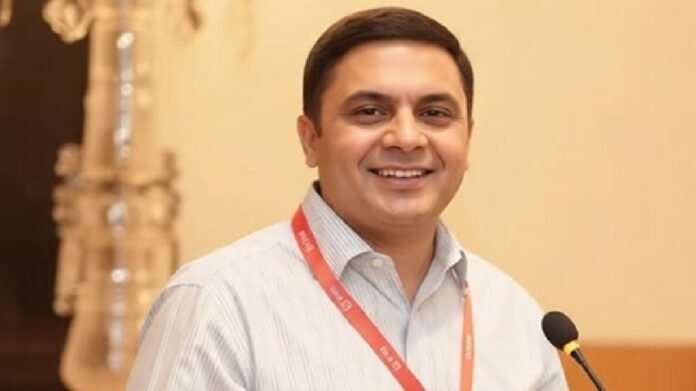
The live demonstration took place in the presence of Dr. Ram Sewak Sharma, Chair, India Energy Stack; Jitendra Srivastava, Chairman and Managing Director, REC Limited; Ashish Kumar Goel, Chairman, UPPCL; Alok Kumar, Director General, AIDA; Reji Pillai, President, ISGF; Shashank Misra, Joint Secretary, Ministry of Power; Prince Dhawan, Executive Director, REC; and Swetha Ravi Kumar, Executive Director, FSR Global.

DEMO PRESENTED TO HON’BLE POWER MINISTER ON 18 FEB 2026

Union Minister for Power, Manohar Lal visited REC pavilion on 18 Feb 2026 where he was presented a live demonstration of a P2P decentralized energy transaction conducted under the India Energy Stack. He also met various Technology Service Providers (TSPs) at REC Pavillion where they presented different AI solutions related to Power Sector.

DEMO PRESENTED TO HON’BLE PRIME MINISTER ON 16 FEB 2026

Earlier, on 16 February 2026, a demo of peer‑to‑peer energy trading was also presented to the Prime Minister of India, Narendra Modi, during his visit to the MeitY Pavilion. The demonstration was conducted by Shashank Misra, Joint Secretary, Ministry of Power, and Prince Dhawan, Executive Director, REC Limited, along with one of the first beneficiaries of the P2P energy trading pilot.

ABOUT INDIA ENERGY STACK

The India Energy Stack (IES) is an interoperable digital framework of open standards and protocols that enables secure, low-cost data and service exchange across the power sector, similar to how UPI transformed India’s digital payments ecosystem.

REC Limited is the nodal agency for the India Energy Stack on behalf of the Ministry of Power. FSR Global serves as the knowledge partner for the initiative, with support from the India Smart Grid Forum (ISGF), which has played a key role in advancing smart grid innovation and providing technical inputs for scaling digital energy solutions across India. Additionally, Networks for Humanity (NFH) is contributing to the development of a trust‑based digital transaction framework to ensure secure, verifiable, and scalable peer‑to‑peer energy networks.

ACC clears Level-16 empanelment; eight 1989-batch officers made Railway GMs

Indian Railways

The Appointments Committee of the Cabinet (ACC) has approved the empanelment and appointment of eight senior officers as General Managers in Indian Railways for the 2025 panel year. These posts are at Level-16 of the Pay Matrix.

The approvals were given under relaxation of the Indian Railway (Selection to Senior Posts) Rules, 2025. This clears the way for new appointments in major railway zones and production units.

All eight officers belong to the 1989 batch of different railway services. With Level-16 empanelment, they become eligible to serve as General Managers or in equivalent top posts.

The officers appointed are:

  1. Manoranjan Pradhan (IRSS:1989) – General Manager, Rail Wheel Factory, Yelahanka
  2. Ashutosh Pant (IRSEE:1989) – General Manager, Banaras Locomotive Works, Varanasi
  3. Prabhas Dansana (IRTS:1989) – Director General, RDSO
  4. Mohit Chandra (IRSEE:1989) – General Manager, Chittaranjan Locomotive Works
  5. Rajesh Kumar Pandey (IRSSE:1989) – General Manager, Northern Railway, New Delhi
  6. Shalabh Goel (IRSEE:1989) – General Manager, Central Railway, Mumbai
  7. Ashish Bansal (IRSE:1989) – General Manager, Northeast Frontier Railway (Construction), Guwahati
  8. Ajay Nandan (IRSME:1989) – General Manager, Rail Coach Factory, Kapurthala

Several of these officers are expected to remain in service till 2028. This will provide continuity at the top level.

At the same time, 56 officers were not included in the 2025 Level-16 panel. This shows that the selection process was strict.

In a separate order, Ashok Kumar Verma (IRSS:1987), General Manager of Northern Railway since October 2024, has been appointed General Manager, Central Organisation for Railway Electrification (CORE), Prayagraj. He has been moved on a lateral transfer. His posting comes as Railways continues to push for full electrification of its network.

The appointment of Rajesh Kumar Pandey as General Manager of Northern Railway is important, as it is one of the largest railway zones in the country.

With eight new General Managers posted at the same time, Indian Railways has carried out a major leadership change at the top level.

Maharashtra govt sets up Civil Services Board for transfer and posting of IAS officers

Maharashtra Government

With an aim to ensure a structured approach to cadre management, the Maharashtra government has established its Civil Services Board. Its main purpose is to guide transfers and postings of IAS officers of the state cadre.

The General Administration Department (GAD) issued a Government Resolution (GR) to this effect on Monday. According to the resolution, the board has been constituted in pursuance of a notification issued by the Department of Personnel and Training (DoPT) on January 28, 2014, in accordance with the Indian Administrative Service (Cadre) Amendment Rules, 2014.

According to the GR, the state’s Chief Secretary will be the chairman of the board, with the senior-most Additional Chief Secretary, or the Chairman of the Board of Revenue, or the Financial Commissioner, or an officer of equivalent rank and status, serving as a member.

The Additional Chief Secretary, Principal Secretary, or Secretary (Personnel) in the General Administration Department will function as the Member Secretary of the board.

As per the resolution, the senior-most officer holding the post of Additional Chief Secretary in a ministerial administrative department in Mantralaya shall be nominated as a member of the Board.

Union Govt undertakes overhaul of CPWD first time in 14 years

CPWD overhaul

In an ambitious move to elevate infrastructure development, the Union Government is undertaking an overhaul of its prime construction agency—the Central Public Works Department (CPWD)—for the first time in 14 years. The initiative focuses on bringing in specialized engineers to handle complex construction projects.

The move is aimed at injecting new talent, modernizing, and address staffing shortages in the CPWD in order to address the growing demands of modern, large-scale infrastructure projects, such as the Kartavya Bhawan, with a portfolio now exceeding ₹25,000 crore annually. However, it does not have enough engineers to undertake its activities within Delhi and across states.

Further, with new buildings like Kartavya Bhawans and the Prime Minister’s residential complex coming up, there is a need for more engineers with different expertise to be brought into the government.

This makeover has been prompted by the need for expertise in constructing and maintaining modern, high-profile government buildings.

There are about 18,000 employees in CPWD under three major verticals—civil (which includes electrical and mechanical streams), architecture, and horticulture. About two-thirds of the employees are in the civil vertical. As a govt official pointed out, there is a need for architectural and design engineers as well as an emphasis on designing structurally sound, seismically proof, energy-efficient buildings. According to him, more design engineers are now needed.

Besides, the new construction activity in the capital has also brought out the biggest gap in CPWD – a shortage of engineers in lower to mid-level positions.

Restructuring and cadre review are among the key aspects of this overhaul. 

A cadre review should generally be undertaken every five years. However, the last cadre review in CPWD took place in 2012. After this, there was a restructuring exercise in 2019 when a consultancy firm was hired to gauge the gaps. According to sources, this restructuring exercise did not help CPWD with several gaps recurring.

The move is expected to improve accountability, speed, and transparency in project execution.

This overhaul follows earlier recommendations to focus on core construction and potentially outsource maintenance, as well as efforts to modernize technology and procedures. 

Shantmanu appointed J&K State Election Commissioner

The Jammu and Kashmir administration on Tuesday appointed former IAS office Shantmanu (IAS:1991:AGMUT) as the new State Election Commissioner (SEC) of the Union Territory. He succeeds B R Sharma (IAS:1984:AGMUT), who completed his tenure after serving in the post since July 20, 2023.

According to an official notification, the appointment was approved by Lieutenant Governor Manoj Sinha under sub-section (3) of Section 36 of the Jammu and Kashmir Panchayati Raj Act, 1989.

Under the statutory framework governing local bodies in Jammu and Kashmir, the State Election Commission is responsible for preparing electoral rolls and conducting elections to Panchayati Raj institutions and municipal bodies.

Cabinet Secretariat directs top officials to track AI summit, submit report by Feb 27

India AI Summit

In a significant development, the Cabinet Secretariat has directed top officials of all ministries and departments to attend the Artificial Intelligence (AI) summit, being held at Bharat Mandapam, and identify actionable takeaways relevant to their respective domains. They have also been asked to submit a concise two-page note by Feb. 27.

The secretariat said this in its communication sent late on Monday, the day the summit began. The summit will conclude on Friday.

Their brief is supposed to outline potential AI use cases, implementation pathways, regulatory or data-governance concerns, and areas where AI could improve efficiency and public service delivery.

This initiative has been taken keeping in view the government’s renewed focus on emerging technologies and AI-led innovation under programmes such as Digital India, as reiterated in the Union Budget.

The summit is being attended by policymakers, technology companies, startups, and academic institutions. Besides, industry executives are showcasing applications ranging from AI-led automation and analytics to sector-specific tools in healthcare, agriculture, and governance.

Latest News