Home Blog Page 32

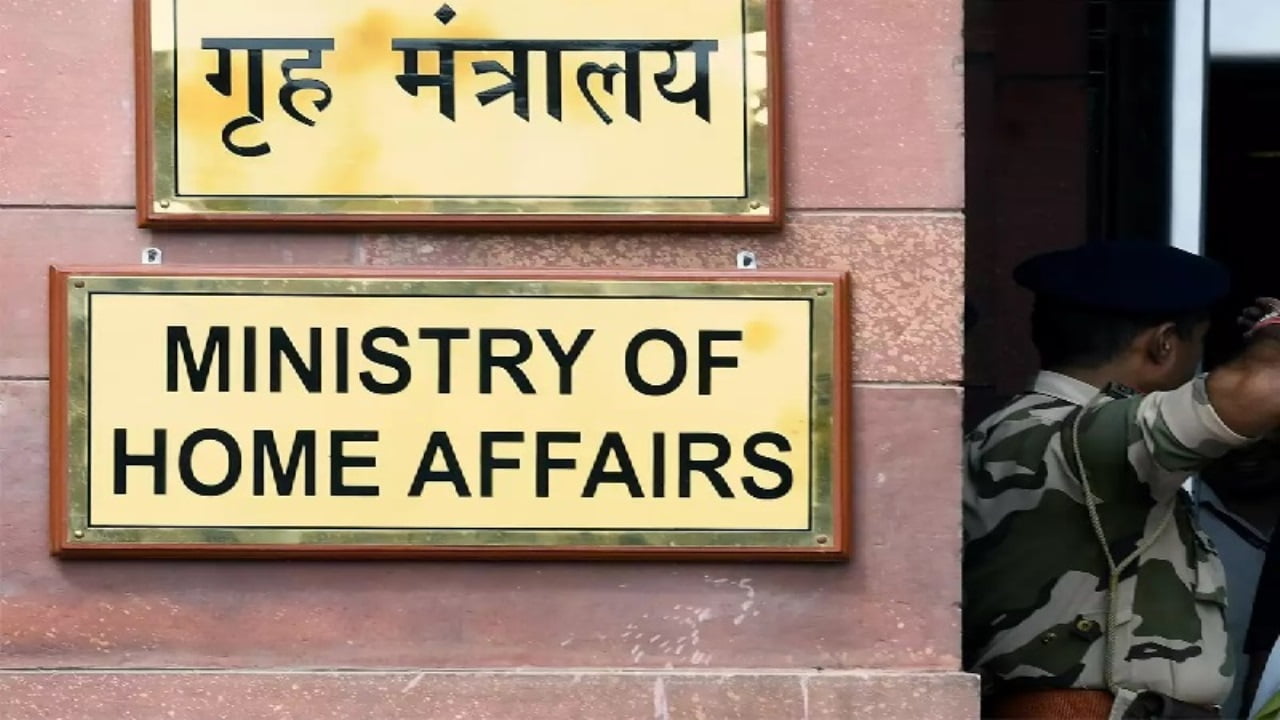
Home Ministry asks Delhi govt to ensure 3 transferred IAS join new postings within one week

The Union Home Ministry has taken a serious note of three IAS officers, transferred by it in February, not joining new postings and has asked the Delhi government to ensure they join their new posts within a week.

The ministry has also warned that they will face “consequences, including disciplinary proceedings and debarment from promotion” if they fail to do so. It has also clarified that no requests for cancellation of the transfer orders will be entertained at all.

The three IAS officers in question are K C Surender, Sushil Singh, and Pranjal J Hazarika, who were transferred from Delhi to Puducherry, Mizoram, and Jammu & Kashmir through a Home Ministry order on February 24, 2026.

These officers originally belonged to the DANICS, who were promoted to the IAS under the AGMUT cadre in February this year.

In the order, the MHA referred to guidelines that stipulate that officers shall be relieved to join their new segment within 15 days from the date of transfer.

It also reminded that in case of non-compliance of transfer orders, the officer would be deemed to be “stand relieved” with immediate effect from April 24 and is directed to join their new place of posting immediately thereafter.

The ministry has also warned that these officers will face consequences under the service rules, including disciplinary proceedings, debarment from promotion, etc.

These three officers are currently serving the Delhi govt. While Sushil Singh is posted as Director, Information and Publicity (DIP), Hazarika is serving as Special Director, Woman and Child Development (WCD) department, and Surender is Special Director of the Administrative Reforms department.
Telangana HC pulls up IAS for non-compliance of its orders

Telangana CS Ramakrishna Rao

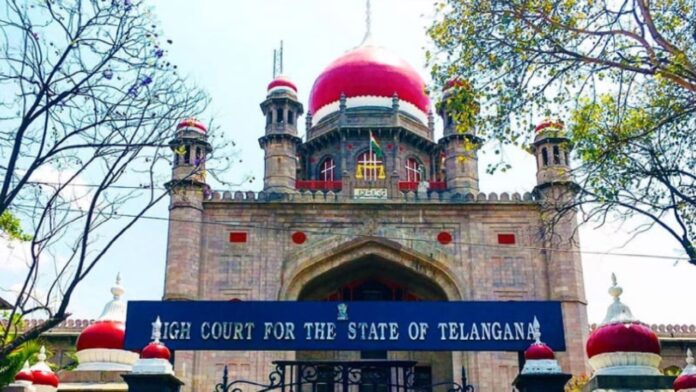
The Telangana High Court pulled up senior IAS officer Sandeep Kumar Sultania (IAS:1998:TG) on Wednesday for failing to comply with its orders regarding pending payments under the Mission Bhagiratha project.

Sultania, currently posted as Principal Secretary in the planning department, is facing contempt charges in the case.

The company filed the contempt case due to the non-payment of long-pending dues, despite earlier court directions. Saltania was Principal Secretary in the Finance Department then.

Justice T Madhavi Devi stressed that if the amount is not paid within the stipulated time, Saltania will have to appear before the High Court on the next date without seeking any exemption.

The contempt case emanates from a writ petition filed by NCC Limited seeking release of over Rs.180 crore towards certified bills for works executed under the Mission Bhagiratha project, for which even payment tokens had been issued.

The High Court had earlier directed the state government to clear the dues within two months along with interest at 6% per annum. The petitioner moved the contempt petition alleging non-compliance with the High Court’s directions.

The matter will be taken up on April 28 for reporting compliance.

Haryana IAS enlivens UN with his interpretation of Ambedkar’s global vision

Raja Sekhar Vundru IAS

In an event that is bound to bring laurels to the Haryana bureaucracy, a senior state cadre IAS officer, Raja Sekhar Vundru (IAS:1990:HY), enlivened the United Nations by delving deep into B R Ambedkar’s global vision in his keynote address at the United Nations Headquarters on April 14.

The event had been organized by the Permanent Mission of India to mark the 135th birth anniversary of Dr. B. R. Ambedkar, the father of the Indian Constitution.

The theme of the event was ‘Dr. B. R. Ambedkar’s Vision of Constitutional Morality and its Relevance for Multilateralism.’

Vundru, who is currently posted as Additional Chief Secretary in Haryana’s Transport Department, is a noted Ambedkar scholar.

At the UN event, he deftly explained Article 51 of the Indian Constitution, saying it reflects the spirit of multilateral cooperation, respect for global norms, and peaceful resolution of conflicts—core elements of the UN Charter (1945), which India signed as a founding member.

Vundru was clear in his thought when he said multilateralism was embedded as a foundational state obligation in Article 51 for India, as it committed independent India to cooperative internationalism, respect for global law, and peaceful relations—principles that continue to influence India’s role in the UN and world affairs today.

He pointed out that Ambedkar was aware of the development of UN ideals embodied in the UN Charter and the Universal Declaration of Human Rights (UDHR) and made a significant and well-documented influence on key parts of the Constitution.

According to him, Dr. Ambedkar repeatedly defended the justiciability of the Fundamental Rights in the Constituent Assembly, insisting that they must be enforceable against the State to be meaningful—directly aligning with the UN’s vision of rights that are real, not merely aspirational.

Vundu informed the august gathering that while introducing the draft Constitution in the Constituent Assembly on November 4, 1948, Ambedkar had said that “constitutional morality is not a natural sentiment. It has to be cultivated. We must realize that our people have yet to learn it. Democracy in India is only a top dressing on an Indian soil, which is essentially undemocratic.

Earlier, India’s Permanent Representative to the UN, Ambassador Harish Parvathaneni, noted that Dr. Ambedkar’s ardent advocacy for instilling the spirit of constitutional morality among Indian citizens was very significant and unique. He identified common strands between the Constitution of India and the UN Charter.

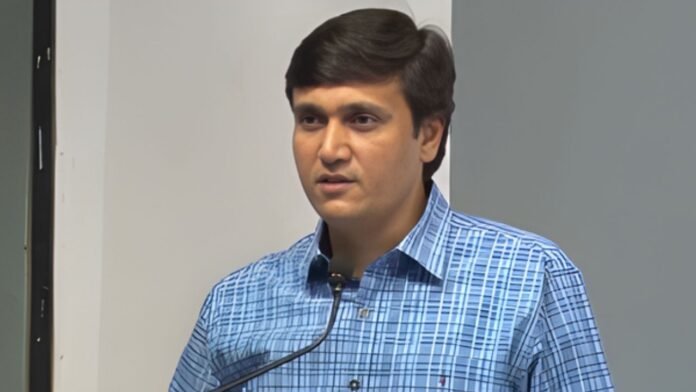
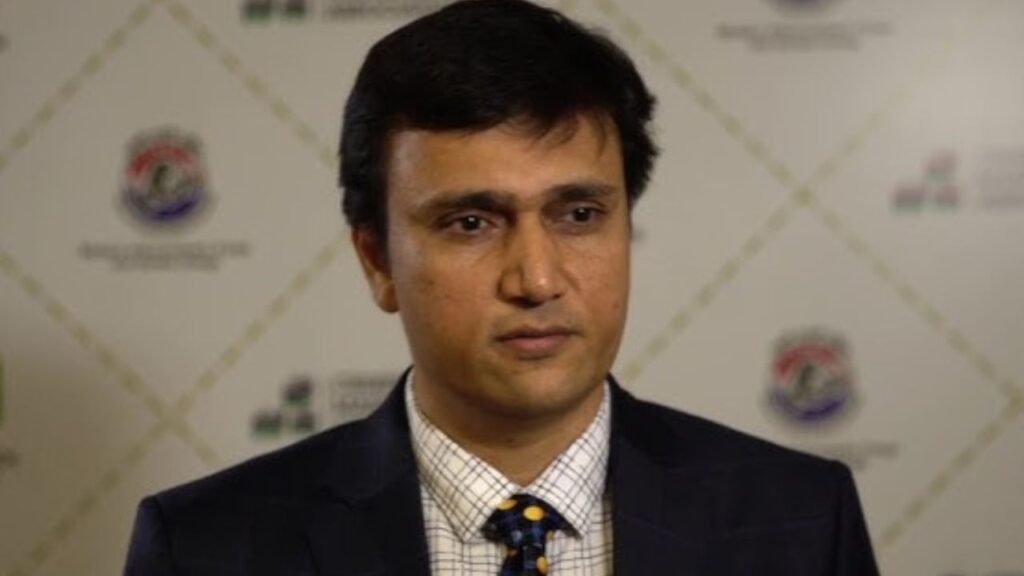
Hardik Satishchandra Shah IAS: Bio, Age, Edu., Rank & Posting

Hardik Satishchandra Shah IAS
Hardik Satishchandra Shah

Hardik Satishchandra Shah IAS is a senior officer of the Indian Administrative Service from the Gujarat cadre (2010 batch). He is currently serving in the Prime Minister’s Office (PMO) and has recently been elevated to the Joint Secretary level as Private Secretary to the Prime Minister. This promotion reflects his growing role and the trust placed in him at the highest level of governance.

Hardik Satishchandra Shah – Quick Facts

  • Name: Hardik Satishchandra Shah IAS
  • Batch & Cadre: 2010 batch, Gujarat cadre
  • Date of Birth: 3 July 1973
  • Age: Around 52 years (approx.)
  • Education:
    • M.E. in Environmental Science
    • LL.B. / B.L. (Law)
  • UPSC Entry: Joined IAS under Non-SCS category
  • IAS Rank: Not publicly available
  • Current Role:
    • Private Secretary to Prime Minister
    • Elevated to Joint Secretary level in PMO
  • Previous Roles:
    • Deputy Secretary, PMO (2019)
    • Director-equivalent level (2024)
    • Private Secretary in Ministry of Environment (2017)
  • State Experience:
    • Member Secretary, Gujarat Pollution Control Board
    • Roles in Forest & Environment Department
  • Tenure: Up to 31 May 2029 (co-terminus basis)

Early Life, Age & Educations

Born on 3 July 1973, the hardik satishchandra shah age is around 52 years (as of 2025). He has built a strong career combining technical knowledge and administrative experience. Talking about hardik shah education, he has an impressive academic background. He holds:

  • M.E. in Environmental Science
  • LL.B. / B.L. (Law Degree)

His education in both science and law has helped him work effectively in areas related to environment, policy, and governance.

UPSC Journey & Rank

While the exact hardik satishchandra shah ias rank is not publicly available, he joined the IAS in 2010 under the Non-SCS category and was allotted the Gujarat cadre.

Hardik Satishchandra Shah IAS

Hardik Satishchandra Shah Career & Key Roles

Before joining the IAS, he worked with the Gujarat Pollution Control Board, where he gained practical experience in environmental regulation.

After becoming an IAS officer, he held several important positions in Gujarat, including:

  • Member Secretary, Gujarat Pollution Control Board
  • Senior roles in Forest & Environment Department

His expertise in environmental governance made him a key officer in policy-related departments.

Journey in Central Government & PMO

His central deputation began in January 2017, when he was appointed as Private Secretary to the Minister in the Ministry of Environment, Forest and Climate Change.

In September 2019, he moved to the Prime Minister’s Office as Deputy Secretary.

  • August 2020: Appointed as Private Secretary to the Prime Minister
  • June 2024: Elevated to Director-equivalent level
  • Latest Update: Promoted to Joint Secretary level in the PMO

He continues to serve as Private Secretary to the Prime Minister, with tenure up to 31 May 2029 on a co-terminus basis.

Why His Role is Important

The role of Private Secretary in the PMO is highly significant, involving close coordination with top-level administration and assisting in key governance matters. The elevation of hardik satishchandra shah ias to Joint Secretary level highlights his experience, efficiency, and reliability in handling crucial responsibilities.

FAQs – Hardik Satishchandra Shah

Q1. Who is Hardik Satishchandra Shah IAS?

Hardik Satishchandra Shah is a 2010 batch IAS officer of the Gujarat cadre. He is currently serving as Private Secretary to the Prime Minister at the Joint Secretary level in the Prime Minister’s Office (PMO).

Q2. What is Hardik Satishchandra Shah’s education?

Talking about hardik satishchandra shah education, he holds an M.E. in Environmental Science and a law degree (LL.B./B.L.), giving him expertise in environmental and legal matters.

Q3. What is Hardik Satishchandra Shah IAS rank?

The exact hardik satishchandra shah ias rank in the UPSC Civil Services Examination is not publicly available. However, he joined the IAS in 2010 under the Non-SCS category.

After IAS elevations, 22 Haryana cops set sight on IPS badge in promotion push

HPS officers' promotion to IPS

Within months of 18 Haryana Civil Services (HCS) officers being elevated to the IAS, the state’s bureaucratic corridors are again abuzz with speculation of promotions—this time it is the turn of state police officers to nurse fresh hope of elevation to the elite class as 22 Haryana Police Service (HPS) officers are expected to be inducted into the IPS.

The reason is simple: the Union Public Service Commission (UPSC) is going to hold a Departmental Promotion Committee (DPC) meeting in Chandigarh on April 28 where the long-pending promotions are expected to be taken up.

Haryana officers claim that the proposal for the promotion of 18 officers against existing vacancies has already received approval. According to it, five posts belong to 2020, four each to 2021 and 2022, one to 2023, and three to 2024. In the upcoming DPC meeting, Haryana is expected to push for four more slots that arose in 2025.

The only hitch is that these promotions will take a couple of years. That is the reason why Haryana officers demand that this should be made an annual exercise, arguing that regular career progression boosts morale among field officers.

In 2022, 16 DSPs were promoted to the IPS, but the quota was later reduced from 35 to 25, leaving many disappointed.

As the IPS cadre has expanded in recent years, the state service officers are clamouring for restoring the higher quota for HPS officers. They point out that timely promotions in both civil and police services not only recognise years of service but also inspire them for better performance.

Retired Rajasthan IAS Subodh Agarwal sent to 14-day judicial custody in JJM scam

Subodh Agarwal ex-IAS

Retired Rajasthan cadre IAS officer Subodh Agarwal (IAS:1988:RJ), who was arrested in connection with the alleged Rs 960-crore Jal Jeevan Mission (JJM) scam, has been sent to 14-day judicial custody.

Agarwal had been arrested by the Anti-Corruption Bureau (ACB) on April 10 and was produced before an ACB court after completion of his police remand.

The court rejected ACB’s request for further remand and sent Agarwal to judicial custody.

Agarwal served as Additional Chief Secretary of the Public Health Engineering Department (PHED) when the alleged scam took place. The JJM scam case has resulted in the arrest of eleven individuals, including a minister.

UP IAS Sameer Verma found missing for six months, Departmental action initiated

Sameer Verma IAS found missing

In an intriguing story of a missing bureaucrat, a senior UP cadre IAS officer, Sameer Verma (IAS:2002:UP), has been found missing for the last six months. He has been absent from duties without permission since October 2025. In addition, he did not even bother to join his new posting, leading to a departmental action being initiated against him for this utter violation of service rules.

The issue has created a flutter in the administrative circles of the state regarding his long absence without official permission.

It happened after Sameer Verma was removed from his position as IG, Stamps and Registration, in June 2025. Though he was subsequently appointed Secretary of the Planning Department in October 2025, he, however, remained missing.

According to sources, after being removed from his post as IG Stamps, Sameer Verma requested study leave to pursue an MBA, but this leave was not granted. Despite this, his absence has been prolonged. It is reported that he has been on unauthorized leave for the past six months, a matter that the government has taken seriously.

According to rules, any officer remaining absent for a prolonged period without permission is considered a violation of service rules, and in such cases, a departmental inquiry and disciplinary action are initiated. In this context, departmental action is being taken against Sameer Verma.

The prolonged absence of a senior IAS officer without permission not only raises questions about administrative discipline but also dents departmental functioning.

The state government is said to be reviewing Verma’s case, and further action will be taken against him in accordance with service rules.

PESB recommends Prasanna Kumar Acharya as CMD of NLC India

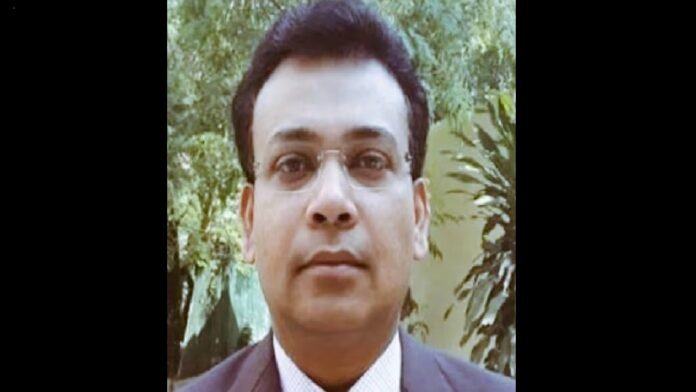
The Public Enterprises Selection Board (PESB) has recommended Prasanna Kumar Acharya for appointment as Chairman and Managing Director (CMD) of NLC India Limited. The recommendation was made following interviews conducted on April 15, 2026.

Acharya is currently serving as Director (Finance) at NLC India Limited. His name will now be forwarded to the Appointments Committee of the Cabinet (ACC) for final approval, subject to vigilance clearance and other prescribed formalities.

The CMD post will fall vacant on July 1, 2026, following the superannuation of incumbent Prasanna Kumar Motupalli on June 30. Motupalli has been serving as CMD of the company since January 12, 2023.

The following 7 applicants were interviewed in the selection meeting :

  1. Prasanna Kumar Acharya, Director (Finance), NLC India Limited
  2. Jagadish Chandra Mazumdar, Executive Director, NLC India Limited
  3. Jasper Rose IS, Executive Director, Mines, Services, Land, Lignite to Methanol Project, NLC India Limited
  4. B Anbuchelvan, Executive Director/ Chief Executive Officer, NLC India Limited
  5. S Rajmohan, Executive Director/ SME, Conveyor, Transport, Long Term Mine Planning & Mine-3, NLC India
  6. Vijaya Kumar S, Executive Director, Project Head/ Barsingsar Project, NLC India Limited.
  7. Dr Pudi Hariprasad, Financial Adviser & Chief Accounts Officer Principal Financial Advisor, Ministry of Railways

Also Read: PESB invites applications for CMD post at NLC India Limited

Centre planning Lok Sabha seats’ expansion to 850, with over 270 seats reserved for women

Expansion of seats

The current NDA government at the Centre seems determined to redraw the country’s electoral map by proposing a cap of 850 seats for the Lok Sabha and a likely uniform 50% increase for state assemblies. This figure includes around 270 seats to be reserved for women under a quota system from 2029 Lok Sabha elections onwards.

That is the reason why a special three-day session of the Parliament has been called from April 16. During the special sitting, three bills—the Constitution (131st Amendment) Bill, the Delimitation Bill, 2026, and the Union Territories Laws (Amendment) Bill, 2026—will be introduced for discussion, as their drafts have already been circulated among MPs.

The law minister is said to introduce the first two bills while the home minister will move the third.

Though the number of increases is to be decided by the Delimitation Commission, government sources say Lok Sabha and assembly seats are likely to see a near-uniform percentage increase across states.

What form the core of the proposal are seven constitutional amendments, including key changes to Articles 55, 81, 82, 170, 330, 332 and 334A. The amendment to Article 81 lays the groundwork for expanding the Lok Sabha from 543 to around 816 seats, with a cap of 850 – a limit sources say is unlikely to be revised in the foreseeable future.

As per constitutional provision, these amendments will require a two-thirds majority of members present and voting, making support from key Opposition parties such as Congress, SP, Trinamool and DMK crucial. It will also require ratification by half of the Indian states.

This move virtually aims to accommodate a 33% quota for women, roughly translating to 273 seats. On the census basis for delimitation, the bill allows population figures to be determined from a census “as Parliament may by law decide,” utilising the latest data.

A three-member Delimitation Commission, to be led by a current or retired judge and include Election Commission of India representation, will redraw constituencies.

The proposed law also aims to extend the quota to Delhi, Jammu and Kashmir, and Puducherry, with ECI acting as the delimitation authority for assembly segments in Pakistan-occupied J&K, where 24 seats remain vacant.

The fact that the current law had linked reservation to post-2027 census delimitation, it could be effective only for the 2034 General Elections. This change effectively speeds up the timeline for the Nari Shakti Vandan Adhiniyam by five years, aiming to have the full quota in place for the 2029 elections, with the reservation lasting for 15 years unless it is extended.

One certain fallout of this move is that it will lead to a major churn in political strongholds, as the proposed reservation of seats for women will be rotated across constituencies.

Telangana HC refuses to pass order on regular DGP appointment issue

Telangana CS Ramakrishna Rao

The Telangana High Court has declined to pass any specific order on the issue of appointing a regular DGP for the state. The court had received a writ petition requesting a High Court’s directive to appoint a regular DGP in Telangana. It was done after Advocate General (AG) A Sudarshan Reddy informed the court that already a list of three empanelled IPS officers was sent to the competent authority for the purpose.

Justice B. Vijaysen Reddy passed this order on a petition filed by one T Dhangopal Rao challenging the appointment of B. Shivadhar Reddy (IPS:1994:TG) as in-charge DGP. The petitioner contended that there was no concept of an in-charge DGP as per the Supreme Court’s guidelines with regard to DGP appointment in the case of Prakash Singh of 2006.

The AG informed the High Court that the Chief Secretary held a meeting on March 11 to decide on the appointment of a regular DGP and that the file was under process to select one from the panel of three candidates.

The matter will be heard on April 27.

Latest News