The deputation tenure of Shubhendra Katta (IRS-C&IT:2011) as Superintendent of Police (SP) in the Central Bureau of Investigation (CBI) has been extended by one year.
According to an order issued by the Department of Personnel and Training (DoPT) on Tuesday (April 21, 2026), the competent authority has approved the extension of his tenure by one year beyond April 28, 2026, up to April 27, 2027 (fifth year), or until further orders, whichever is earlier.
Notably, Katta has been serving in the CBI since April 2022. His initial deputation tenure was for four years up to April 28, 2026, which has now been extended by one year.
Saravanan PK (IRS-C&IT:2016), who was recommended for central deputation by the Department of Revenue, has been appointed as Deputy Secretary in the Warehousing Development and Regulatory Authority (WDRA), Delhi, for a period of four years.
According to an order issued by the Department of Personnel and Training (DoPT) on Tuesday (April 21, 2026), his appointment has been approved under the Central Staffing Scheme. His tenure will be for four years from the date of assumption of charge of the post or until further orders, whichever is earlier.
Notably, the Warehousing Development and Regulatory Authority (WDRA) functions under the Department of Food & Public Distribution.
Pankaj Kumar (ISS:2016), who was recommended for central deputation by the Ministry of Statistics & Programme Implementation, has been selected for appointment as Deputy Secretary in the Department of Promotion of Industry & Internal Trade (DPIIT) for four years. According to an order issued by the Department of Personnel and Training (DoPT) on Wednesday (April 22, 2026), he has been appointed under the central staffing scheme for a period of four years from the date of taking over charge of the post or until further orders, whichever is earlier.
Lokesh Kumar Jain (IRS-C&IT:2009) has been appointed as Private Secretary (PS) to Suresh Gopi, Minister of State for Petroleum and Natural Gas.
According to an order issued by the Department of Personnel and Training (DoPT) on Wednesday (April 22, 2026), the Appointments Committee of the Cabinet (ACC) has approved his appointment at the Director level.
His tenure will be effective from the date of assumption of charge of the post up to April 9, 2028 (i.e., the balance period of his five-year tenure), or on a co-terminus basis with the Minister, or until he ceases to function as PS to the Minister, or until further orders, whichever is earlier.
To facilitate this appointment, his current posting as Director in the Department of Water Resources, River Development & Ganga Rejuvenation has been curtailed. He had been serving in the department since April 2023.
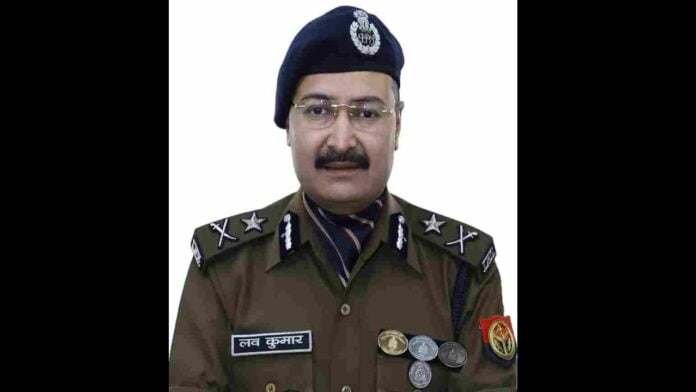
Senior IPS officer Love Kumar (IPS:2004:UP), who has been serving in the Special Protection Group (SPG) since April 2024, will continue to hold the post of Inspector General (IG) for one more year.
According to an order issued by the Department of Personnel and Training (DoPT) on Wednesday (April 22, 2026), the Appointments Committee of the Cabinet (ACC) has approved the proposal of the Office of Secretary (Security), Cabinet Secretariat, to extend his tenure.
Notably, Love Kumar was initially appointed in SPG by temporarily upgrading the DIG-level post held by him to IG level for a period of two years. The latest order extends this arrangement by one more year beyond April 4, 2026, thereby marking the third year of his tenure at the IG level.
The extension continues the temporary upgradation of the post of Deputy Inspector General (DIG) (Level-13A) to Inspector General (IG) (Level-14), indicating that the position remains non-permanent in nature.
The Appointments Committee of the Cabinet (ACC) on Tuesday (April 21, 2026) approved the empanelment of 41 officers from various services for appointment to Joint Secretary or equivalent posts in the Government of India.
This comes close on the heels of an earlier empanelment cleared on April 8, 2026, when 64 officers were approved for Joint Secretary-level posts.
The empanelled officers are from multiple services, including the Indian Administrative Service (IAS), Indian Police Service (IPS), Indian Revenue Service (Income Tax), Indian Railway Traffic Service (IRTS), Indian Railway Accounts Service (IRAS), Indian Audit & Accounts Service (IA&AS), and the Central Secretariat Service (CSS).
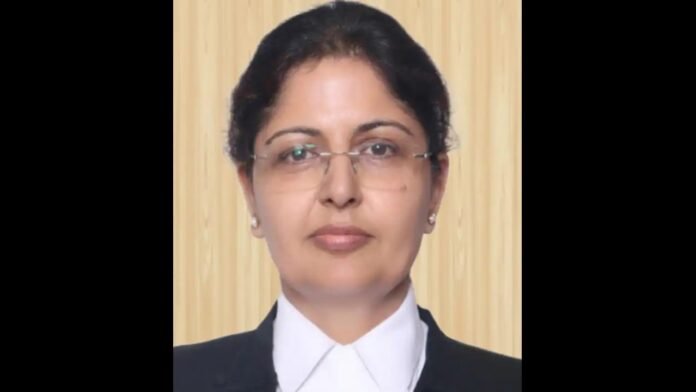
The Union government on Wednesday (April 22, 2026) notified the appointment of Justice Lisa Gill as the Chief Justice of the Andhra Pradesh High Court, making her the first woman to hold the post.
“In exercise of the power conferred by clause (1) of Article 217 of the Constitution of India, the President is pleased to appoint Smt. Justice Lisa Gill, Judge of the Andhra Pradesh High Court, to be Chief Justice of the Andhra Pradesh High Court with effect from April 25, 2026,” read the notification issued by Union Law Minister Arjun Ram Meghwal.
Justice Gill brings nearly 36 years of experience in the legal field, including over 11 years as a judge of the Punjab and Haryana High Court.
She will assume charge on April 25, following the retirement of Dhiraj Singh Thakur on April 24.
Earlier, the Supreme Court Collegium had recommended her name on February 26 for appointment as Chief Justice of the Andhra Pradesh High Court when she was serving as a judge of the Punjab and Haryana High Court.
Last month, Justice Gill was transferred from the Punjab and Haryana High Court to the Andhra Pradesh High Court in line with the policy for early transfers of prospective Chief Justices.
The Central Administrative Tribunal (CAT) has directed the West Bengal government to grant a No Objection Certificate (NOC) for the cadre change to IPS officer Mane Swapnil Tukaram (IPS: 2022: WB). The IPS officer is seeking his cadre to be changed from West Bengal to Karnataka on the grounds of his marriage to Karnataka cadre IPS officer Shaloo (IPS: 2021: KN).
Interestingly, the Karnataka government has already granted its NOC for the proposed inter-cadre transfer of the applicant, but it is the Bengal government that is sitting on the file by neither granting NOC nor communicating any decision, thereby causing undue delay in the matter. It is happening despite repeated representations and requests for processing his application by Mane.
Not only this, but the applicant even sent reminders to the Bengal government for the same and later moved the CAT, which has ruled that the Bengal government’s failure to grant NOC would be considered as NOC deemed to have been issued.
The CAT thus directed the Bengal govt to relieve Mane to join the Karnataka Cadre within the stipulated time frame, failing which the applicant would be deemed to be relieved after the expiry of said period.
A bizarre incident during Bihar Chief Secretary Pratyay Amrit (IAS:1991:BH)’s visit to Kishanganj on Monday has created a flutter in the state’s administrative circles. The Chief Secretary, who was on a Kishanganj visit, became angry after spotting a vehicle with a West Bengal registration number arranged by the local administration to pick him up from the airport.
Pratyay Amrit got so enraged that he flatly refused to ride in it and traveled to the Kishanganj Collectorate in the Purnia Divisional Commissioner’s official vehicle as an alternative, held a meeting with officials there with DGP Vinay Kumar, and returned to Patna without lunch.
The news has become a topic of discussion in administrative circles, as even after the meeting ended, the Chief Secretary’s anger did not subside. It is being reported that Amrit was scheduled to have lunch after the meeting, but he immediately left for Patna without lunch.
The incident has led to administrative circles being abuzz with discussions. Various speculations are being made among officials, while questions are also being raised about the functioning of the district administration.
The Chief Secretary reached Kishenganj to hold a high-level meeting on security in Seemanchal on Monday. He chaired the meeting attended by DGP Vinay Kumar (IPS:1991:BH) along with DMs and SPs of Kishanganj and Araria districts, among others, and officers of the Sashastra Seema Bal (ASSB). Security-related issues in the districts bordering the India-Nepal border were reviewed in this meeting.
It should be noted here that the central government is strict about security in border districts, and just two months ago, Union Home Minister Amit Shah had formulated a strategy to prevent infiltration and encroachment by outsiders in the Seemanchal region. In February, Shah held three days of meetings in Purnia, Kishanganj, Katihar, and Araria districts. He worked with officials from all districts bordering Nepal and senior SSB officers to develop an action plan.
It is reported that Amit Shah will again review security challenges in the districts bordering Nepal in Delhi next month, where Chief Secretary Pratyay Amrit and DGP Vinay Kumar will also be present. That is the reason why the Chief Secretary and DGP were visiting the border districts to review the situation.
Dr Keneilhoutuolie Maichineo (IFoS:2006:CG) has been appointed as Director of Census Operations/Director of Citizen Registration (Director level) for Nagaland for a period of three years.
Awanish Kumar (IAS:2014:AGMUT), currently serving in Lakshadweep as Secretary handling multiple portfolios including Education, Sports & Youth Affairs, Industries, Legal, Art & Culture, and CEO Election, has been given additional charge of Director of Census Operations/Director of Citizen Registration (Deputy Secretary level) in Lakshadweep for a period of three years.
Sonal Swaroop (IAS:2012:AGMUT) has been appointed as Director of Census Operations/Director of Citizen Registration (Director level) for Arunachal Pradesh and Meghalaya for a period of three years.



















 Get Latest Updates