The Public Enterprises Selection Board (PESB) has recommended Ajit Kumar Panda for appointment as Chairman and Managing Director (CMD) of Container Corporation of India Limited (CONCOR). The recommendation was made following interviews conducted on April 18, 2026.
Panda is currently serving as Director (Project & Services) at CONCOR. His name has been forwarded to the Appointments Committee of the Cabinet (ACC) for final approval, subject to vigilance clearance and other prescribed formalities.
The CMD post will fall vacant on August 1, 2026, following the superannuation of incumbent Sanjay Swarup on July 31. Swarup has been serving as CMD since October 2023.
The PESB had invited applications for the post on October 10, 2025, with the last date for submission being November 2, 2025.
The following 8 applicants were interviewed in the selection meeting :
Ajit Kumar Panda, Director (Project & Services), New Delhi, Container Corporation Of India Limited
Harish Chandra, Principal Executive Director (Finance), Company Secretary and CFO, Container Corporation Of India Limited
Dr Alok Badkul, Executive Director cold chain air cargo and CEO FHEL, Container Corporation Of India Limited
Ghalib Ahmed Jillani, Executive Director (Quality Assurance), RITES Limited
Arvind Malkhede, Principal Chief Operations Manager, Central Railway, Ministry of Railways
Navin Kumar Parsuramka, Principal Executive Director, Coaching, Ministry of Railways
Jayant Singh, Chairman, Land Ports Authority of India
Manish Tiwari, Joint Secretary, Consumer Affairs, Ministry of Food And Public Distribution
Bank of Baroda has elevated Sanjay Singh to the rank of General Manager. In his new role, he will head the Financial Inclusion and Corporate Social Responsibility (CSR)vertical of the Bank.
The vertical plays a key role in advancing the Bank’s agenda of inclusive banking, last-mile credit delivery, and community development initiatives across the country.
A seasoned banker with over 28 years of experience, Singh has handled a wide range of responsibilities during his career. His strong understanding of grassroots banking and customer-centric approach is expected to further strengthen the Bank’s efforts in financial inclusion and CSR activities.
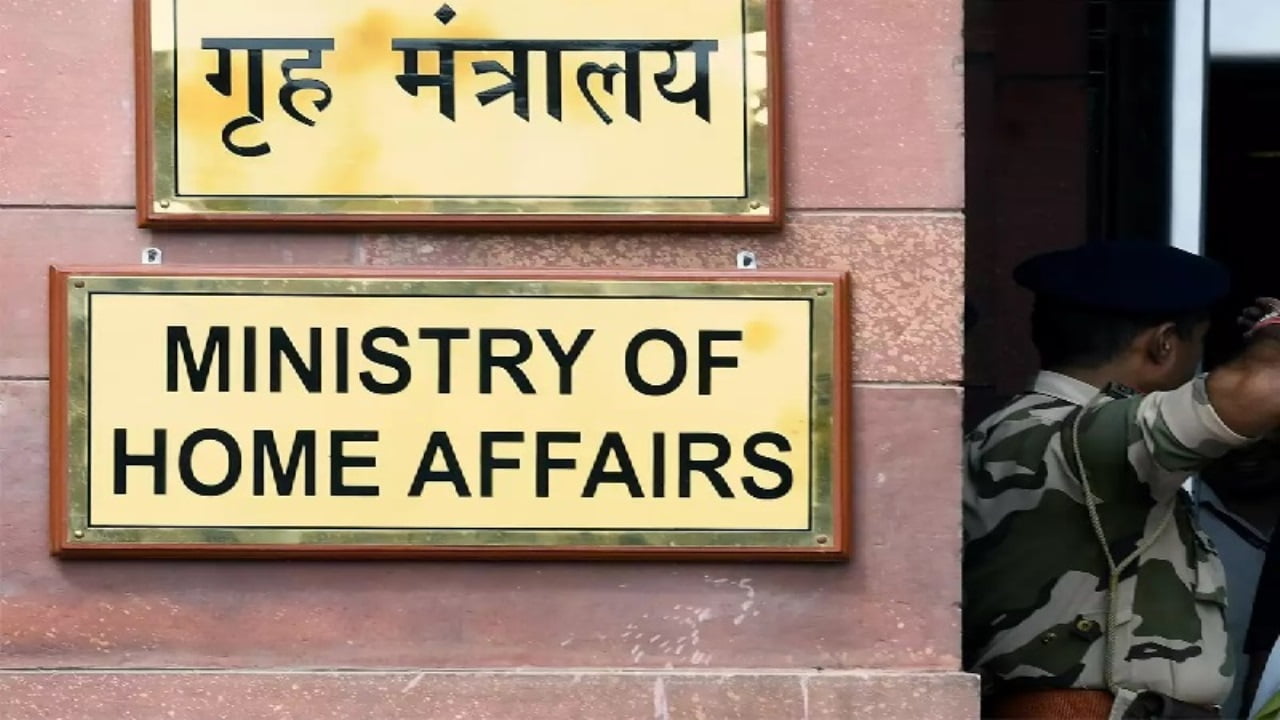
The Ministry of Home Affairs (MHA) has appointed three IPS officers to key positions in the Bureau of Police Research & Development (BPR&D), National Investigation Agency (NIA) and Sashastra Seema Bal (SSB) on central deputation.
K Swarnambika (IPS:2012:NL) has been posted as Superintendent of Police in BPR&D. She was earlier serving at the Auroville Foundation at the Deputy Secretary/Director level since July 2023, with her tenure there scheduled to continue till July 2026.
Vikash Kumar (IPS:2020:CG) has been appointed as Superintendent of Police in NIA. He is currently serving as DCP, Traffic-Protocol in Raipur.
Ashish Kumar Mishra (IPS:2012:AGMUT) has been appointed as Commandant (General Duty) in SSB.
A major storm has erupted within the Madhya Pradesh bureaucracy, particularly among the IPS officers, after BJP MLA from Pichhore, Pritam Lodhi, launched a frontal attack on IPS officer Ayush Jakhar (IPS:2022:MP). The incident has triggered sharp outrage, with the IPS Association demanding strict action against the legislator for openly threatening an IPS officer.
Jakhar, currently serving as Karera SDOP, became the target of Lodhi’s explosive remark, saying, “Karera does not belong to your daddy.” In a highly objectionable video, the MLA is heard issuing an open threat of muscle power, saying, “My fist used to weigh two and a half kilograms; now it weighs 250 kilograms.”
The IPS Association has taken a tough stand on it, and ADG-rank officer Chanchal Shekhar shot off a strongly worded letter on behalf of the Association, terming the MLA’s remarks “derogatory” and “deeply offensive.” The association said such conduct violates the dignity of democratic institutions and sets a dangerous precedent.
“This language undermines the morale and impartiality of police officers and adversely impacts administrative functioning,” the letter stated, adding that public representatives are expected to maintain restraint and not resort to intimidation.
The IPS Association expressed “deep regret” that it happened on the Civil Service Day, a day meant to honour public servants, but instead an officer was subjected to public humiliation and threats.
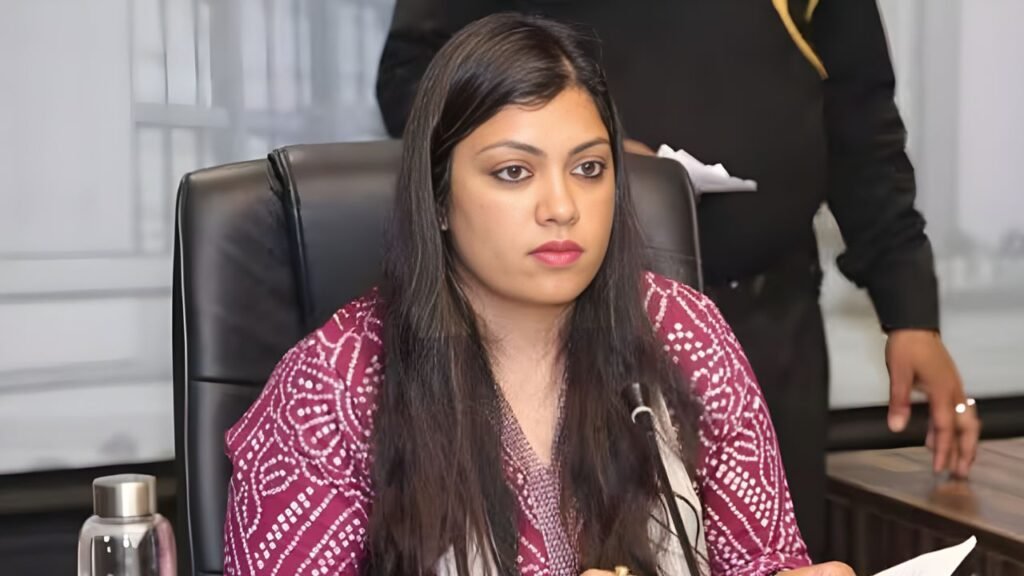
Medha Roopam (IAS:2014:UP) is an Indian Administrative Service (IAS) officer of the Uttar Pradesh cadre from the 2014 batch. Known for her strong administrative approach and consistent performance, she has held several important positions across districts and development authorities in the state. She gained wider recognition after being appointed as the District Magistrate of Gautam Buddha Nagar (Noida) in July 2025, becoming the first woman officer to hold this position.
Throughout her career, Medha Roopam has worked in districts such as Hapur and Kasganj, where she handled key governance challenges including public health programs and disaster management.
She has also contributed at the state level as Additional CEO of Greater Noida Authority, where she was involved in major infrastructure projects like Jewar International Airport and Film City. Her journey reflects a blend of field experience and policy-level work in one of India’s most dynamic states.
Medha Roopam Biography, Age, Family Details & Education
Born in Agra in 1990, she completed her schooling in Kerala, studied at Naval Public School, Ernakulam and St. Thomas School, Thiruvananthapuram. She graduated in Economics (Honours) from St. Stephen’s College, University of Delhi. She cleared the Civil Services Examination in 2013, securing All India Rank 10 with Psychology as her optional subject.
She also has a background in competitive shooting and has won three gold medals in the Kerala State Shooting Championship, representing the state at the national level.
she comes from a family with a strong administrative background. Her father, Gyanesh Kumar (IAS:1988:Kerala), has served in senior positions in the state and at the Centre, and is currently serving as the Chief Election Commissioner. She is married to IAS officer Manish Bansal of same batch (2014), he is posted as DM of Agra in latest bureaucratic reshuffle enacted by state government on April 19, 2026.
Her experience spans district administration, disaster management and urban development, with a focus on public service delivery and governance implementation.
Medha Roopam – Career & Posting Details
Category
Details
Name
Medha Roopam
Service
Indian Administrative Service (IAS)
Batch & Cadre
2014 Batch, Uttar Pradesh Cadre
Current Posting
District Magistrate, Gautam Buddha Nagar (Noida)
Joined as DM Noida
July 2025
Notable Achievement
First woman District Magistrate of Gautam Buddha Nagar (Noida)
Allocated to the Uttar Pradesh cadre, she began her career as Assistant Magistrate in Bareilly and went on to serve in key administrative roles across districts including Meerut, Unnao, Lucknow, Barabanki, Hapur and Kasganj.
Role
Location / Department
Key Highlights
Assistant Magistrate (Initial Posting)
Bareilly
Began administrative career with field-level training
Various Administrative Roles
Meerut, Unnao, Lucknow, Barabanki, Hapur, Kasganj
Gained experience in district governance and administration
She has held important field assignments in the state. As District Magistrate of Hapur, she focused on implementation of immunisation drives and Ayushman Bharat schemes. She later served as District Magistrate of Kasganj, where she handled flood situations and monitored rescue operations on the ground.
Position
District
Work & Contributions
District Magistrate
Hapur
Focused on immunisation drives and implementation of Ayushman Bharat scheme
District Magistrate
Kasganj
Managed flood situations and led on-ground rescue and relief operations
From February 2023 to June 2024, she served as Additional Chief Executive Officer of Greater Noida Authority, where she was associated with major infrastructure and planning projects, including Jewar International Airport and Film City.
Position
Organization
Duration
Work
Additional CEO
Greater Noida Authority
Feb 2023 – June 2024
Worked on major infrastructure and planning projects including Jewar International Airport and Film City
In July 2025, she was appointed as District Magistrate of Gautam Buddha Nagar (Noida), becoming the first woman to hold the post. The role involves overseeing urban governance, infrastructure development and coordination of key projects in one of the state’s most high-profile districts.
Position
District
Responsibilities
District Magistrate
Gautam Buddha Nagar (Noida)
Overseeing urban governance, infrastructure development, and coordination of key projects in a high-profile district
The Punjab and Haryana High Court granted a final opportunity to Haryana cadre IAS officer Mukul Kumar (IAS:2011:HY) to file a long-pending compliance affidavit. But it came with a penalty with the court asking him to pay Rs 1 lakh as costs to be deducted from his salary.
Kumar is currently serving as the Director in the Urban Local Bodies department of the Haryana government.
Justice Sudeepti Sharma’s order came on a contempt of court petition in a service matter filed against the IAS officer.
Justice Sharma observed that the respondent was seeking some more time to file a compliance affidavit, so the last opportunity was being granted to him to file a compliance affidavit, subject to payment of Rs 1 lakh cost to be deducted from his salary.
The Bench directed that the amount be shared equally between the Punjab and Haryana High Court Bar Association, Chandigarh, and the Punjab and Haryana High Court Employees’ Welfare Fund. The matter has now been adjourned to May 25.
The case emanates from a High Court order passed over a year back pertaining to the petitioner-employee’s resignation. The bench was told that the resignation was accepted with retrospective effect nearly three decades back despite its prior withdrawal.
The bench then had held the decision to be without jurisdiction and contrary to settled legal principles and had also quashed the order dated September 6, 1994, while ruling that the petitioner be treated as in service with entitlement to 50 percent back wages.
The ruling came on the petition filed in 2001 by a senior accountant, who initially tendered his resignation on November 1, 1993, with effect from December 1, 1993. But the employer did not accept the resignation and asked him to clear outstanding house-building loan dues. The resignation remained in limbo for months until the petitioner withdrew it on August 8, 1994. Yet, the competent authority on September 6, 1994, accepted the resignation with retrospective effect.
He moved the High Court, which categorically ruled that resignation did not take effect unless accepted through a specific order.
The HC judge also reinforced the principle that a resignation could be withdrawn at any time before it was formally accepted.
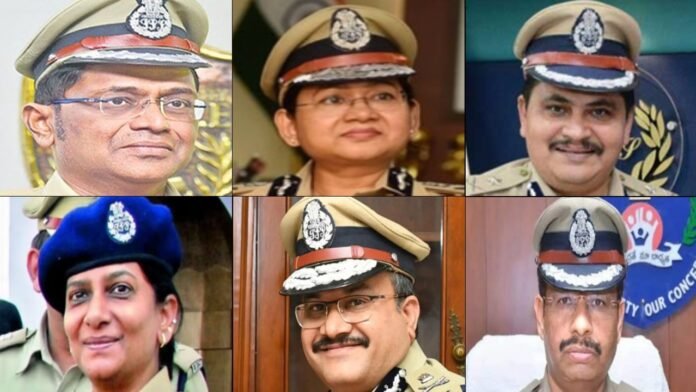
The Telangana government on Wednesday (April 22, 2026) empanelled and promoted six senior IPS officers of the 1995 and 1996 batches to the rank of Director General of Police (DGP).
The officers promoted include VV Srinivasa Rao (IPS:1995:TG), Swati Lakra (IPS:1995:TG), Mahesh Muralidhar Bhagwat (IPS:1995:TG), Charu Sinha (IPS:1996:TG), Anil Kumar (IPS:1996:TG), and VC Sajjanar (IPS:1996:TG).
They have been elevated to the rank of DGP in the Higher Administrative Grade Plus (HAG+) at Level 16 of the pay matrix. The officers will continue to serve in their present assignments on an in-situ basis.
Currently, VV Srinivasa Rao is serving as Chairman of the Telangana State Level Police Recruitment Board (TGLPRB). Swati Lakra is heading the Special Protection Force (SPF), while Mahesh Muralidhar Bhagwat is posted as Additional Director General of Police (Law & Order).
Charu Sinha is serving as Additional Director General of Police in the Crime Investigation Department (CID). Anil Kumar holds the charge of ADGP, Operations, overseeing elite units such as GreyHounds and OCTOPUS. VC Sajjanar is currently serving as Commissioner of Police, Hyderabad.
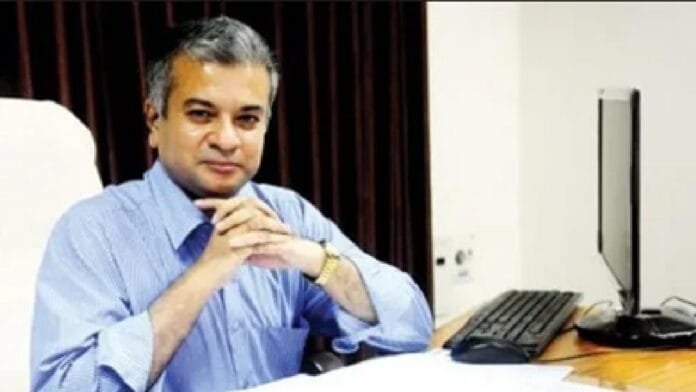
A comprehensive research paper by IAS officer Raju Narayana Swamy (IAS:1991:Kerala cadre), anti-corruption crusader, has brought to light critical structural weaknesses in India’s cybercrime governance, exposing a significant gap between legal provisions and their enforcement on the ground.
Published in the Journal of Law and Public Policy, the 24-page study titled “Mind the Gap: An Empirical Analysis of India’s National Cybercrime Framework and Its State-Level Implementation in Kerala” presents a detailed examination of how India’s cyber laws function within the country’s federal structure. Using Kerala as a case study, the research highlights a paradox: a state known for high literacy and digital penetration continues to struggle with ineffective cybercrime enforcement.
At the core of the study is the concept of an “implementation gap”—the disconnect between de jure legal frameworks and de facto enforcement outcomes. While India has a robust legislative framework under the Information Technology (IT) Act, 2000, the study finds that the effectiveness of these laws is severely undermined at the state level due to institutional, technical, and societal constraints.
One of the most striking findings of the study is the extremely low conviction rate in cybercrime cases. Data from Kerala Police for the period 2009–2019 shows that out of 56 cases where trials were completed, convictions were secured in only three cases, resulting in a conviction rate of just 5.4 per cent. This is significantly lower than the national average of 27.1 per cent. At the same time, the charge-sheeting rate stood relatively high at 60.8 per cent, while pendency remained a major concern at 63.7 per cent, pointing to serious procedural delays and judicial bottlenecks.
The research also highlights a steady rise in cybercrime complaints over the decade, reflecting both increasing digital adoption and growing vulnerability. Financial frauds, cheating, advance-fee scams, job frauds, and cyber harassment such as revenge pornography emerge as dominant categories of cyber offences. Notably, many of these crimes exploit educated youth, underscoring that digital literacy does not necessarily translate into cybersecurity awareness.
A key dimension of the problem lies in the lack of public awareness about cyber laws. Survey data collected from 300 internet users in Kerala reveals that 92 per cent of respondents were unaware of the IT Act or any relevant cybercrime legislation. Even among those who claimed awareness of cybersecurity practices, a majority could not identify basic protective measures, and many reported poor digital hygiene, such as rarely changing passwords. The study further notes that only a small fraction of victims actually approached law enforcement, and among those who did, satisfaction with police response was low.
The limitations of enforcement agencies form another critical aspect of the study. Interviews with 50 law enforcement officials revealed that 94 per cent acknowledged limited proficiency in digital forensics and cyber investigation techniques. Most officers admitted to having only basic or “skeletal” knowledge of cybercrime, which significantly hampers effective investigation and evidence collection. This lack of technical capacity is compounded by inadequate infrastructure and the absence of specialized training.
Jurisdictional challenges further complicate enforcement. The study points out that cyber offences often involve cross-border elements, making investigation difficult due to lack of cooperation from foreign intermediaries and unclear jurisdictional boundaries. A majority of officers reported that success rates in tracking transnational cybercriminals were below 20 per cent. Additionally, overlapping provisions between the IT Act and the Indian Penal Code (IPC) create legal ambiguities, often leading to delays and complications in prosecution.
The federal structure of governance emerges as a key factor contributing to the enforcement gap. While cyber laws are framed at the national level, their implementation falls within the domain of state police forces, which vary widely in capacity and resources. This division creates coordination challenges between central agencies such as CERT-In and state-level cyber cells. The study notes that this fragmentation often results in duplication of efforts, inefficiencies, and delayed investigations.
The research also critically examines institutional initiatives such as Kerala’s CyberDome project, which was designed as a public-private partnership to enhance cyber policing capabilities. While innovative in concept, the study finds that such initiatives have not been able to overcome deeper systemic issues related to legal ambiguity, lack of technical expertise, and weak institutional coordination.
Importantly, the study challenges the assumption that stronger laws alone can address cybercrime effectively. It argues that the problem lies not in the absence of legislation but in the mismatch between legal design and enforcement capacity. The IT Act provides a comprehensive framework, including provisions for interception, monitoring, and data collection, but these remain underutilized or ineffective due to ground-level constraints.
The findings are reinforced by perspectives from law students, academicians, and technocrats. A large majority of law students surveyed agreed that India’s legal and judicial mechanisms are insufficient to tackle cybercrime effectively and that investigative methodologies remain underdeveloped. Experts also emphasized the urgent need for integrating advanced technologies such as artificial intelligence, blockchain-based evidence systems, and secure data-sharing mechanisms into cybercrime investigation.
The study identifies three major dimensions of the implementation gap: an awareness gap among citizens, an institutional gap in enforcement capacity, and a normative gap in the legal framework itself. Issues such as vague definitions within the IT Act and the bailable nature of most cyber offences further weaken the deterrent effect of the law.
In its concluding sections, the paper underscores that effective cyber governance requires more than legislative intent. It calls for a shift from a compliance-based approach to one focused on strengthening institutional capacity and systemic coherence. The study emphasizes that even technologically advanced states like Kerala face significant challenges when legal, administrative, and technological systems operate in silos.
To address these issues, the research recommends a multi-pronged strategy. Key suggestions include strengthening state-level enforcement capacity through specialized forensic training, improving coordination between central and state agencies, and establishing standard operating procedures for handling digital evidence. It also calls for the creation of a shared national cybercrime database accessible to investigators across states and the formation of joint task forces for handling cross-border cases.
Equally important is the need to enhance public awareness through targeted digital literacy campaigns. The study argues that informed citizens are essential for effective cyber governance, as they play a crucial role in reporting crimes and adopting preventive measures. Legal reforms are also recommended to address ambiguities in the IT Act, including reconsideration of the bailable nature of offences and clearer definitions of cyber offences.
Ultimately, the study presents a compelling argument that the success of India’s cybercrime framework depends not only on the strength of its laws but also on the capacity of institutions and the awareness of its citizens. Without systemic reforms, the gap between policy and practice is likely to persist, undermining the promise of justice in the digital age.
The research concludes that cyber governance in India must evolve to match the pace of technological change. Strengthening institutional frameworks, investing in capacity building, and fostering coordination across agencies will be crucial in ensuring that the country’s legal architecture translates into effective enforcement on the ground.
In a significant development, the Central Administrative Tribunal (CAT) on Wednesday pulled up the Madhya Pradesh government over delay in the IPS induction process while hearing a petition filed by three 1998-batch State Police Service officers. These officers had moved the tribunal after being excluded from consideration for IPS induction due to an inordinate delay in it.
The tribunal questioned the functioning of the central and state governments and issued notices to both governments granting them interim relief.
A number of legal experts believe the order could set an important precedent in addressing administrative delays and ensuring accountability in similar cases.
The three officers missed the opportunity for induction into the IPS after crossing the upper age limit of 56 years. They argued that it was due to the delay in conducting the mandatory cadre review that resulted in their disqualification.
As per norms, the cadre review is to be done every five years. According to the petition, it was due in 2018 but was conducted after four years of delay in 2022. As a result, the applicants crossed the prescribed age limit and lost their opportunity for IPS induction despite fulfilling all other eligibility criteria. The officers have completed 26 to 27 years of service.
The petitioners contended that the delay was a clear failure of governance and that they should not suffer due to administrative lapses, seeking relief from the tribunal.
The CAT observed a prima facie case in favour of the applicants and directed that the status quo be maintained. It also issued notices to the central and state governments, seeking their responses.
IPS officer Ashutosh Singh (IPS:2012:CG), currently serving as Superintendent of Police (SP) in the Central Bureau of Investigation (CBI), has been appointed as Deputy Inspector General (DIG) in the agency.
According to an order issued by the Department of Personnel and Training (DoPT) on Wednesday (April 21, 2026), the competent authority has approved his appointment to the post up to December 25, 2030 or until further orders, whichever is earlier.
Notably, Singh has been serving in the CBI since December 2025, when he was inducted as SP for a period of five years.





















 Get Latest Updates