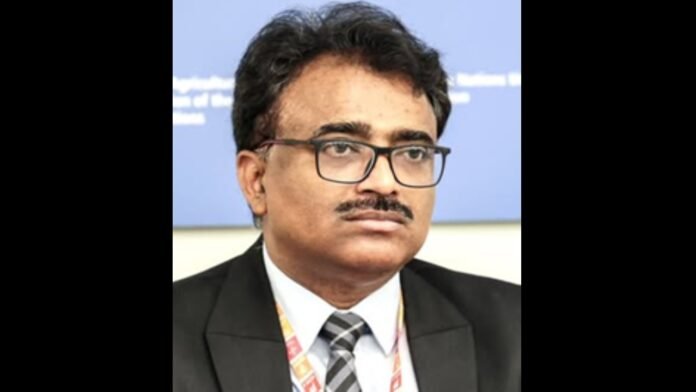
The foreign deputation tenure of Jajjavarapu Balaji (IAS:2001:AM) as Minister (Agriculture) at the Embassy of India in Rome has been extended by four months.
According to an order issued by the Department of Personnel and Training (DoPT) on Thursday (March 5, 2026), the Appointments Committee of the Cabinet (ACC) approved the proposal of the Ministry of Agriculture and Farmers Welfare to extend his tenure.
The extension will be for a further period of four months beyond August 29, 2026, or until further orders, whichever is earlier.
Balaji has been serving in this position since June 2023.
Aman Garg (IRS-C&IT:2008) has been appointed as Senior Country Officer at the International Finance Corporation (IFC), part of the World Bank Group, in its India Office for a period of three years.
According to an order issued by the Department of Personnel and Training (DoPT) on Thursday (March 5, 2026), the competent authority has approved the proposal of the Department of Economic Affairs to allow him to take up the long-term foreign assignment.
The appointment is effective from the date he assumes charge of the assignment or until further orders, whichever is earlier.
Currently, Garg is serving as Director in the Department of Economic Affairs. For this assignment, his ongoing tenure as Director under the Central Staffing Scheme has been curtailed.
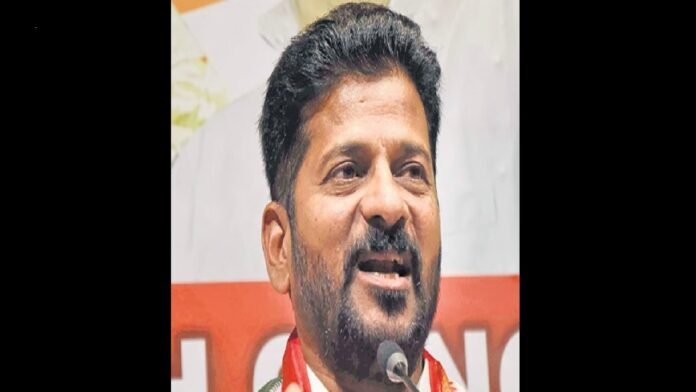
With an eye on the next assembly elections, Telangana Chief Minister Revanth Reddy recently urged senior IAS officers of the state to provide their take on the achievements and shortcomings of the Congress government. It is being done in order to chart out a roadmap ahead of the assembly polls.
CM Reddy said it was the duty of every officer to uphold the public trust through transparent and effective governance. He said this while addressing officials during a review of the 99-day ‘Praja Palana–Pragati Pranalika’ programme.
He claimed that the state has secured investment commitments worth nearly ₹8 lakh crore.
The Telangana CM said that the proposed ‘Future City’ project has the potential to significantly transform the state’s economic trajectory. He asked officials concerned to maintain sharp focus on planning and execution.
He also instructed secretaries to maintain updated data on outsourcing and contract employees across departments.
He was particular about it that no government offices are operated from rented buildings and proposals for which should be incorporated in upcoming budget plans.
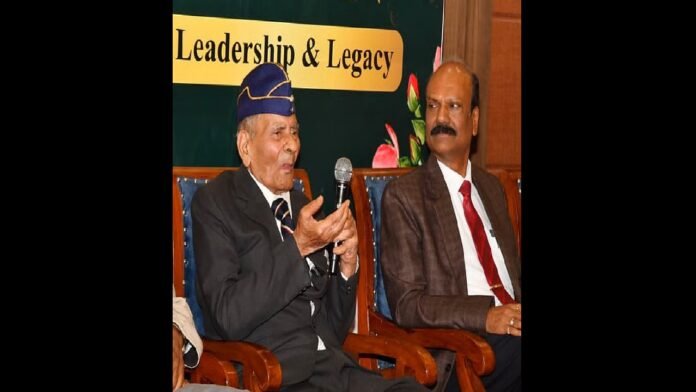
Call him a living legend or a former Madhya Pradesh DGP, but a frail centenarian Harivallabh Mohanlal (HM) Joshi is not an ordinary retired police officer in the twilight of his life. Joshi is the only surviving member of the inaugural 1948 batch IPS, and hence happens to be one of the oldest living links to India’s policing history – its evolution from a colonial era and its transformation into a vibrant police force in a democratic set up post-independence.
Born on March 5, 1926 in Rajasthan, Joshi turned 100 on Thursday. To commemorate his 100th birthday, the Madhya Pradesh IPS Association organized a grand function at the Police Officers’ Mess in Bhopal where Joshi was honoured with a shawl and a bouquet of flowers.
And to add an element of nostalgia, a young IPS probationary of the 2024 batch, Kajal Singh, was selected to honour the legendary top cop with the bouquet. Kajal is currently serving as Assistant Superintendent of Police in Ujjain,
A documentary highlighting Joshi’s robust administrative leadership, his stellar contributions to anti-dacoity campaigns, and outstanding achievements was screened at the function,
Current DGP Kailash Makwana and several of his predecessors and ex-IPS officers were specially present on the occasion to have a glimpse of this legendary officer.
Speaking on the occasion, Joshi described police service as a way to serve society and encouraged officers to work with a spirit of duty and honesty.
Makwana paid tribute by saying that the Joshi’s tenure as MP DGP is remembered as an inspiring chapter in the history of the Madhya Pradesh Police.
He said it was his capable leadership, vision, and determination that he could effectively guide the state police force in difficult circumstances. During his tenure, several important initiatives were taken in the areas of dacoity eradication, crime control, and police welfare,” Makwana reflected.
IPS Association president, ADG Chanchal Shekhar, extended warm greetings to Joshi on this occasion describing him as an inspiration to all serving officers.
The DGP lauded Joshi’s leadership, saying it was his leadership, dedication, and commitment to public service continue to be a source of inspiration for officers and other police personnel.
He said the most significant characteristic of Joshi’s personality and work style was that he always performed his duties with the spirit of “Karma is Worship.”
The Legendofficer salutes this legendary first batch bureaucrat of Independent India on his 100th birthday.
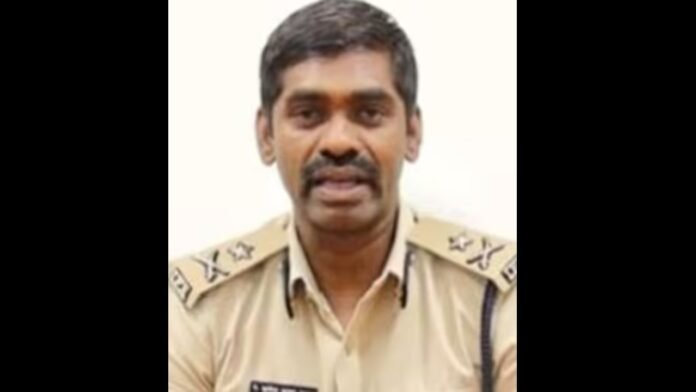
Following directions from the Andhra Pradesh High Court, senior Bihar cadre IPS officer M Sunil Nayak (IPS:2005:BH) appeared before investigating officers for questioning on Thursday in the alleged custodial torture case involving former Andhra Pradesh MP and current Deputy Assembly Speaker K Raghurama Krishna Raju (RRR).
Nayak is currently posted as IG in Bihar Fire Services Department.
According to officials, he reached the CCS Police Station in Guntur, where he was questioned until 5 pm as per the directions issued by the High Court on Monday. Nayak had been directed to appear before the investigators for questioning on a daily basis between March 5 and 9 from 10 am to 5 pm.
Vizianagaram Superintendent of Police (SP) A R Damodar is serving as the investigating officer in the case.
The case dates back to May 2021, when the then YSR Congress MP, Raghurama Krishna Raju, was arrested at his residence in Hyderabad and taken to the CID regional office in Guntur. He was reportedly kept in custody there overnight during which he alleged he was tortured.
On the basis of investigations Nayak, who was serving as DIG of CID at the time on deputation to Andhra Police, visited the CID office multiple times that night and hence was named as an accused in the case.
It should be mentioned here that Andhra Police had arrested Nayak in Bihar but he had to be let off after being denied a transit remand by the Patna’s jurisdictional court due to which he could not be brought to Andhra Pradesh for questioning. Nayak later moved the High Court for anticipatory bail, following which the court directed him to appear before investigators, leading to Thursday’s questioning.
The Gujarat government on Thursday (March 5, 2026) carried out a major reshuffle in the state police administration by transferring 37 IPS officers and assigning them new postings. Of these, all officers have been given fresh responsibilities except Wabang Jamir, who has been placed on the waiting list.
As part of the reshuffle, 1991-batch IPS officer Shamsher Singh has been appointed as the Director of Civil Defence and Commandant General of Home Guards. Meanwhile, 2003-batch officer Ashok Kumar has been posted as Inspector General of Police (IGP), CID Intelligence, in Gandhinagar.
The names of the officers and their postings are as follows;
Shamsher Singh (IPS:1991:GJ), awaiting posting orders, has been posted as Director, Civil Defence and Commandant General, Home Guards, Gujarat State, Ahmedabad.
Ashok Kumar (IPS:2003:GJ), Inspector General of Police, Rajkot Range, Rajkot, has been transferred and posted as Inspector General of Police, CID (Intelligence), Gandhinagar.
Gagandeep Gambhir (IPS:2004:GJ), Inspector General of Police (Administration), Gandhinagar, will hold additional charge of Inspector General of Police, State Monitoring Cell, Gandhinagar.
Gautamkumar M Parmar (IPS:2004:GJ), Inspector General of Police, Bhavnagar Range, Bhavnagar, has been transferred and posted as Inspector General of Police, CID (Crime), Gandhinagar.
Raghavendra Vatsa (IPS:2005:GJ), Joint Commissioner of Police (Crime), Surat City, has been transferred and posted as Inspector General of Police, Ahmedabad Range, Ahmedabad.
Nilesh Bhikhbhai Jajadiya (IPS:2006:GJ), Inspector General of Police, Junagadh Range, Junagadh, has been transferred and posted as Joint Commissioner of Police (Sector-2, Crime and Law & Order), Vadodara City.
Bipin Shankarrao Ahire (IPS:2006:GJ), Additional Director, Anti-Corruption Bureau, Ahmedabad, has been transferred and posted as Inspector General of Police, Cyber Centre of Excellence, Gandhinagar.
PL Mal (IPS:2006:GJ), Inspector General of Police, Coastal Security, Ahmedabad, has been transferred and posted as Additional Director, Anti-Corruption Bureau, Ahmedabad.
NN Chaudhari (IPS:2006:GJ), Joint Commissioner of Police (Traffic), Ahmedabad City, has been transferred and posted as Inspector General of Police, Intelligence-2, Gandhinagar.
AG Chauhan (IPS:2006:GJ), Inspector General of Police (Prison), Ahmedabad, has been transferred and posted as Joint Commissioner of Police (Traffic), Ahmedabad City.
RV Asari (IPS:2006:GJ), Inspector General of Police, Panchmahal-Godhra Range, Godhra, has been transferred and posted as Inspector General of Police, Bhavnagar Range, Bhavnagar.
KN Damor (IPS:2006:GJ), Joint Commissioner of Police, Sector-2, Surat City, has been transferred and posted as Inspector General of Police, CID (Crime), Gandhinagar.
Makrand Govindbhai Chauhan (IPS:2007:GJ), Joint Director, Anti-Corruption Bureau, Ahmedabad, has been promoted and posted as Deputy Inspector General of Police (Law & Order), Gandhinagar.
Parixita V Rathod (IPS:2007:GJ), Inspector General of Police, CID (Crime), Gandhinagar, has been transferred and posted as Inspector General of Police, Banaskantha Range, Palanpur.
Vidhi Choudhary (IPS:2009:GJ), Additional Commissioner of Police (Special Branch), Ahmedabad City, has been transferred and posted as Deputy Inspector General of Police, Panchmahal-Godhra Range, Godhra.
Vishalkumar Baldevbhai Vaghela (IPS:2009:GJ), Deputy Inspector General of Police (Armed Units), Gandhinagar, has been transferred and posted as Deputy Inspector General of Police, State Monitoring Cell, Gandhinagar. He will also hold the charge of Deputy Inspector General of Police, Police Recriutment Board, Gandhinagar.
Leena Patil (IPS:2010:GJ), Additional Commissioner of Police (Crime & Law & Order), Vadodara City, has been transferred and posted as Principal, Gujarat Police Academy, Karai.
Nirlipt Rai (IPS:2010:GJ), Deputy Inspector General of Police, State Monitoring Cell, Gandhinagar, has been transferred and posted as Deputy Inspector General of Police, Rajkot Range, Rajkot.
Dipakkumar Vasudevbhai Meghani (IPS:2010:GJ), Deputy Inspector General of Police (Law & Order), Gandhinagar, has been transferred and posted as Joint Director, Anti-Corruption Bureau, Ahmedabad.
Mahendra Bagria (IPS:2010:GJ), Additional Commissioner of Police (Crime, Traffic & Admin), Rajkot City, has been transferred and posted as Additional Commissioner of Police, Sector-2, Surat City.
Hiteshkumar Hansraj Josyar (IPS:2011:GJ), awaiting posting orders, has been posted as Deputy Inspector General of Police, Intelligence-1, Gandhinagar.
Tarun Duggal (IPS:2011:GJ), awaiting posting orders, has been posted as Additional Commissioner of Police (Administration), Ahmedabad City.
Chaitanya Ravindra Mandlik (IPS:2011:GJ), awaiting posting orders, has been posted as Additional Commissioner of Police (Crime, Traffic & Admin), Rajkot City.
Saroj Kumari (IPS:2011:GJ), awaiting posting orders, has been posted as Deputy Inspector General of Police (Prison), Vadodara.
Rajendrasinh Chudasama (IPS:2011:GJ), awaiting posting orders, has been posted as Deputy Inspector General of Police, Junagadh Range, Junagadh.
RP Barot (IPS:2011:GJ), awaiting posting orders, has been posted as Deputy Inspector General of Police (Prison), Ahmedabad.
GA Pandya (IPS:2011:GJ), awaiting posting orders, has been posted as Deputy Inspector General of Police (Prison), Rajkot.
RT Susara (IPS:2011:GJ), awaiting posting orders, has been posted as Additional Commissioner of Police (Special Branch), Ahmedabad City.
Sudha S Pandey (IPS:2011:GJ), awaiting posting orders, has been posted as Deputy Inspector General of Police (Armed Units), Vadodara.
Sujata Mazumdar (IPS:2011:GJ), awaiting posting orders, has been posted as Deputy Inspector General of Police (Armed Units), Gandhinagar.
Dr Sudhirkumar J Desai (IPS:2012:GJ), Deputy Inspector General of Police (Intelligence), Gandhinagar, has been transferred and posted as Additional Commissioner of Police (Sector-1 & Traffic), Vadodara City.
Balram Meena (IPS:2012:GJ), ADC to Governor, has been transferred and posted as Additional Commissioner of Police, Sector-1, Surat City.
Dr Karanraj Vaghela (IPS:2012:GJ), Additional Commissioner of Police (Economic Wing), Surat City, has been transferred and posted as Additional Commissioner of Police (Crime), Surat City.
SV Parmar (IPS:2012:GJ), Deputy Inspector General of Police, State Reserve Police Force, Group-15, ONGC, Mehsana, has been transferred and posted as Additional Commissioner of Police (Traffic), Surat City.
AM Muniya (IPS:2012:GJ), Deputy Inspector General of Police, State Reserve Police Force, Group-5, Godhara, has been transferred and posted as Deputy Inspector General of Police, Coastal Security, Ahmedabad. He will also hold the charge of Deputy Inspector General of Police, Coastal Security & Intelligence, Gandhinagar.
Mayur Gulabrao Patil (IPS:2014:GJ), awaiting posting orders, has been posted as Deputy Commissioner of Police, Zone-8, Ahmedabad City.
Wabang Jamir (IPS:1999:GJ), Special Commissioner of Police, Sector-1, Surat City, has been transferred and kept on waiting for posting.
The vacancy notification was issued on Thursday (March 5, 2026), with March 27, 2026 set as the last date for submission of applications through the PESB portal. According to the notification, eligible candidates from both the public and private sectors can apply for the position.
The post fell vacant on October 1, 2025, following the superannuation of Pradip Kumar Banik, who had been serving as Director (Production) since his elevation in March 2023.
Notably, PESB had earlier advertised the same post on August 19, 2025, ahead of Banik’s superannuation.
The Public Enterprises Selection Board (PESB) has started the process to select a new Director (Projects) at GAIL (India) Limited after the post fell vacant on March 1. The vacancy arose when the incumbent Deepak Gupta assumed charge as Chairman and Managing Director (CMD) of the company.
PESB issued the vacancy notice on March 3, 2026, inviting applications from eligible candidates for the position. Interested candidates have been asked to submit their applications through the PESB portal, with March 24, 2026 set as the last date for submission.
Notably, Gupta had been serving as Director (Projects) at GAIL since February 2022 before taking over as CMD.
Senior Punjab cadre IAS officer Kamal Kishore Yadav (IAS:2003:PB) has been reinstated after a nearly month-long suspension. He has been posted as Secretary in the General Administration and Coordination Department.
Yadav was suspended along with another IAS officer, Jaspreet Singh (IAS:2014:PB), on February 7 for the inordinate delay in the procurement of smartphones for the Anganwadi workers in the state.
While Yadav has been reinstated and given a posting, Singh is still waiting to be posted.
The Punjab government had cracked the whip last month by placing these two officers under suspension and transferring another very senior IAS officer, Vikas Pratap (IAS:1994:PB), after getting peeved at the six years of delay in implementing its orders to procure smartphones for Anganwadi workers. These triple actions had sent ripples down the spines of those in the corridors of power.
The state govt had ordered the procurement of 28,515 smartphones for Anganwadi workers when Yadav and Singh were posted in the Industry Department. Punjab Infotech, which is an arm of the Industry Department, was assigned the task of procuring the smartphones for the Social Security Department for distribution among Anganwadi workers.
Yadav now replaces Gauri Prashar Joshi (IAS:2009:PB) in the General Administration Department, as she is proceeding on a long leave.
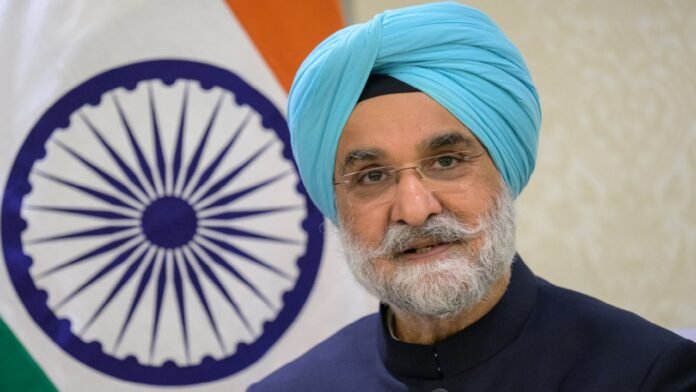
In a major administrative change, the President of India on Thursday (March 5, 2026) appointed Taranjit Singh Sandhuas the new Lieutenant Governor of Delhi. He will succeed Vinai Kumar Saxena, who has been appointed as the Lieutenant Governor of Ladakh after serving in Delhi from May 2022 to March 2026.
Sandhu is a former diplomat-turned-politician and a member of the Bharatiya Janata Party (BJP). A 1988-batch officer of the Indian Foreign Service (IFS), he served as India’s Ambassador to the United States from 2020 to 2024. After retiring from diplomatic service, he was nominated as the BJP’s candidate from Amritsar in the 2024 Lok Sabha elections.
Born on January 23, 1963, in Amritsar, Punjab, Sandhu completed his BA in History from St. Stephen’s College and later obtained an MA in International Relations from Jawaharlal Nehru University.
Diplomatic Career Sandhu began his diplomatic career in 1988 with an early posting in the former Soviet Union. In 1992, he was part of the team that helped establish India’s embassy in newly independent Ukraine. Over the years, he held several key assignments including at India’s mission to the United Nations, as Consul General in Frankfurt, and as Deputy Chief of Mission in Washington, D.C..
He later served as India’s High Commissioner to Sri Lanka from 2017 to 2020 before being appointed Ambassador to the United States. During his tenure in Washington from 2020 to 2024, Sandhu played a key role in strengthening India–US relations, including facilitating Prime Minister Narendra Modi’s state visit to the United States in 2023.
Political Transition After retiring from diplomatic service in February 2024, Sandhu joined the BJP in March the same year. His entry into politics placed him among a group of former diplomats who transitioned to political roles, including S. Jaishankar and Hardeep Singh Puri.
Family Background Sandhu belongs to a prominent Sikh family with a long legacy in public life. His grandfather, Teja Singh Samundri, was a noted freedom fighter and a founding member of the Shiromani Gurdwara Parbandhak Committee (SGPC). His father, Bishan Singh Samundri, founded Guru Nanak Dev University and also served as Principal of Khalsa College Amritsar.
His wife, Reenat Sandhu, is also a former officer of the Indian Foreign Service of 1989 batch. She retired in 2024 after a distinguished diplomatic career during which she served in several important assignments, including as India’s Ambassador to the Netherlands.
With decades of diplomatic experience and a recent entry into politics, Sandhu is now set to assume charge as Delhi’s Lieutenant Governor at a time when the national capital remains at the centre of administrative and political developments.
















 Get Latest Updates