Despite the fact that Madhya Pradesh is going to get a larger share of IAS officers (after the results of the UPSC exam declared on Friday) this time than it had earlier, the state will continue to face a shortage of 68 officers.
The state has nearly 459 sanctioned posts of IAS officers, out of which 320 posts are filled through direct recruitment and 139 posts through promotion.
At present, only 391 officers of both categories are working in the state. Among them, 265 are directly recruited, and 126 officers are promotees.
The MP’s woes are heightened due to retirements. 18 officers retired last year, and a large number of state cadre officers will retire in the next three years, resulting in an additional shortage of IAS officers.
The situation is the same for the State Administrative Service (SAS) officers, as they are unlikely to be promoted to the IAS because of a ban on promotion. For the SAS, 873 posts have been sanctioned, out of which 436 posts are filled up by direct recruits, and the rest, 437 posts, are manned through promotion.
Under the current scenario only half of the sanctioned posts of the SAS officers are working in the state.
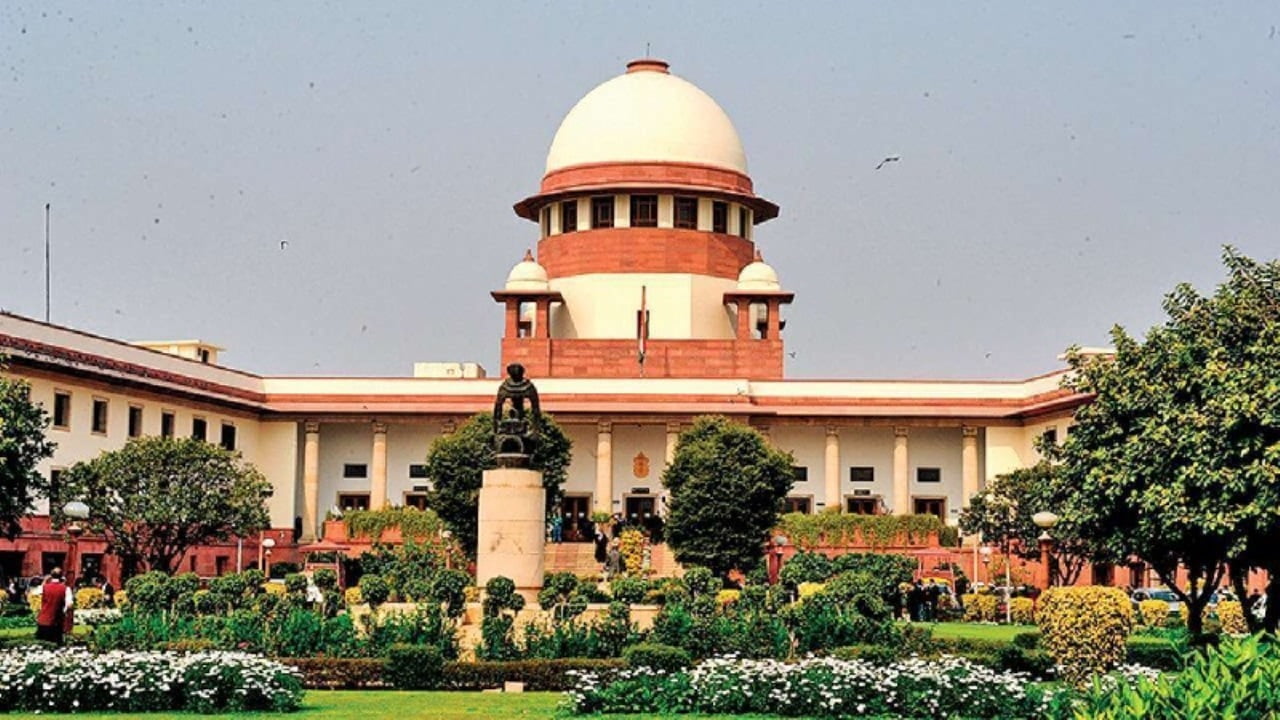
Former Chhattisgarh IAS officer Anil Tuteja, who is facing investigations in several major scams, requested the Supreme Court on Monday to direct the investigating agencies to interrogate him continuously in all the cases and then allow him bail till the completion of trials.
Tutega, who topped the state civil service exam in 1998 and was promoted to the IAS in 2003 and became a powerful bureaucrat in the Bhupesh Baghel-led Congress govt in Chhattisgarh, was recently arrested by the Economic Offence Wing investigating various scams. He now seems to be getting frustrated over the denial of bail due to one case or the other.
It became evident when his counsel, Shoeb Alam, told the bench of Chief Justice Surya Kant and Justice Joymalya Bagchi that agencies have shown a peculiar tendency of arresting him in a different case whenever Tuteja is about to get bail in one.
According to him, Tuteja has been in jail since April 2024 and has volunteered for continuous custodial interrogation by the Economic Offences Wing of Chhattisgarh Police and ED. Once that is done, he should not be arrested in one case or another merely to keep him behind bars, Alam argued.
The bench remarked that Tuteja had wielded significant power and the cases against him related to alleged siphoning of huge sums of public money.
“You have been granted bail by courts in cases where discretion was exercised. But we cannot pass a peremptory order granting bail in all present and future cases,” the bench averred.
The cases against Tuteja as listed by the apex court involve the Rs 175 crore rice milling scam, the Rs 600 crore District Mineral Foundation (DMF) scam, the Rs 540 crore coal levy scam, the Rs 2,000 crore liquor scam, the Nagrik Apurti Nigam (PDS) scam, and the Mahadev Betting App scam.
The bench asked him to seek bail after arrest or anticipatory bail if he apprehends arrest.
The bench even hailed the Chhattisgarh HC’s decision to refuse Tuteja’s omnibus bail plea. The top court bench, however, opined that if he files a bail plea within a week, the HC should decide it on priority within two to four weeks.
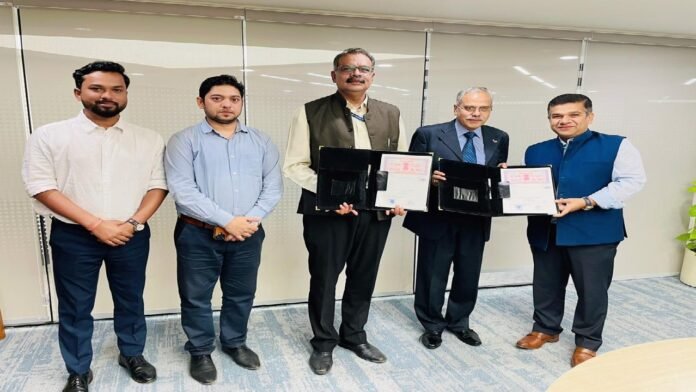
New Delhi, March 9, 2026: REC Limited has committed ₹11.56 crore under its Corporate Social Responsibility (CSR) initiative for the procurement of clinical and non-clinical equipment for Sankara Eye Hospital, Saharsa, Bihar. The project will be implemented by Sankara Eye Hospital with the aim of strengthening healthcare infrastructure and improving access to quality eye care services in the region.
A Memorandum of Agreement (MoA) was signed on March 9, 2026, between Pradeep Fellows, Executive Director (CSR), REC Limited, and Wg Cdr V. Shankar (Retd), Trustee & Executive Director, Sankara Eye Hospital, at the REC Limited office located in SCOPE Complex.
The initiative is expected to significantly enhance the hospital’s capacity to deliver specialized and timely eye care services to the people of Saharsa and surrounding districts of Bihar, particularly benefiting economically weaker sections of society.
Through this initiative, REC Limited continues to reinforce its commitment to strengthening public healthcare infrastructure and promoting accessible, affordable, and quality healthcare services across the country, especially in underserved and remote regions.
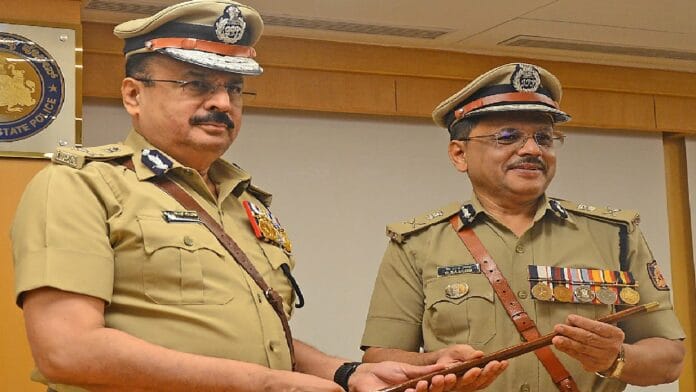
In an attempt to end the practice of the orderly system, the Karnataka DGP, M. A. Saleem (IPS:1993:KN), has ordered the withdrawal of all police personnel posted as orderlies at the residences of senior officers. The DGP has ordered to deploy them to regular policing duties. Though this move has been welcomed by various quarters, it is not without the sense of skepticism being voiced over it given the past experience.
This latest order seeks to deploy some 3,000 police personnel currently engaged in such odd duties back to core policing work.
The orderly system has existed in several parts of this country as a vestige of the British Raj, where police constables are made to perform domestic chores at officers’ residences.
This system continues to exist despite the government sanctioning a limited number of civilian posts by introducing an allowance so that officers could hire domestic help privately.
This system had officially been banned in 2017 following widespread criticism and protests within the constabulary, but it proved largely cosmetic, as many orderlies themselves returned to officers’ residences once the furore calmed down.
This malaise is not Karnataka-specific but a pan-India phenomenon despite occasional condemnation. The National Police Commission recommended its abolition decades ago, arguing that it demoralises the rank and file and diverts manpower from essential police duties. The courts, too, have been scathing.
The orderly system is virtually a symbol of feudalism within the police hierarchy. That is the reason why the Madras High Court described it as a form of “colonial slavery.”
Its condemnation is not restricted to courts alone; even political leaders have expressed outrage. Kerala Chief Minister Pinarayi Vijayan described the system as a form of slavery and a violation of human rights. Some states have already begun experimenting with alternatives.
The Tamil Nadu govt has already formed district-level monitoring committees headed by the collector to track compliance of its abolition, while Telangana has linked the withdrawal of orderlies to broader police reform initiatives. But the tragedy is that despite these moves, the powerful lobby of top-ranking police officers has ensured any such attempts are foiled.
When Dr. Devesh Chaturvedi took charge as Secretary, Ministry of Agriculture and Farmers’ Welfare on August 6, 2024, it was not just another routine posting. He had spent many years working in the agriculture sector. He had seen it from the village level to the state and the Centre.
He succeeded Manoj Ahuja, a 1989 batch IAS officer, who returned to Odisha as Chief Secretary. For Dr. Chaturvedi, agriculture was not new. He had worked in this sector for a long time.
A Rare Blend of Technical and Administrative Depth
Dr. Chaturvedi is a 1990-batch IAS officer. He has a strong academic background. He studied Mechanical Engineering at IIT Kanpur. He completed his M.Tech from IIT Delhi. Later, he did a PG Diploma from IIM Bangalore. He also carried out doctoral research at IIT Delhi, though the degree was not formally awarded.
Those who have worked with him say he studies issues carefully. He looks at data before taking decisions. At the same time, he keeps ground realities in mind.
After completing his training, Dr. Chaturvedi began his career as Executive Magistrate in Etawah. Over the years, he went on to serve as District Magistrate and Collector in several key districts including Pithoragarh, Deoria, Bulandshahr, Kanpur Dehat, Gorakhpur and Prayagraj.
Early Administrative Foundations
These field assignments exposed him to rural realities agricultural distress, supply chains, irrigation challenges, procurement mechanisms and farmer welfare schemes experiences that would later shape his policy perspective.
He subsequently rose to serve as Divisional Commissioner in major divisions including Prayagraj and Lucknow, strengthening his administrative command over large regions.
Diverse Governance Exposure in Uttar Pradesh
Before specialising in agriculture leadership, Dr. Chaturvedi held key positions across multiple departments in Uttar Pradesh. He handled Food & Civil Supplies, Forest, Election, Tourism, Education, Minority Welfare & Muslim Waqf, and the Planning Department. He also served as Director General of the State Planning Institute.
This cross-sector experience sharpened his understanding of governance linkages from supply chain management to rural development and institutional planning.
Two Central Deputation Phases
Dr. Chaturvedi’s exposure to central policymaking came through two deputation stints from June 2007 to May 2012 and again from May 2015 to June 2019. During these tenures, he worked in the Ministry of Tourism, the Department of Personnel & Training, and significantly, in the Department of Agriculture & Farmers’ Welfare.
His second stint in the Agriculture Ministry proved defining. From May 2018 onwards, he served as Joint Secretary and was later elevated as Additional Secretary in the same Ministry. His involvement ranged from policy design to programme monitoring.
After returning to Uttar Pradesh in June 2019, he was appointed Principal Secretary (Agriculture) and later Additional Chief Secretary handling Agriculture, Agriculture Education & Research, Agriculture Marketing, Agricultural Foreign Trade & Export Promotion, along with the charge of Agriculture Production Commissioner. He also held the portfolio of Additional Chief Secretary, Appointment & Personnel, besides serving as Director General (Training), Lucknow.
By the time he was appointed Union Agriculture Secretary in 2024, he had accumulated a rare combination of central policy experience and state-level execution in agriculture governance.
Appointment as Union Agriculture Secretary
His appointment as Agriculture Secretary was widely viewed within bureaucratic circles as a natural progression. Few officers had spent as much time working on agriculture policy at both levels of government.
During his tenure as Secretary (August 2024 – 2026), he focused on strengthening policy coordination, improving Centre–state convergence, and ensuring time-bound implementation of flagship agricultural schemes. His approach emphasised structured monitoring mechanisms and clarity in inter-departmental coordination.
At his farewell ceremony organised by the Ministry, Union Minister Shivraj Singh Chouhan described his tenure as exemplary and marked by foresight and commitment. The Minister highlighted his role in reinforcing implementation efficiency and strengthening institutional processes within the Department.
Leadership Style and Legacy
Colleagues describe Dr. Chaturvedi as methodical, detail-oriented and institution-focused. His tenure did not revolve around headline-driven interventions but around system strengthening — an approach that often defines long-term administrative impact.
What distinguished his leadership was the continuity he represented. Having handled agriculture in Uttar Pradesh extensively and later at the Centre, he understood both the policymaker’s constraints and the implementing officer’s challenges.
His career reflects a broader pattern within the IAS where technical expertise, field administration, and central policy exposure converge to produce sectoral specialists.
As he demits office, his journey stands as an example of how sustained sectoral engagement can shape national-level leadership. In the evolving landscape of agricultural reforms, his tenure represents a bridge between policy architecture and ground-level execution.
With an eye on the forthcoming municipal corporation elections, the Gujarat government on Saturday appointed Administrators to the six Municipal Corporations—Ahmedabad, Vadodara, Surat, Rajkot, Jamnagar, and Bhavnagar. These administrators will now take over the functioning of the Municipal Corporations as the term of their elected bodies ends on March 9 (Monday).
The Urban Development and Urban Housing Department of the state govt followed suit and issued similar orders for the Municipal Corporations that will see their five-year term coming to an end next week.
According to the govt orders, the Education Department’s Principal Secretary, Mukesh Kumar (IAS:1996:GJ), has been appointed as Administrator of the Ahmedabad Municipal Corporation.
The Managing Director of the Gujarat Urja Vikas Nigam Ltd. (GUVNL), Shalini Agarwal (IAS:2005:GJ), has been deputed as the Administrator of the Vadodara Municipal Corporation.
Milind Torwane (IAS:2000:GJ), currently serving as Education Secretary, has been named Surat civic body’s Administrator, and Remya Mohan (IAS:2007:GJ) will be in charge of the Rajkot civic body.
Similarly, Aarti Kanwar (IAS:2001:GJ) will administer the Jamnagar civic body, and the Social Justice and Empowerment Secretary, Harshad Patel (IAS:2005:GJ), has been posted as Administrator of the Bhavnagar Municipal Corporation.
While Remya Mohan was posted earlier in Rajkot as its District Collector from 2019 to 2021, Milind Torwane served as Surat Municipal Commissioner between 2014 and 2016.
Similarly, Shalini Agarwal earlier served as Vadodara Municipal Commissioner from 2021 to 2022. She was recently transferred from Surat, where she was the Municipal Commissioner, to the post of MD GUVNL in Vadodara.
According to reliable sources, the notification for the civic polls is likely to be made after the conclusion of the ongoing Assembly session on March 22. The fact of the matter is that these elections are delayed and were originally meant to be held in December, but they were last delayed in 2020-2021 due to the outbreak of the Covid-19 pandemic. And hence the corresponding delay.
As per the GPMC Act, due to the Disaster Management Act also being in place at that time, the Municipal Commissioners of respective civic bodies were appointed as CEOs instead of appointing fresh administrators. However, since the last election was held in February 2021, the cycle of the civic body polls has now changed.
These elections are now likely to be held at the end of April or in the first week of May.
The Telangana government has proposed to extend the tenure of Chief Secretary K Ramakrishna Rao (IAS:1991:TG) by another three months. It sent its proposal to the Centre for approval last week.
Rao is already on a seven-month extension, which is expiring on March 31. He retired in Aug last year. The state govt has now requested a further extension until June.
In order to substantiate his request for an additional three-month extension for Ramakrishna Rao, Telangana Chief Minister A. Revanth Reddy has cited examples of Odisha and Madhya Pradesh, where retired Chief Secretaries were granted a one-year extension. So, even if Rao is granted the proposed extension, his total extended tenure would remain less than a year.
It is necessary to remind here that Chief Minister Reddy had also personally raised the issue with Union Home Minister Amit Shah when they met in Delhi recently to discuss issues related to surrendered Maoists.
The Home Minister is said to have not given any such assurance of extension but informed the CM that he would bring the matter to the notice of Prime Minister Narendra Modi.
A top IAS officer says that a one-year extension is only an exception for which the state govt is supposed to give reasons for the continuation of any officer, but in an extraordinary case like in UP, even a two-year extension (one year each) was given to the chief secretary in view of elections.
The reason why the Telangana govt is so keen to continue Ramakrishna Rao as Chief Secretary until the end of June is that it has recently launched its ambitious 99-day Praja Palana-Pragati Pranalika programme. This programme is being implemented across the state and will conclude on June 12. The govt thinks that appointing a new chief secretary at this stage would mean delaying the programme as the new incumbent would need time to familiarise himself with the initiative.
But it does not mean that the state govt is sitting idle hoping that the Centre will approve its request. Rather, it is already examining alternative options in case the proposal is not approved. Though there are around 10 senior IAS officers of Special Chief Secretary rank in the state, two 1992 batch IAS officers—Jayesh Ranjan and Vikas Raj—are clear frontrunners.
While Jayesh Ranjan is currently heading the Municipal Administration Department, Vikas Raj is looking after the Transport, Roads, and Buildings Department.
Besides these two, Shashank Goel (IAS:1990:TG) is the senior-most IAS officer in the state cadre, but he is presently serving the Union Govt on deputation and is unlikely to return to the state.
The Supreme Court vehemently criticized the perfunctory attitude of litigants, particularly government authorities, in complying with court orders. The apex court noted that govt bodies often file appeal or review petitions only when they face the prospect of contempt proceedings being initiated against them. The court said such conduct needs to be dealt with strongly, as it is eroding public trust in the judiciary.
A bench of Justices Ahsanuddin Amanullah and R Mahadevan said instead of being an exception, delayed appeals are increasingly becoming the norm in recent years.
The bench warned that such conduct undermines the authority of courts and may amount to criminal contempt in certain situations.
The Supreme Court’s strong observations came while hearing a contempt petition against officials of the Government of Chhattisgarh for failing to comply with a court order regarding the regularisation of certain employees.
The top court also dismissed the usual argument given in defence by authorities citing administrative hurdles or impossibility of implementing orders, saying such arguments cannot be raised during contempt proceedings if the court is not informed about the difficulty within the stipulated time.
The court finally granted the Chhattisgarh govt a final opportunity to implement the order within 15 days but not without instructing High Courts to take a strong view of such cases, especially when the litigants are state authorities or bodies covered under Article 12 of the Constitution.
Terming such litigants as “unscrupulous,” the top court asked High Courts to deal properly with such “unscrupulous litigants,” more so when they happen to be “state,” within the meaning of Article 12 of the Constitution, or like bodies, with an iron hand.
“It is the solemn duty of all of us manning courts across the hierarchy to ensure that the public faith never wavers,” the Supreme Court remarked.
While noting that justice must be tempered with mercy, the court said strong action is necessary in cases involving dishonest litigants and suggested that the judiciary may need to reconsider its “liberal approach to contempt.”
The bench also clarified that contempt proceedings are not limited only to parties directly before the court, but third parties or officials involved in the decision-making chain could also be held liable for non-compliance.
In a landmark verdict addressing the growing incidents of transfers of non- and retired IAS officers to IAS cadre posts by the political establishment in Kerala, the Central Administrative Tribunal (CAT) on Friday ruled that this practice should be stopped. The tribunal held that all posts notified as cadre posts by the Union Government must be filled only by serving IAS cadre officers.
As the petition had been moved by the Kerala IAS Association, the tribunal directed the Kerala government not to fill up such posts with non-IAS or retired IAS officers.
In a significant move, the tribunal brought the Civil Services Board (CSB) into active play by ruling that all appointments, transfers, and postings of IAS officers in Kerala should be done only in consultation with the CSB.
These directions were passed by the CAT’s Ernakulam Bench, comprising Justice Sunil Thomas and V. Rama Mathew, judicial and administrative members, respectively.
The CAT’s order came on a plea by the Kerala IAS Association and two of its members—IAS officers B. Asok and Priyanka G.—who had alleged violation of the IAS Rules, 1954, and IAS Amendment Rules, 2014, as well as indiscreet transfers and postings of IAS officers and filling up of cadre posts with non-IAS officers.
The petitioners contended that all appointments and transfers of cadre officers ought to be done on the recommendations of the CSB and as per rules, a cadre officer appointed to a cadre post shall hold the office for at least two years.
They also alleged that there have been frequent transfers of IAS officers in Kerala without the CSB’s recommendation and cited the three specific instances of ‘encadre posts’ being filled up by non-IAS officers or retired IAS officers.
The Tribunal set aside three transfer orders, including that of senior IAS officer B. Ashok Kumar with a retired IAS officer, observing that the prescribed procedures under the cadre rules had not been followed.
In a significant observation, the tribunal also declared the appointment of IPS officer M R Ajith Kumar as the Excise Commissioner as illegal.
The bench then clarified that the posts of Excise Commissioner, Director of the Kerala Institute of Local Administration (KILA), and Director General of the Institute of Management in Government (IMG) were IAS cadre posts.
The tribunal added teeth to its verdict by saying if any of the said posts are held by non-IAS officers/retired IAS officers, they shall be removed forthwith and the posts shall remain vacant.
It further declared that the filling up of IAS cadre posts by non-IAS officers/retired IAS officers, by redesignation, renaming, or by any other method, and keeping the IAS cadre posts vacant, was irregular and deemed to be a colourable exercise of executive functions.
The state government, however, denied the allegations, saying non-IAS or retired IAS officers were not posted against the posts notified for IAS officers. The govt also contended that the CSB has not been disbanded and there was no indiscriminate transfer or posting of IAS officers in the state.
Whatever the reality on the ground, this judgment surely brings relief to many IAS officers in the state and could lead to a significant reshuffle at the senior bureaucratic level in the days to come.
The Ministry of Home Affairs has appointed five IPS officers to key positions in central police organisations. The officers have been posted in the Border Security Force (BSF), Indo-Tibetan Border Police (ITBP) and the National Crime Records Bureau (NCRB).
Three officers have been appointed in the BSF. One of them will serve as Inspector General while two others have been posted as Deputy Inspectors General.
IPS officer Rajpal Meena (IPS:2007:KL) has been appointed as Inspector General in the BSF.
Two officers have been appointed as DIG in the force. They are Arun Mohan Joshi (IPS:2006:UK) and Jai Yadav (IPS:2012:UK).
Meanwhile, Neeru Garg (IPS:2005:UK) has been appointed as Deputy Inspector General in the Indo-Tibetan Border Police (ITBP).
In a separate order, Mukhtar Mohsin (IPS:2005:UK) has been appointed as Deputy Director at the National Crime Records Bureau (NCRB). The post is at the DIG level.
The Ministry of Home Affairs issued five separate orders for these appointments.













 Get Latest Updates