The Madhya Pradesh bureaucracy is witnessing a race amongIAS and IPS officers to grab a slot in the State Information Commission. Even some retired bureaucrats have joined the fray, complicating the competition. There are at present three posts of the Information Commissioner that are lying vacant.
Among the IAS officers who have applied for these posts are Sanjay Mishra (IAS:2011:MP) and Vandana Vaidya (IAS:2009:MP). Both of them are serving civil servants but are ready to leave their present jobs to become Information Commissioners.
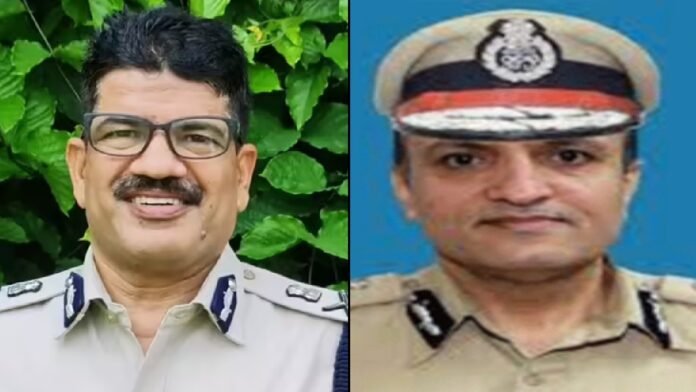
Among the IPS officers who have applied for the Information Commissioner’s posts are 1991-batch IPS officer GP Singh and 1989-batch IPS officer Mukesh Jain. In addition to them, another IPS officer of the 1992 batch, Pawan Shrivastava, has also applied for the post, though he is retiring on December 31.
Among the retired civil servants trying their luck are Sanjay Gupta, Virendra Singh Rawat, Naresh Pal, Rajesh Kaul, Ravindra Singh, and Snrinivas Sharma.
The list is exhaustive, as the officers retired from other administrative jobs are also flexing their muscles apart from the 51 journalists in the ring. Besides, there are a few others associated with the RSS who are also said to be lobbying for the posts.
Two senior IPS officers of the 1994 batch were left out of the Odisha government’s promotion list issued on Tuesday, setting off quiet chatter in police and bureaucratic circles. ADG-rank officers Sanjeeb Panda and Yeshwant Jethwa, both eligible for elevation for over a year, were expected to make the cut but did not figure in the latest order.
Panda currently heads the state’s anti-Naxal operations, while Jethwa is serving as Vigilance Director. Their absence from the list has raised eyebrows within the IPS community, particularly because both names were being closely tracked ahead of any future changes in the police leadership. Although DGP Y B Khurania is in tenure until August 2026, talk of a possible shift at the top has been simmering for some time.
According to officials in the Home Department, the promotions could not move forward due to the absence of sanctioned vacancies at the DGP level. One senior official maintained that the two officers met all eligibility requirements but added, off the record, that the vacancy position was the only hurdle.
Odisha has four sanctioned DGP posts—two cadre and two ex-cadre—but six officers already hold the rank: Y B Khurania, Sudhanshu Sarangi, Sapna Tewari, Susanta Nath, Vinaytosh Mishra and R P Koche. Sapna Tewari is currently on central deputation. With five officers serving in-state, officials say any addition would push the strength beyond what the government is willing to allow at present.
Not everyone agrees with that reasoning. A senior police officer pointed out that there have been earlier occasions where six or even seven officers were simultaneously at DGP rank, despite the sanctioned strength remaining unchanged at four.
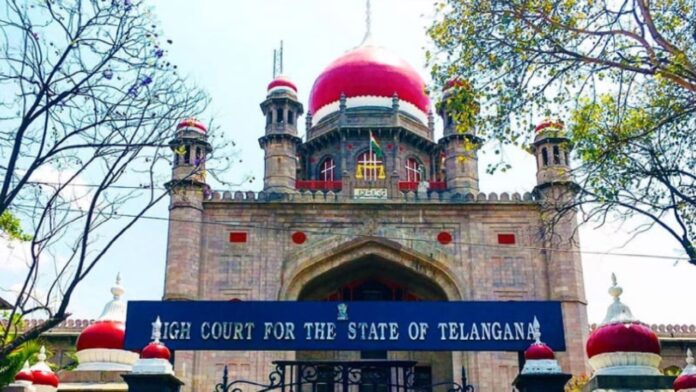
In an important development, the Telangana High Court has set aside an order passed by the Hyderabad bench of the Central Administrative Tribunal (CAT) providing a shield to an IPS officer couple from penalties over a 16-month overstay in Andhra Pradesh. The HC passed the order upholding a Ministry of Home Affairs (MHA) memorandum that termed the overstay as “unauthorised” while allowing it to go ahead with its proceedings against the duo.
The case dates back to 2011 when the IPS couple, D Kalpana Nayak, an IPS officer of the 1998 batch, and her husband, Mahender Kumar Rathod, a 2001 batch officer, were sent on inter-cadre deputation to erstwhile AP for a five-year term. She is currently serving as Additional Director General of Police (ADGP) in CID while her husband now holds IG rank.
Despite their sanctioned tenure lapsing in Jan 2016, the couple continued to serve in the newly carved state of Telangana until May 2017. This led the MHA to initiate action against them. The couple faced loss of service increments and recovery of excess payments made to them during the period of overstay.
The couple argued that following the state’s bifurcation, their delay was caused by administrative requirements and a significant shortage of senior officers in Telangana.
But the division bench comprising Chief Justice Aparesh Kumar Singh and Justice G M Mohiuddin emphasised in its order on Dec 24 that under the Indian Police Service (IPS) Cadre Rules, 1954, the central govt wielded exclusive authority over the movement of cadre officers and dismissed the duo’s pleas.
The HC also observed that a borrowing state—erstwhile AP and later Telangana—had no power to unilaterally extend a deputation beyond the period sanctioned by the Centre.
The court also pointed out that the request for their extension was initiated by the officers themselves through individual representations.
The court reprimanded them, saying as senior All-India Service (AIS) officers, the couple was obliged to comply with the central government’s orders and report any delays to the MHA. The HC clearly stated that the couple’s failure to do so invited action, which was necessary to uphold the rule of law.
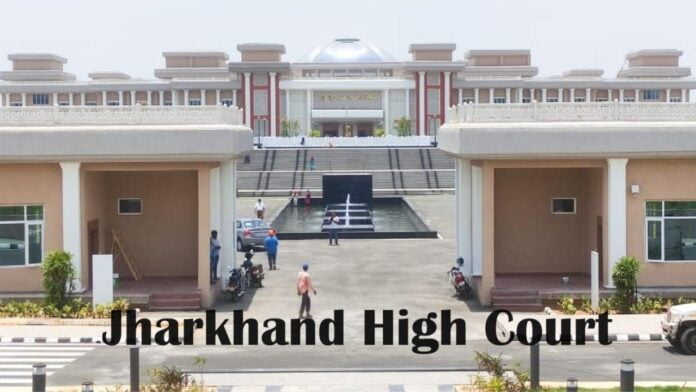
In a ruling that has the potential of unleashing far-reaching consequences, the Jharkhand High Court has held that prior sanction under Section 197 of the Code of Criminal Procedure (CrPC) cannot be used as a shield to protect corrupt public servants. While upholding criminal proceedings against former IAS officer Pooja Singhal (IAS:2000:JH), the court ruled that prior sanction is required only when such acts are reasonably connected to the discharge of official duties.
The court gave its ruling, taking cognizance against Singhal.
Singhal had moved the court, saying that criminal proceedings under the Prevention of Money Laundering Act (PMLA) against her were invalid, as no prior sanction was secured.
The High Court ruled that sanction is required only when the alleged offence is directly and reasonably connected to the discharge of official duties. The court put it clearly, saying the protection under Section 197 CrPC is not intended to shield corrupt public servants from criminal prosecution.
According to the court ruling, acts that are personal, illegal, or motivated by corruption, even if committed during the tenure of public office, do not attract the protection of prior sanction.
The interpretation of Section 197 of the CrPC came after a writ petition was filed by Singhal seeking to quash a cognizance order passed by a Special Judge of the Prevention of Money Laundering Act (PMLA) court on July 19, 2022.
The cognizance was taken in which Singhal was accused of offences under Sections 3 and 4 of the Prevention of Money Laundering Act, 2002.
Singhal contended that since the alleged acts occurred while she was serving as a public servant, prior sanction under Section 197 CrPC was mandatory, and in its absence, the proceedings were legally unsustainable.
A single-judge bench of Justice Ambuj Nath examined whether the alleged offences had a reasonable connection with official duties. The bench seems to have relied on a Supreme Court jurisprudence that draws a clear distinction between official acts and criminal misconduct in the name of official action.
The HC clearly defined the purpose of the Act, saying money laundering and corruption cannot be considered acts done in discharge of official duty; merely being a public servant does not automatically attract Section 197 CrPC; and granting sanction in such cases would defeat the purpose of anti-corruption laws.
The Odisha government on Tuesday (December 30, 2025) issued promotion orders for 16 Indian Police Service (IPS) officers belonging to different batches. The promotions have been granted to various ranks and grades based on the officers’ length of service and eligibility under the prevailing service rules.
At the senior level, two IPS officers of the 2001 batch have been promoted to the Additional Director General of Police (ADGP) grade, corresponding to Level-15 of the Pay Matrix. These include Shynis S and Soorya Thankappan, with the latter receiving a proforma promotion.
Three officers of the 2008 batch have been elevated to the Inspector General of Police (IGP) grade, Level-14 of the Pay Matrix. The promoted officers are Dr Satyajit Naik, Dr Umashankar Das, and Prakash R, who has been granted a proforma promotion.
In the Deputy Inspector General of Police (DIGP) grade, corresponding to Level-13A of the Pay Matrix, two officers of the 2012 batch have been promoted. They are Madkar Sandeep Sampat and Sudhansu Sekhar Mishra, with Mishra receiving a proforma promotion.
Six IPS officers of the 2013 batch have been promoted to the Selection Grade (Level-13 of the Pay Matrix). The officers include Jagmohan Meena, Parmar Smit Parshottamdas, and Mukesh Kumar Bhamoo. Proforma promotions have been granted to Rahul PR, Anupama James, and L Divya V.
At the junior level, three officers of the 2017 batch have been promoted to the Junior Administrative Grade (JAG), corresponding to Level-12 of the Pay Matrix. These officers are Swathy S Kumar, Siddharth Kataria, and Prahlad Sahai Meena.
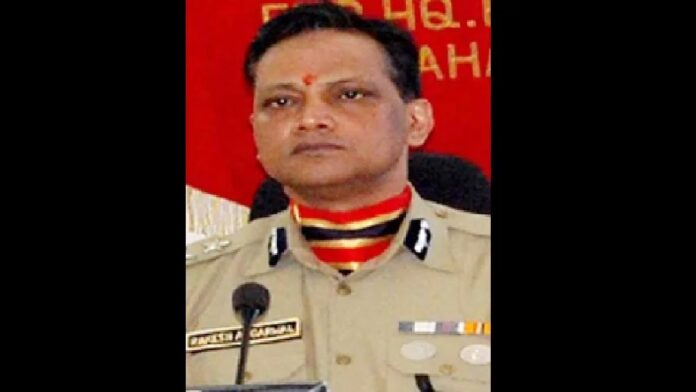
The Ministry of Home Affairs (MHA) has given Rakesh Aggarwal (IPS:1994:HP) additional charge as Director General (DG) of the National Investigation Agency (NIA). The move comes after Sadanand Vasant Date (IPS:1990:MH), who was heading the agency, was prematurely sent back to his parent cadre Maharashtra.
Aggarwal, a 1994-batch IPS officer from Himachal Pradesh cadre, is currently Special Director General of the NIA. He took over that role on September 29, 2025, after his post was upgraded on an in-situ basis from Additional DG level. His term as Special DG was cleared for two years or until further orders.
As per an Office Memorandum issued by the MHA, Aggarwal will now look after the duties of NIA Director General with immediate effect, until a regular appointment is made or the government issues fresh instructions. The move ensures there is no gap in leadership at the country’s main counter-terror investigation agency.
The stage is now set for a new DGP to take over in Haryana with the dawn of New Year. The Governor issued relieving orders of officiating DGP O P Singh (IPS:1992:HR) on Tuesday as he is retiring on Dec 31. On the other hand, in order to finalise the list of IPS officers sent by the Haryana govt for appointment as a new DGP, the UPSC convened its empanelment committee meeting on Wednesday.
The Haryana govt is expected to name the new chief of the state police on Jan 1 after the USPC finalizes the panel by shortlisting the candidates.
IPS officer O P Singh had been given the charge of DGP after Shatrujeet Kapur (IPS:1990:HR) was asked to proceed on leave following the allegation of his alleged involvement in the suicide of fellow IPS officer, Y Puran Kumar (IPS:2001:HR), and was later relieved of the DGP charge in the second week of Dec after he returned from around two months’ leave.
Interestingly, Kapur’s name also figured among the names of five IPS officers sent to the UPSC for shortlisting by the Haryana govt earlier.
Apart from Kapur, the other four names forwarded by the Haryana govt are S K Jain, a 1991 batch IPS officer posted as DGP (human rights); Ajay Singh, a 1992 batch IPS officer posted as Director General, Haryana State Vigilance and Anti-Corruption Bureau; and 1993 batch IPS officers Alok Mittal and A S Chawla. Mittal is posted as Managing Director of Haryana Police Housing Corporation, with additional charge of resident commissioner, New Delhi. Chawla is Director of Haryana Police Academy (HPA), Madhuban.
The UPSC’s empanelment committee meeting is attended by its members, including an officer from the Department of Personnel and Training (DoPT), Haryana Chief Secretary or Additional Chief Secretary (Home), and the incumbent DGP of the state police.
In a significant move to further strengthen quality assurance and quality control in National Highway development, the National Highways Authority of India (NHAI) has signed a Memorandum of Understanding (MoU) with the National Test House (NTH), a premier quality testing institution under the Ministry of Consumer Affairs, Government of India.
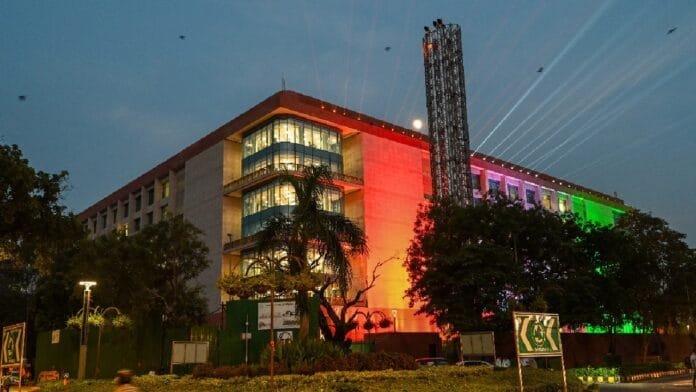
The MoU was signed at the NHAI headquarters in New Delhi by Vipensh Sharma, Member (Projects), NHAI, and Dr. Alok Kumar Srivastava, Director General, NTH. The signing ceremony took place in the presence of NHAI Chairman Santosh Kumar Yadav and Bharat Khera, Additional Secretary in the Ministry of Consumer Affairs, along with senior officials from both organisations.
The agreement aims to reinforce quality assurance and quality control mechanisms in National Highway projects through independent, third-party testing of construction materials, components and systems. This initiative is expected to ensure strict adherence to prescribed standards and technical specifications.
Under the MoU, the National Test House will undertake testing and certification of materials and products used in highway projects in accordance with specifications issued by the Ministry of Road Transport and Highways (MoRTH), Bureau of Indian Standards (BIS) codes and relevant international standards. This will help promote uniformity, standardisation and regulatory compliance across National Highway projects.
The NTH will also provide technical support to NHAI headquarters, regional offices and project implementation units by offering expert testing, evaluation and technical opinions in complex and critical cases during project execution.
In addition, the collaboration will support NHAI’s initiatives to enhance road safety and sustainability. Special emphasis will be placed on assessing the performance, reliability and energy efficiency of safety-critical infrastructure components, including roadway lighting systems.
The MoU further provides for institutional collaboration through capacity building and knowledge sharing. This includes training programmes for NHAI officers and stakeholders, as well as the dissemination of best practices in material testing, quality assurance and infrastructure management.
By partnering with a nationally recognised and technically competent testing institution, NHAI aims to strengthen its quality assurance framework while enhancing transparency and accountability in highway construction. The collaboration underscores NHAI’s commitment to delivering reliable, safe and world-class National Highway infrastructure across the country.
The Appointments Committee of the Cabinet (ACC) on Tuesday (December 30, 2025) approved the redesignation of three officers from the 2012 batch of different services to the rank of Director, with effect from January 1, 2026. All three officers are currently serving at the Deputy Secretary level in their respective departments.
Among those redesignated is Ravinder Kumar (IAS:2012:AGMUT), who is presently serving as Private Secretary to Union Agriculture Minister Shivraj Singh Chouhan at the Deputy Secretary level.
The ACC has also approved the redesignation of Arun G (IES:2012), who is currently posted as Deputy Secretary in the Department of Agriculture and Farmers Welfare.
The third officer, Prerna Joshi (IES:2012), has also been upgraded to the Director rank. She is presently serving as Deputy Secretary in the Central Information Commission.
In a major administrative decision, the Central Board of Direct Taxes (CBDT) on Tuesday (December 30, 2025) placed 145 Joint Commissioners of Income Tax in the Non-Functional Selection Grade (NFSG) at Level-13 of the Pay Matrix, with effect from January 1, 2026. According to Notification issued by the Department of Revenue, Ministry of Finance, the 2013 batch officers have been granted NFSG in Pay Band-4 (₹37,400–67,000) with Grade Pay of ₹8,700 (pre-revised).
The upgradation is non-functional in nature and does not involve any immediate change in posting or assignment. Such NFSG placements are part of the career progression framework for Group ‘A’ officers and are granted subject to eligibility and vigilance clearance.













 Join Us on WhatsApp