The Appointments Committee of the Cabinet (ACC) has approved the appointment of two senior officers as Joint Secretaries in the Eighth Central Pay Commission (8th CPC) under the Department of Expenditure.
Amit Satija (IAS:2008:AGMUT), currently serving as Joint Secretary in the Department of Defence Production, has been appointed as Joint Secretary in the 8th Central Pay Commission. He will hold the position for an overall tenure of five years up to April 16, 2028, or until further orders, whichever is earlier.
Niraj Kumar Gayagi (IDAS:1997), presently working as Joint Secretary in the Department of Justice, has also been appointed as Joint Secretary in the 8th Central Pay Commission. His tenure will be for seven years up to April 6, 2027, or until further orders, whichever is earlier.
Vijyendra Kumar (IRS-IT:2007), Deputy Inspector General (DIG) in the Central Bureau of Investigation (CBI), has been appointed as Joint Director in the agency.
According to an order issued by the Department of Personnel and Training (DoPT), the Appointments Committee of the Cabinet (ACC) has approved the proposal to appoint him as Joint Director in the CBI till the completion of his deputation tenure up to July 19, 2026.
Vijyendra Kumar has been serving in the CBI since July 2017, when he was inducted as Superintendent of Police (SP) for a tenure of five years. In September 2022, his tenure was extended for two years. Subsequently, in July 2024, his tenure was extended for one year till July 2025, and again in July 2025 for another year up to July 2026.
During his tenure, he was promoted to the rank of DIG. With the latest order, he has now been elevated to the rank of Joint Director in the CBI.
Anil Kumar will continue to hold the additional charge of Chairman-cum-Managing Director (CMD)(JS level), National Divyangjan Finance and Development Corporation (NDFDC), for another six months. His main charge is Chief General Manager, NDFDC.
According to an order issued by the Department of Personnel and Training (DoPT) on April 8, 2026, the Appointments Committee of the Cabinet (ACC) has approved the proposal of the Department of Empowerment of Persons with Disabilities to extend his additional charge for a period of six months.
The extension will be effective from March 12, 2026 to September 11, 2026, or until a regular appointment is made to the post, or until further orders, whichever is earlier.
The central deputation tenure of Lily Pandeya (IRPS:1998) as Joint Secretary in the Ministry of Culture has been extended by two years.
According to an order issued by the Department of Personnel and Training (DoPT) on April 8, the Appointments Committee of the Cabinet (ACC) has approved the proposal of the Ministry of Culture to extend her deputation tenure for a period of two years beyond May 31, 2026, or until further orders, whichever is earlier.
Her five-year tenure as Joint Secretary in the Ministry of Culture was scheduled to come to an end on May 31, 2026.
The central deputation tenure of Bishnu Charan Mallick (IAS:2007:RJ) as Director of Census Operations (DCO)/Director of Citizen Registration (DCR), Rajasthan, has been extended up to April 30, 2027.
According to an order issued by the Department of Personnel and Training (DoPT) on April 8, the Appointments Committee of the Cabinet (ACC) has approved the proposal of the Ministry of Home Affairs to extend his deputation tenure for an overall period up to April 30, 2027, or until further orders, whichever is earlier.
Notably, Bishnu Charan Mallick has been serving in the post since December 2020. He was initially appointed for a tenure of three years and was subsequently granted an extension in November 2023, extending his tenure up to December 31, 2025. His second extension was for three months up to March 31, 2026. With the latest order, his tenure has now been extended up to April 30, 2027.
Ms Mithlesh (ICoAS:1997) has been promoted to the grade of Additional Chief Adviser (Cost) in the Indian Cost Accounts Service in Level 16 of the Pay Matrix.
According to an order issued by the Department of Personnel and Training (DoPT) on April 8, the Appointments Committee of the Cabinet (ACC) has approved her empanelment to the grade for the panel year 2026. The promotion will be effective from the date of assumption of charge of the post and will remain in force until further orders.
In a significant administrative move to augment the law and order scenario in the state, the Bihar government has ordered a major shakeup in the police force by appointing 32 senior IPS officers as nodal officers for various districts across the state.
The list includes top IPS officers of ADG, IG, and DIG ranks. Twenty-four officers will oversee one district each, while eight officers will be responsible for two districts each.
Among notable postings, ADG Nayyar Hasnain Khan has been given charge of Patna, IG Sanjay Kumar will look after Muzaffarpur, and ADG S Ravindran will be responsible for Gaya. IG Premlata S has been given responsibility for Bhagalpur and Naugachhia.
These nodal officers are supposed to review around 18 key parameters in their assigned districts, like law and order, pending cases, investigation quality, speedy trials, and functioning of police stations.
In addition they also have to take special care of the public grievance redressal, including monitoring public hearings and police-public interaction. Each officer is required to prepare a detailed monthly report based on inspections and submit it to the DGP, including personal observations and recommendations.
The entire move is aimed at enhancing accountability and improving overall policing standards across districts, ensuring better control over law and order.
According to sources, under this nodal officer system, senior officers visit districts, review policing work, and submit reports to the DGP.
A revised list has now been issued following these changes to make policing more effective.
The list of the IPS officers with designations and assigned district/districts is as follows:
The central government has announced a fresh round of appointments, posting three senior IPS officers to key positions in the Central Armed Police Forces (CAPFs). These appointments have been made at the DIG and IG levels in the Sashastra Seema Bal (SSB) and the Border Security Force (BSF).
According to the notification issued on Friday, senior IPS officer Deepak Barnwal (IPS: 2010: BH) has been appointed as DIG in the SSB on central deputation.
Barnwal has previously served as Superintendent of Police (SP) in Bihar’s Madhubani, Aurangabad, and Lakhisarai districts. But it was his stint in Aurangabad that brought recognition to his leadership quality after he effectively led anti-Naxal operations.
He has carved out a niche in maintaining high standards of administrative transparency. Barnwal has also handled specialized assignments like serving as SP in the Special Branch.
Similarly, Rajasthan cadre IPS officer Adarsh Sidhu (IPS: 2012: RJ) has been assigned a new posting in the BSF as DIG on deputation.
Like Barnwal, Sidhu has also served as SP in different districts of Rajasthan, like Bhilwara, Tonk, Pali, and Bundi. He is known for his community-oriented policing approach and initiatives aimed at protecting child rights.
In addition to them, IPS officer Princee Rani (IPS: 2005:TR) has been appointed as IG in the Border Security Force (BSF) on a lateral-shift basis. She is currently serving as Inspector General (IG) in the National Security Guard (NSG). Her tenure in the BSF will continue up to February 5, 2029.
A recipient of the President’s Medal for Meritorious Service in 2025, Rani has had a distinguished career and held several key positions in Tripura, including senior positions like IG (administration) and DIG (traffic).
These appointments are, however, part of routine cadre management and deputation processes. The inclusion of these three officers is expected to enhance operational efficiency in the two wings of the CAPFs.
In an interesting development, the newly-elected body of the Gujarat IPS Officers’ Association has decided to take to social media to counter “baseless allegations” against its officers in the state. Association president and Ahmedabad City Police Commissioner, Gyanender Singh Malik (IPS:1993:GJ), announced plans to activate the association’s social media handles for better policing and taking up matters related to the state police force.
The body has also decided to open its X handle.
According to media reports, it was decided after members raised the issue of the allegations of custodial torture made against a fellow officer, currently posted in Rajkot, by a “journalist” who runs an online portal.
The development has come at a time when the National Human Rights Commission (NHRC) issued a notice to DGP (in charge) K L N Rao on the alleged illegal detention and torture of a journalist by the Rajkot Crime Branch. The NHRC has sought a report on the issue within two weeks after an MLA accused an IPS officer of involvement in alleged torture.
Interestingly, the journalist who alleged being tortured later withdrew his complaint before it was heard.
Association president Malik said if the association has an opinion, we would like to put it out on our social media handle. He said the association would also address transfer postings and issues that benefit officers and the police. “Our agenda is also how to improve policing as a whole,” he averred.
However, in its statement on the minutes of the meeting, the Gujarat IPS Association said it was discussed among members that, in many instances, frivolous and baseless allegations are being leveled against IPS officers in media/social media platforms by interested individuals. “It was decided that in such situations, the association should come forward and take remedial/required steps,” the statement said.
An IPS officer, who attended the Wednesday meeting, said it has been decided that the association should come out with the actual version of things that happened so that the media and public can discern the truth. The IPS lobby feels that this is to make sure that the officer has support from the system and is not fighting alone.
The post of the association’s president had fallen vacant after DGP Manoj Agrawal retired from the service on September 30, 2025.
Besides Malik as president, ADG-rank officer Piyush Patel (IPS:1998:GJ), currently serving as Director of the Anti-Corruption Bureau, was elected Vice President; Nipuna M Torawane (IPS:2000:GJ), posted as Principal Secretary (Home), was elected as Secretary; and NN Chaudhari (IPS:2006:GJ), serving as IG (Intelligence-2), was elected as Treasurer of the association.
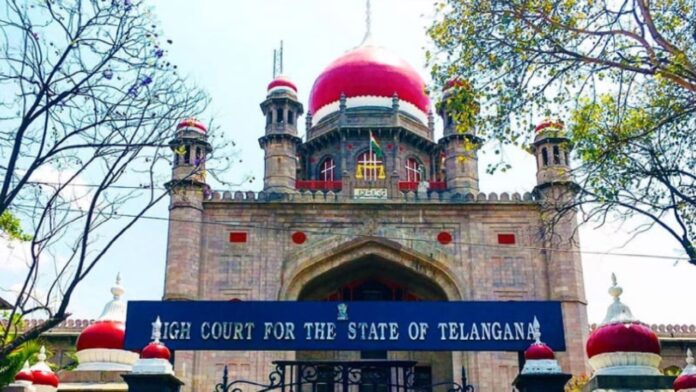
In a significant development, senior IPS officer Abhilasha Bisht (IPS:1994:TG) got interim relief from the High Court in her fight against her cadre reallocation to Andhra Pradesh by the Union Government. The High Court permitted her to continue serving in Telangana till further orders, pending the adjudication of her challenge to her reallocation to the Andhra cadre.
A division bench of High Court Justice P. Sam Koshy and Justice Narsing Rao Nandikonda passed the order while hearing her writ petition.
The Union Govt had ordered Bisht to be reallocated to the Andhra cadre in 2025. She moved the Central Administrative Tribunal (CAT) against this order, but the CAT upheld her reallocation to the AP cadre on January 9, 2026.
Then she moved the High Court against it. In addition to challenging the CAT’s order, Bisht also questioned subsequent proceedings issued by the Centre and communicated through the Telangana government.
She has now sought restoration of her seniority in the 1994 batch of IPS officers and continuation in the Telangana cadre.
Bisht, in her petition, contends that the cadre allocation process was flawed due to its reliance on a “distorted” seniority list allegedly provided by the state authorities.
According to her, the process led to her being wrongly treated as junior to officers of the 1994 batch. She argues that the fact was contrary to it, as these officers were virtually junior to her, thereby unsettling a seniority position that had remained unchanged for over two decades.
Bisht has further argued that the Centre had acted on inaccurate information despite seeking a certified seniority list and altered her position without issuing prior notice to her or giving her an opportunity to present her case.
She claims that this action violated the principles of natural justice and was influenced by extraneous considerations.




















 Get Latest Updates