The central deputation tenure of Kunal Kashyap (IRS-C&CE:2008) as Commissioner (Housing) of the Delhi Development Authority (DDA) has been extended for two years.
According to an order issued by the Department of Personnel and Training (DoPT) on Monday (November 10, 2025), the Appointments Committee of the Cabinet has approved the proposal of the Ministry of Housing & Urban Affairs to extend Mr. Kashyap’s deputation tenure beyond November 8, 2025, up to November 8, 2027, or until further orders, whichever is earlier.
Mr. Kashyap has been serving in the post since February 2024. Before joining DDA, he served as Chief Assessor & Collector in the Municipal Corporation of Delhi (MCD).
The Public Enterprises Selection Board (PESB) has invited applications for the post of Director (Consumer Mobility), Bharat Sanchar Nigam Limited (BSNL). The vacancy notification was issued on Monday (November 10, 2025), with December 1, 2025, set as the last date for submitting applications through the PESB portal.
The post will fall vacant on August 1, 2026, following the superannuation of the incumbent, Sandeep Govil, on July 31, 2026. Mr. Govil has been serving in the position since January 2023.
Eligible candidates from both public and private sector organizations are invited to apply for this key leadership role.
The Public Enterprises Selection Board (PESB) has recommended Arun Kumar Tyagi for the post of Director (Technical), Northern Coalfields Limited (NCL). The selection was made following the PESB interview held on November 10, 2025.
Mr. Tyagi is currently serving as Area General Manager, Gevra, South Eastern Coalfields Limited. His name will now be sent to the Appointments Committee of the Cabinet (ACC) for final approval, subject to the necessary vigilance clearances.
A total of 12 candidates were interviewed by the PESB for the post. The list included:
Babuli Kishor Jena, General Manager (Mining) /Area General Manager, Sohagpur Area, South Eastern Coalfields Limited
Suman Saurabh, General Manager (CMC), Northern Coalfields Limited
Sanjay Kumar Sahu, General Manager, Bankola Area, Eastern Coalfields Limited
Sanjay Kumar Mishra, General Manager, South Eastern Coalfields Limited
Rajender Verma, General Manager, Area General Manager Nigahi Area, Northern Coalfields Limited
Ranjay Sinha, General Manager, Dhori Area, Central Coalfields Limited, Central Coalfields Limited
Anand Mohan, General Manager Area General Manager, Eastern Coalfields Limited
Arun Kumar Tyagi, General Manager Area General Manager, Gevra, South Eastern Coalfields Limited
Anand, Executive Director (Mining/Production), Coal India Limited
Vijaya Kumar S, Executive Director, Project Head/Barsingsar Project and CEO/NRPL, NLC India Limited
Abhay B Bhagat, Chief General Manager, NLC India Limited
Shreyansh Mohan (IRS-C&IT:2015), who was recommended for central deputation by the Department of Revenue, has been selected for appointment as Deputy Secretary in the Department of Higher Education for four years. According to an order issued by Department of Personnel and Training (DoPT) on Monday (November 10, 2025), the competent authority has approved the appointment of Mr Mohan to the post under the Central Staffing Scheme for a period of four years from the date of taking over charge of the post or until further orders, whichever event takes place earlier.
IAS officer Richa Verma (IAS:2012:HP) has been appointed as Deputy Secretary in the Department of Higher Education, Delhi, for a period of four years.
According to an order issued by the Department of Personnel and Training (DoPT) on Monday (November 10, 2025), the competent authority has approved her appointment for a tenure of four years from the date she assumes charge of the post or until further orders, whichever is earlier.
Ms. Verma is presently serving in her cadre state, Himachal Pradesh, as Managing Director of the H.P. State Industrial Development Corporation (SIDC), Shimla, and also holds the additional charge of Managing Director, Himachal Pradesh State Handicrafts & Handloom Corporation, Shimla.
An uneasy calm prevails among the IPS officers in the aftermath of the Supreme Court’s recent dismissal of the Centre’s plea challenging its judgment for a progressive reduction in the deputation posts of IPS officers to the Central Armed Police Forces (CAPF). This development paves the way for a gradual erosion in the dominance of IPS officers within the paramilitary forces.
The CAPFs comprise the Border Security Force (BSF), Central Reserve Police Force (CRPF), Central Industrial Security Force (CISF), Indo-Tibetan Border Police (ITBP), and Sashastra Seema Bal (SSB).
In what can, arguably, be termed as a blow to the IPS lobby in the country, the Supreme Court, in its judgment on May 23, had directed the Centre to progressively reduce the deputation of IPS officers in the Senior Administrative Grade (SAG), or up to the rank of Inspector General in the CAPFs within an outer limit of two years. This judgment was delivered by a bench of justices, A.S. Oka and Ujjal Bhuyan.
But the Central Government rushed to the apex court with a petition seeking review of its judgment to progressively reduce the IPS officers’ deputation to the CAPFs. But the Centre’s plea was dismissed by a Bench of Justices Surya Kant and Ujjal Bhuyan on October 28.
The importance of this Supreme Court’s decision is mammoth for the IPS officers, as 20% of posts in the rank of Deputy Inspector General (DIG) and 50% of posts in the rank of Inspector General (IG) in CAPFs are reserved for IPS officers.
This is the culmination of the efforts of Group A officers of the CAPFs, who moved the top court in 2021 seeking Non-Functional Financial Upgradation (NFFU), cadre review and restructuring, and amendments to recruitment rules to eliminate IPS deputation and enable internal promotions up to the SAG level.
While this supreme verdict brings major relief to around 13,000 CAPF officers who now stand a chance of benefiting from it through faster promotions and reduced stagnation, it spells doom for the dominance of the IPS officers within the forces.
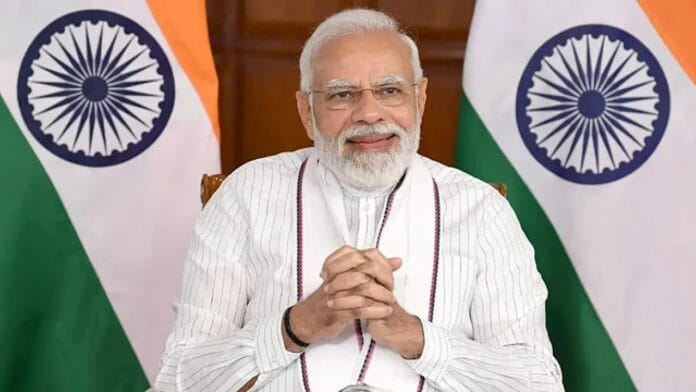
A bureaucrat couple’s decades-long passion for preserving India’s musical heritage recently caught the attention of Prime Minister Narendra Modi. During the inauguration of the year-long celebrations marking 150 years of the national song Vande Mataram at the Indira Gandhi Indoor Stadium in New Delhi on Friday, the Prime Minister toured an exhibition showcasing India’s cultural legacy.
Among the exhibits, an old gramophone stood out — featuring the first-ever recording of Vande Mataram. PM Modi is said to have paused to listen to the vintage recording, which drew admiration from dignitaries and attendees alike.
The rare gramophone record was contributed by a bureaucrat couple — Akhilesh Jha, a 1996-batch Indian Civil Accounts Service officer, and Rashmita Jha, a 1997-batch Indian Revenue Service (Income Tax) officer — who have spent years archiving and preserving historical gramophone records.
Union Culture Minister Gajendra Singh Shekhawat, Delhi Chief Minister Rekha Gupta, and several senior officials were also present and listened to the iconic recording alongside the Prime Minister.
In a major bureaucratic move, the Appointments Committee of the Cabinet (ACC) has cleared the appointment of two senior Indian Revenue Service (IRS-IT) officers as Members of the Central Board of Direct Taxes (CBDT).
As per an order issued by the Department of Personnel and Training (DoPT) on Friday (November 8, 2025), Ms. Mona Singh (IRS-IT:1990), presently serving as Principal Director General of Income Tax (HRD), Delhi, has been appointed as Member, CBDT, against the vacancy arising on July 1, 2025, following the retirement of Prabodh Seth (IRS-IT:1989), Member (Administration).
Similarly, Prasenjit Singh (IRS-IT:1990), currently holding the position of Principal Director General of Income Tax (Training), Delhi Region, has been appointed as Member, CBDT, against the vacancy dated November 1, 2025, in relaxation of Recruitment Rules (RRs). This position fell vacant after the retirement of Ramesh Narain Parbat (IRS-IT:1989), Member (Legislation), on October 31, 2025.
With the departure of DGP Anurag Gupta (IPS:1990:JH), the long-standing tension between the Centre and the Jharkhand government appears to have eased, though his sudden voluntary retirement (VRS) has surprised many in bureaucratic and political circles of Ranchi and Delhi.
Adding to the intrigue, the late-night appointment of Tadasha Mishra (IPS:1994:JH) as Acting DGP on November 6 has become a major talking point. Mishra has made history by becoming Jharkhand’s first woman DGP, a proud milestone for the state. However, buzz in official corridors suggests that the upright and task-oriented officer was not the initial choice for the top post.
The frontrunners were reportedly Prashant Kumar (IPS:1992:JH) and Manvinder Singh Bhatia (IPS:1994:JH), while the senior-most officer in the cadre remains Anil Palta (IPS:1990:JH).
What has further surprised many is Mishra’s short remaining tenure—she is set to retire on December 31, 2025. Her brief stint has fueled speculation that, unless granted an extension, Jharkhand may soon witness the appointment of a new DGP.
Sources indicate that Prashant Kumar was initially considered the leading contender, but last-minute developments paved the way for Mishra’s historic elevation. Meanwhile, another senior IPS officer, Priya Dubey (IPS:1998:JH), is being mentioned in power circles as a possible contender for an important state assignment.
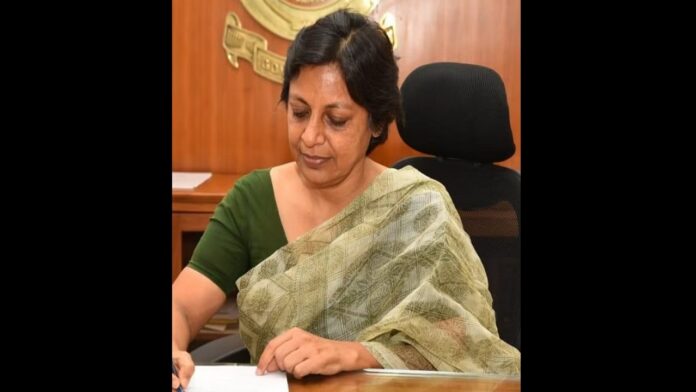
Punjab’s first woman Chief Secretary, Vini Mahajan (IAS:1987:PB), has joined the Chandigarh Administration as a member of the Administrator’s Advisory Council.
The Council, comprising experts, officials, and eminent citizens, advises the UT’s Administrator on governance and issues related to public welfare.
The Chandigarh Administration in its official order names her as a newly appointed member of the Council.
Mahajan is a 1987-batch IAS officer of the Punjab cadre and holds the unique distinction of being the Punjab’s first woman Chief Secretary. In a career spanning over decades, she has held crucial positions in both the state and the Centre. Thus, her induction in the advisory role enriches the Council with a vastness of bureaucratic experience.


















 Join Us on WhatsApp