




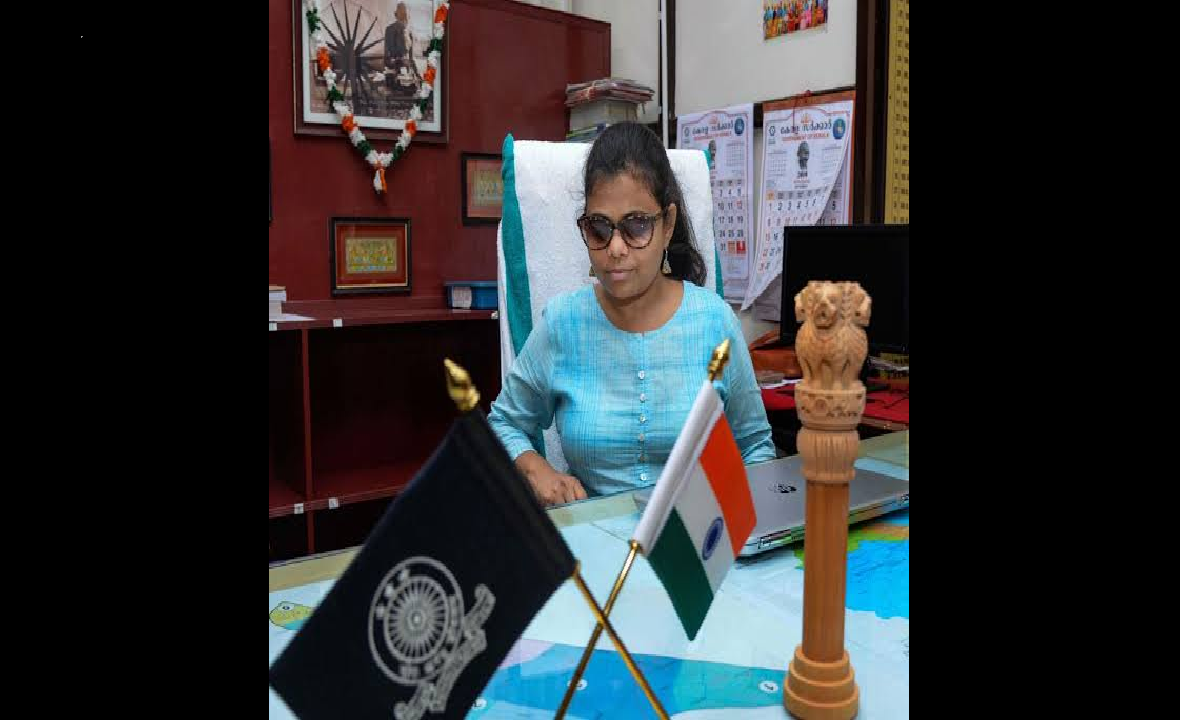
In a significant development, the Central Administrative Tribunal (CAT) has come to the rescue of India’s first visually impaired woman IAS officer Pranjal Patil (IAS:2017:AGMUT) by quashing her transfer from Delhi to Arunachal Pradesh.
Besides setting aside the transfer order, the tribunal also quashed her relieving order as well as the rejection of her representation.
The tribunal also directed the authorities to continue or repost her in Delhi within four.
While quashing her transfer, Judicial Member Rajveer Singh Verma criticised the government for mechanically applying routine transfer rules on her without considering the special needs of employees with disabilities.
The tribunal’s ruling came on an application filed by her, saying that she required continuous specialised ophthalmic care in Delhi and Noida. Her grandmother, who was her sole caretaker, had also died two days before the transfer order was issued.
Patil joined the Delhi segment in January 2020 to access specialised medical treatment and social support, yet the Union Home Ministry transferred her to Arunachal Pradesh in September 2024.
Not only this but the CAT also protected Patil’s future career prospects by ruling that her inability to complete tenure in difficult postings because of her disability could not adversely affect her promotion, empanelment, central deputation, or other service benefits.
Further, as per rulings, any future proposal to transfer her outside Delhi would require a reasoned order, after hearing her and considering her medical condition, support requirements, and alternative postings.
The CAT said the government’s obligation to provide reasonable accommodation under the Rights of Persons with Disabilities Act, 2016, takes precedence over administrative transfer guidelines.
She had initially been allocated the Kerala cadre but was transferred to the AGMUT cadre under the inter-cadre transfer policy.
Patil contended that the transfer violated the Rights of Persons with Disabilities Act as well as the instructions issued by the Department of Personnel and Training (DoPT) exempting employees with disabilities from rotational transfers.
The Centre, however, defended its transfer order on the ground that IAS officers belonging to the AGMUT cadre were required to serve in different segments, including difficult postings.
It also argued that there was also a shortage of senior-scale officers in Arunachal Pradesh.
But the tribunal rejected these arguments.
The tribunal also rejected the Centre’s argument that Patil had accepted the possibility of postings across the AGMUT cadre when she sought the inter-cadre transfer in 2018.

















 Get Latest Updates