

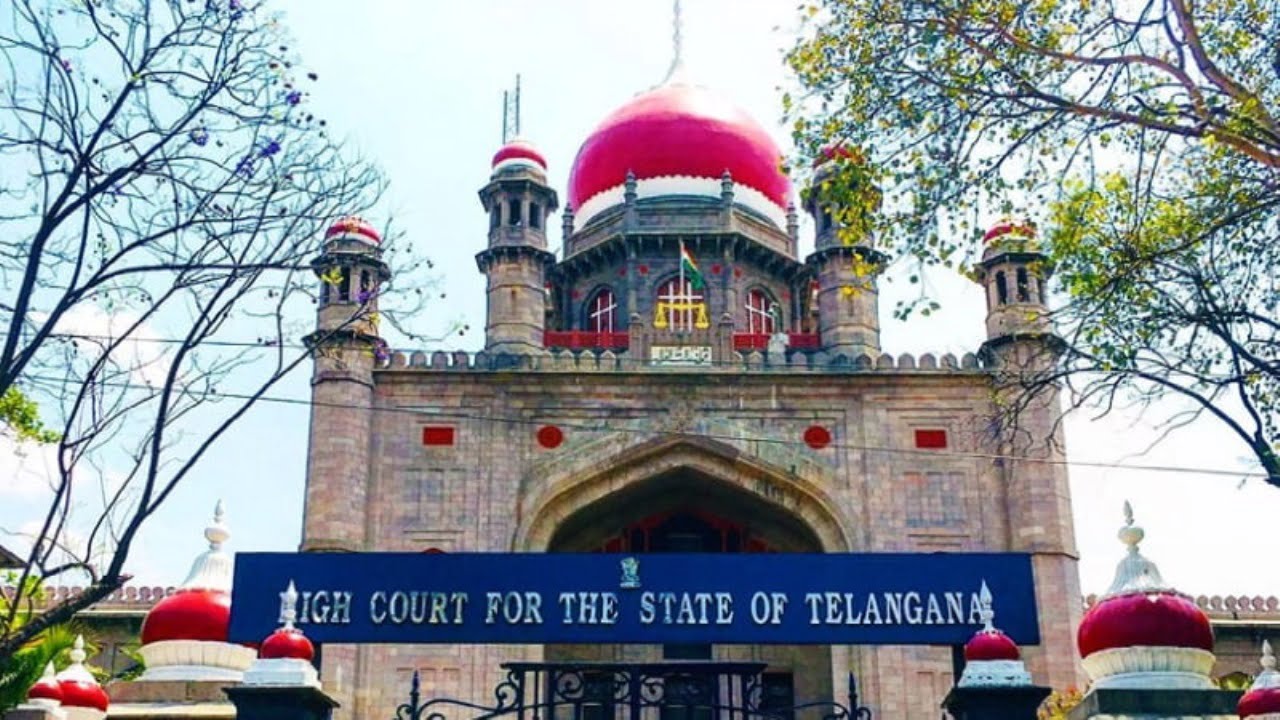
In an important development, the Telangana High Court has set aside an order passed by the Hyderabad bench of the Central Administrative Tribunal (CAT) providing a shield to an IPS officer couple from penalties over a 16-month overstay in Andhra Pradesh. The HC passed the order upholding a Ministry of Home Affairs (MHA) memorandum that termed the overstay as “unauthorised” while allowing it to go ahead with its proceedings against the duo.
The case dates back to 2011 when the IPS couple, D Kalpana Nayak, an IPS officer of the 1998 batch, and her husband, Mahender Kumar Rathod, a 2001 batch officer, were sent on inter-cadre deputation to erstwhile AP for a five-year term. She is currently serving as Additional Director General of Police (ADGP) in CID while her husband now holds IG rank.
Despite their sanctioned tenure lapsing in Jan 2016, the couple continued to serve in the newly carved state of Telangana until May 2017. This led the MHA to initiate action against them. The couple faced loss of service increments and recovery of excess payments made to them during the period of overstay.
The couple argued that following the state’s bifurcation, their delay was caused by administrative requirements and a significant shortage of senior officers in Telangana.
But the division bench comprising Chief Justice Aparesh Kumar Singh and Justice G M Mohiuddin emphasised in its order on Dec 24 that under the Indian Police Service (IPS) Cadre Rules, 1954, the central govt wielded exclusive authority over the movement of cadre officers and dismissed the duo’s pleas.
The HC also observed that a borrowing state—erstwhile AP and later Telangana—had no power to unilaterally extend a deputation beyond the period sanctioned by the Centre.
The court also pointed out that the request for their extension was initiated by the officers themselves through individual representations.
The court reprimanded them, saying as senior All-India Service (AIS) officers, the couple was obliged to comply with the central government’s orders and report any delays to the MHA. The HC clearly stated that the couple’s failure to do so invited action, which was necessary to uphold the rule of law.
















 Join Us on WhatsApp