


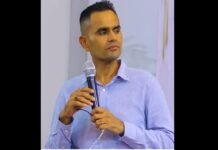
Veteran former bureaucrat Dr P K Mishra, currently Prime Minister Narendra Modi’s Principal Secretary, was in a reflective mood at Bharat Mandapam on December 10 when he described good governance as a fundamental right of citizens, defined by efficiency, transparency, grievance redressal, and timely service delivery.
Mishra shared his vision of a modern and an inclusive nation with liveable cities and vibrant villages, stressing citizen-centred governance, responsible use of technology, and collective action to ensure dignity, justice, and development for all Indians.
Mishra was addressing the inaugural session of the “National Conference on Ensuring Everyday Essentials—Public Services and Dignity for All” organised at Bharat Mandapam in the national capital.
According to him, Human Rights Day is not merely a commemoration but an invitation to reflect on dignity in everyday life. Mishra emphasised the significance of World Human Rights Day for democratic nations like India, where constitutional ideals, democratic institutions, and societal values converge to protect and promote human dignity.
In his keynote remarks, Mishra said that today dignity is shaped not only by freedoms but also by access to privacy, mobility, a clean environment, and digital inclusion.
Mishra cited the benefits of PM Modi’s call for Jan Bhagidari, saying public service delivery has shifted from prescribing to responding, from delivering schemes to delivering dignity, and from viewing people as beneficiaries to partners in nation-building.
He urged the National Human Rights Commission to adapt frameworks for emerging challenges as India advances toward Viksit Bharat 2047. At the same time, Mishra highlighted issues like climate change, environmental justice, data protection, algorithmic fairness, responsible AI, gig work vulnerabilities, and digital surveillance as pressing concerns.












 Join Us on WhatsApp