MOIL Limited has achieved its highest-ever November production and sales, marking a significant milestone in the company’s operational performance.
MOIL recorded 1.65 Lakh Metric Tonnes (LMT) of manganese ore production in November 2025, showing a 1% year-on-year (YoY) increase. Sales reached 1.37 LMT, reflecting a 3% YoY growth.
For the period April–November 2025-26, cumulative production stands at 12.69 LMT, an 8% increase over the same period of the previous year.
On this occasion, Ajit Kumar Saxena, CMD, MOIL, stated that the best ever November performance stands as a testament of teamwork, and consistent improvement demonstrated by the MOIL family. He is confident of MOIL team to continue with this positive momentum in the coming months. (Source-PIB)
The Bihar government on Wednesday (December 3, 2025) issued promotion orders for 49 IAS officers of the state cadre, granting them elevation to different pay levels and corresponding ranks. The promotions will come into effect from January 1, 2026. Of the promoted officers, four who are currently on central deputation have been granted proforma promotions.
The Motwani Jadeja Foundation (MJF) came to its knees and tendered apologies for publicly circulating a training programme for IAS officers without taking approval of the government. The issue came to light after the Union Government took a firm stand and issued a formal advisory warning all states and ministries against nominating IAS officers for the training programme of the Motwani Jadeja Foundation. The advisory, released by the Department of Personnel and Training (DoPT) on Monday, said that the MJF uploaded the information on its own, without any reference to or approval of the DoPT.
A day after the DoPT signalled the red alert, the foundation’s chief, Asha Jadeja Motwani, took to her handle X (formerly Twitter) to express her regrets at the mistake committed by her Indian team in Ahmedabad, claiming it was done in ‘overenthusiasm’ and that she would soon contact the DoPT in Delhi to know how to proceed about it.
The MJF, headquartered in California in the US, had virtually circulated details of a training programme, called the 21st Century India Center Emerging Leaders Program, for mid-career IAS officers with 8-10 years of experience. The foundation invited the applications from IAS officers to participate in this programme.
The DoPT took umbrage at it and swung into action by issuing the advisory, clarifying that the programme was “not issued, approved, sponsored, or endorsed by the Government.”
In order to prevent any unauthorised participation, copies of the advisory, signed by DoPT’s Under Secretary Uma Magesh, were forwarded to all Chief Secretaries of states and UTs, Secretaries of Ministries/Departments, and NIC for uploading on the DoPT website.
The cadre disputes involving bureaucrats of Andhra Pradesh (AP) and Telangana spring back into focus once again with a recent Telangana High Court order. The High Court stayed a Central Administrative Tribunal (CAT) order directing the allocation of the Telangana cadre to senior IAS officer D. Ronald Rose (IAS:2006:AP). Rose is currently posted as Finance Secretary in AP.
A Division Bench of Chief Justice Aparesh Kumar Singh and Justice Ghouse Meera Mohiuddin passed this interim order staying the CAT’s verdict.
The Union Government had moved the High Court against the CAT’s order challenging its jurisdiction to decide the cadre of All India Service officers.
The Centre’s involvement began after the tribunal instructed the Telangana Government to bring Ronald Rose on its payroll, despite the fact that Rose had originally been allotted the AP cadre at the time of bifurcation. The Centre took umbrage at it and moved a writ petition in the High Court. The Centre argued that cadre allocation of All India Service (AIS) officers is an exclusive prerogative of the DoPT and cannot be altered through Tribunal directions.
The HC was also told that Ronald Rose had earlier sought a cadre swap, but the DoPT rejected his request, as the officers proposed for exchange were also allotted to Andhra Pradesh.
The court has directed the DoPT to submit the report of the Pratyush Sinha Committee, which had examined cadre allocations of IAS and other AIS officers after bifurcation. The hearing will resume after six weeks, during which both the DoPT and the Telangana Government have to file their counter-affidavits.
The cadre disputes involving bureaucrats of Andhra Pradesh and Telangana have been waging ever since the state of Andhra Pradesh was bifurcated in 2014.
The Ministry of Housing and Urban Affairs has approved the relocation of five key Union ministries to newly constructed government office complexes in New Delhi as part of the ongoing administrative reorganisation under the Central Vista redevelopment and related infrastructure expansion. According to official memorandums issued on December 3, 2025, the Ministry of Youth Affairs and Sports, the Ministry of Social Justice and Empowerment, and the Ministry of Women and Child Development will shift to GPOA Block-03 at Netaji Nagar, while the Ministry of Tribal Affairs and the Ministry of Corporate Affairs will move to Kartavya Bhawan-01 in the Central Vista zone.
The Ministry of Youth Affairs and Sports has been allocated space across the 6th, 7th and 8th floors of GPOA Block-03, the Ministry of Social Justice and Empowerment will function from the 7th and 8th floors, and the Ministry of Women and Child Development has been given offices on the 6th and 7th floors.
Meanwhile, both the Ministry of Tribal Affairs and the Ministry of Corporate Affairs will operate from the third floor of Kartavya Bhawan-01, with separate rooms and workspaces earmarked for each. The relocations will see these ministries shift from their current premises at Shastri Bhawan, Sankalp Bhawan and Nirman Bhawan.
In a surprise development, Prasar Bharati Chairman Navneet Sehgal (Retd IAS: 1988: UP) resigned from his post on December 2, 2025, and the competent authority has approved his resignation. The sudden exit has triggered speculation within official circles, as no formal reason has been cited so far. While multiple theories continue to circulate in the power corridors, a section of government insiders suggests that he may have been asked to step down.
Sehgal was appointed as Chairman of the public broadcaster in March 2024 for a tenure of three years or until attaining the age of 70, whichever was earlier. His appointment had filled a long-standing vacancy at the top, following the completion of A. Surya Prakash’s term in February 2020. With his unexpected resignation, Prasar Bharati is once again facing uncertainty at its leadership level.
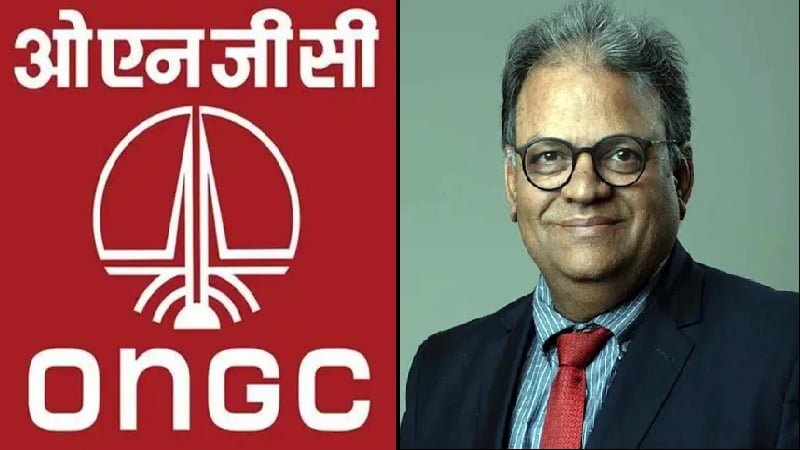
The Central government has extended the tenure of Arun Kumar Singh, Chairman of Oil and Natural Gas Corporation (ONGC), by one year. His current term was set to end on December 6, 2025, but he will now continue until December 6, 2026, or until a regular chairman assumes charge, whichever comes earlier.
The Appointments Committee of the Cabinet has approved his re-employment on a contract basis from December 7, 2025. The Ministry of Petroleum and Natural Gas will finalise the terms and conditions in consultation with the Department of Public Enterprises, as mentioned in the official order issued on December 2.
A search-cum-selection committee has also been constituted to identify a regular chairman for ONGC. The panel will be led by the Chairman of the Public Enterprise Selection Board (PESB), with the Petroleum and Natural Gas Secretary and former IOC Chairman B Ashok as members.
Industry sources say Singh brought stability to ONGC’s leadership and helped slow the long decline in crude oil production. His one-year extension is seen as a move to ensure continuity and consolidate the operational improvements achieved under his tenure at India’s largest oil and gas producer.
Singh was selected for the post in August 2022, shortly before turning 60, and took charge on December 6, 2022, for a three-year term. Before joining ONGC, he served as Chairman and Managing Director of Bharat Petroleum Corporation Ltd (BPCL), after earlier working as Director (Marketing) from 2018 to 2021.
The Union Government has no plan to increase the foreign direct investment (FDI) limit in public sector banks. The current limit stands at 20 percent. There was a perception in the banking sector that the Centre might consider raising the FDI limit to 49 percent. The Minister of State for Finance, Pankaj Choudhary, clarified it in the Parliament on Tuesday. He said that the Centre is not considering any such proposal to raise the FDI limit in Public Sector Banks (PSBs).
Choudhary’s statement came in reply to a written question in the Rajya Sabha on whether the government has proposed raising the FDI limit in PSBs to 49 percent. It should be noted that the government continues to hold its share in 12 public sector banks since 2020.
The FDI limit in PSBs and private sector banks is 20 percent and 74 percent, respectively. In the case of private sector banks, up to 49 percent of FDI is through the automatic route, and beyond 49 percent and up to 74 percent, the government route is applicable.
Chaudhary also clearly said that the number of shares held by the Union Government in 12 public sector banks (PSBs) has not declined since 2020. However, he added, the respective percentage of shareholding of the Union Government has declined in some of these banks due to the raising of capital through the issuance of fresh shares by banks.
According to the minister, fresh capital is raised by the banks to meet their capital requirement for business growth and maintaining regulatory requirements. He added that such capital raising reduces the fiscal burden on the government and strengthens the balance sheet of banks. Further, the minister said, there is a minimum public shareholding requirement of 25 percent, which banks have to ensure compliance of under the rule.
As per the New Public Sector Enterprises policy for Atmanirbhar Bharat, recommendations are to be made by NITI Aayog with regard to Central PSEs under strategic sectors, which includes the Banking, Insurance, and Financial Services Sector.
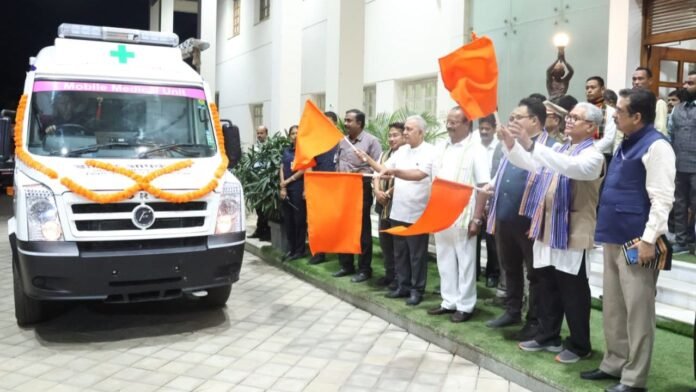
REC Limited has reaffirmed its commitment to accessible and affordable healthcare for India’s remotest communities through a major CSR initiative in Tripura. In a significant step toward supporting underserved and tribal populations, REC has sanctioned ₹3.60 crore to Sewa International for the operation of three Mobile Medical Units (MMUs)—two in Dhalai district and one in South Tripura district—over the next three years.
The MMUs were officially flagged off on 30 November 2025 by Hon’ble Governor of Tripura, Shri Indra Sena Reddy Nallu. The ceremony was graced by Shri Narayanan Thirupathy, Independent Director, REC Limited; Shri Shyam Parande, Global Coordinator and General Secretary, Sewa International; Shri Shubhendu Roy, CPM, Regional Office Guwahati, REC Limited; and members of the REC CSR Team.
Equipped with GPS-enabled tracking, the Mobile Medical Units are designed to deliver doorstep healthcare services across remote pockets of Dhalai and South Tripura districts. The units are expected to cater to approximately 3,750 beneficiaries every month, providing free medical consultations, diagnostic services, medicines, and preventive healthcare awareness to communities that often lack access to primary medical facilities.
This initiative underscores REC Limited’s unwavering dedication to improving quality of life in rural and tribal regions, while strengthening public health infrastructure in alignment with national development priorities.
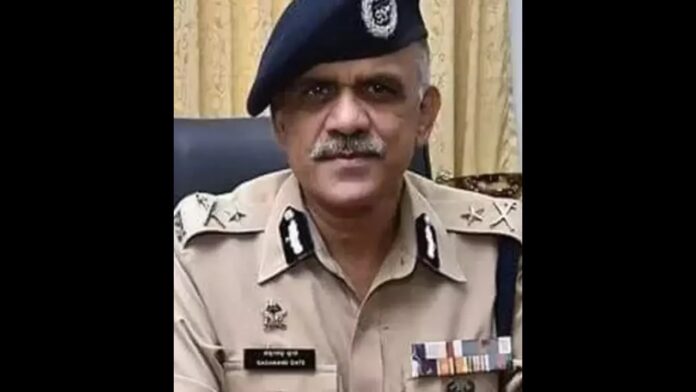
Success follows those who chase excellence in life. This is the moral that the story of Maharashtra cadre IPS officer Sadanand Date teaches. He is heading India’s premier federal agency, the National Investigation Agency (NIA), currently, but the Maharashtra government wants him to head the state police. When he was heading the Maharashtra Anti-Terrorist Squad (ATS), the Centre borrowed him from the state to head the agency that investigates crimes against India’s sovereignty and integrity—the NIA. Now Maharashtra misses him and wants him back.
Date is tipped to take over as the next state police chief from current incumbent Rashmi Shukla, who retires on Dec 31.
Interestingly, the UPSC is yet to select Date’s name as one of the three shortlisted candidates to be picked as DGP; the state government wants the Centre to relieve him and hence has sought his repatriation to the state.
It has been done in anticipation, as the Date’s name figures at the top of the list of seven IPS officers sent to the UPSC for shortlisting by the state government in November. Being the most senior officer on the list, Date’s name is sure to be included in the panel of three names to be selected by the UPSC for the appointment as the next DGP.
Besides being the senior-most officer in the list sent to the UPSC, Date has been a decorated police officer who shot to fame after taking on two of the 10 terrorists who attacked Mumbai on 26/11 in 2008. He was even awarded the President’s Police Medal for Gallantry in 2009. It was his impeccable profile as a counter-terrorism specialist that impressed the central government enough to lift him from the Maharashtra ATS to lead the country’s federal agency.
During a vast and variegated policing career spanning over 35 years, Date has earned several commendations and awards for his work, including the Mahatma Gandhi Peace and Communal Harmony award from the Minorities Commission and the Police Medal for Meritorious Services in 2007.
If picked, Date can get a two-year term as Maharashtra’s top cop, though he has only one year of service remaining.


















 Join Us on WhatsApp