Home Blog Page 88

Punjab govt in a fix over suspended IPS Ravjot Kaur Grewal’s reinstatement

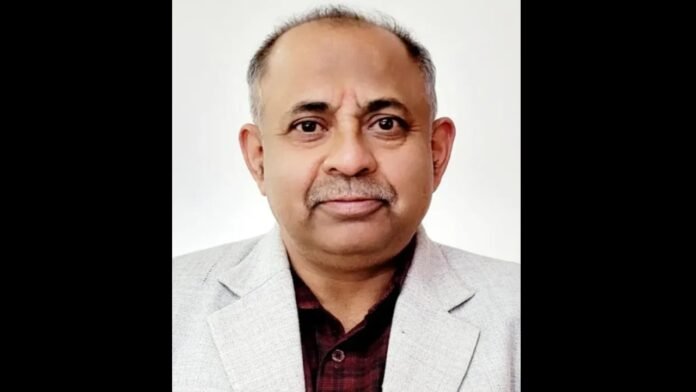
Ravjot Kaur Grewal IPS

The suspended Punjab IPS officer, Ravjot Kaur Grewal (IPS:2015:PB), continues to await reinstatement. She had been suspended from the post of Tarn Taran SSP by the Election Commission of India (ECI) on Nov 8, ahead of the Tarn Taran Assembly by-election on Nov 11. Around a month has elapsed since then, but Grewal is yet to be reinstated.

 The state government is in a fix, as the rules prohibit it from bringing her back even though the Model Code of Conduct is not in force. The Bhagwant Mann government is playing safe behind the rules that say only the Election Commission, in “concurrence” with the Department of Personnel, Public Grievances and Pensions (DoPT), Government of India, can reinstate her.

Interestingly, what the state govt forgets is that it will have to initiate correspondence with the EC, but the fact is it does not want to be seen helping an officer suspended by the ECI.

The action against Kaur had been taken after Shiromani Akali Dal (SAD) chief Sukhbir Singh Badal lodged a complaint alleging that Grewal was misusing the police to file “false” FIRs against his party’s leaders and workers to scuttle their campaign for the bypoll.

Punjab’s Chief Electoral Officer said ECI had suspended Grewal after taking cognisance of the serious lapses in impartial conduct during the period when the moral code of conduct was in force owing to the announcement of bypoll in Tarn Taran.

If a source is to be believed, the Punjab Government has asked a senior home department officer to take whatever steps are necessary to ensure the reinstatement of Grewal. But nothing seems to be happening as of now, and Grewal’s fate hangs in the balance.
K’taka IAS Darpan Jain is India’s chief negotiator for ongoing trade talks with US

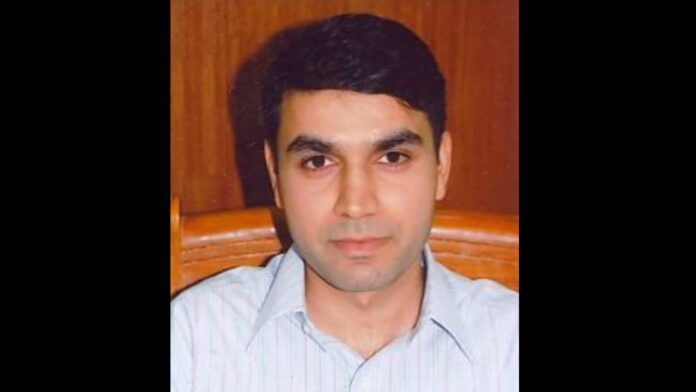
IAS Darpan Jain

Karnataka cadre IAS officer Darpan Jain (IAS:2001:KN) has been assigned the stupendous task of negotiating the trade deal with the United States as the chief negotiator. A US delegation led by Deputy US Trade Representative Ambassador Rick Switzer reached India on December 9 to hold the talks, scheduled for December 10 and 11.

The ongoing trade talks between the two countries will be covering all trade-related issues as both nations aspire to reach the Bilateral Trade Agreement (BTA).

It is not that this is the first time that such talks are taking place, but the only thing that has changed is the chief negotiator, as Rajesh Agrawal (IAS:1994:MN), who was earlier serving as the chief negotiator, has become secretary in the Ministry of Commerce. So, his role has changed. Now as Commerce Secretary, Agrawal has to supervise the negotiations.

This assignment for Jain, currently posted as Joint Secretary in the Commerce Ministry, occupies special significance as it has come at a time when the relations between the two countries were strained due to a unilateral penal tariff imposed on India by the US. Not to forget that the US is known as a ruthless trade bargainer.  

The world is watching the ongoing trade talks as both the Indian and US sides have to iron out the thorny issue of tariffs. The trade relations between India and the US nosedived after the US imposed a total of 50 percent tariffs on imports from India, with 25 percent of these constituting reciprocal tariffs and another 25 percent being imposed as a penalty for India’s import of oil from Russia.

Though the Union Commerce Minister, Piyush Goyal, recently expressed satisfaction at the progress the trade talks are making and sounded hopeful that the first tranche of the BTA, dealing with tariffs, would be concluded soon.

Finance Ministry tightens its noose, enforces sunset clause and timelines for centrally sponsored schemes

Finance Ministry's review meeting

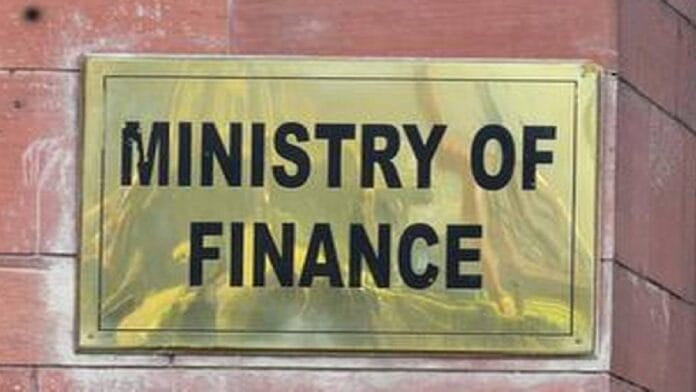
With a view to optimise public spending, the Finance Ministry has decided to tighten its noose around all ministries and departments by enforcing clear sunset clauses and timelines for every new centrally sponsored scheme (CSS) and existing scheme. Keeping it in mind, it has directed all ministries and departments to follow it and set clear sunset clauses and timelines for them. This strategy is to be implemented during the 16th Finance Commission cycle beginning on April 1, 2026.

This move is aimed to ensure that all schemes carry a sunset clause assessing the fiscal burden on the exchequer and laying out a roadmap and timeline for achieving outcomes.

The ultimate goal is to ensure efficient public spending by quantifying performance and identifying underperforming central ministries and departments. 

According to a highly placed source, there is a clear instruction that all schemes must carry a sunset clause that assesses the fiscal burden on the exchequer and lays out a roadmap and timeline for achieving outcomes.

This is not all; ministries have been asked to provide additional disclosures after conducting appraisals of each scheme. The disclosures are supposed to contain information regarding the rationale for continuing any scheme, actual expenditure and budget allocations over the past five years, the fund-flow trail, and the number of posts created for the scheme.

Besides, the Finance Ministry’s expenditure department recently directed ministries and departments to revise their appraisal reports by incorporating additional details and submit the updated versions by the first week of January. Earlier, ministries were required to submit their reports by the year-end, but an extra week has been given for these additional requirements.

The reason behind asking for the additional information is aimed at quantifying scheme performance, identifying ministries that have repeatedly fallen short of spending targets, and detailing the movement of funds to show the exact time taken for approvals and releases.

Even the schemes reviewed by the Niti Aayog have to follow the same process.

PM-led committee to meet today to select new Chief Information Commissioner

PM Narendra Modi

A three-member selection committee headed by Prime Minister Narendra Modi, and including Leader of Opposition Rahul Gandhi, is likely to meet on Wednesday afternoon to choose the next Chief Information Commissioner and Information Commissioners for the Central Information Commission (CIC).

The Centre told the Supreme Court on December 1 that the committee would meet on December 10 to decide the names. The CIC has had no chief since Heeralal Samariya completed his term and left office on September 13 after turning 65.

The CIC can have one Chief Information Commissioner and up to ten Information Commissioners. At the moment, only two ICs — Anandi Ramalingam and Vinod Kumar Tiwari — are in place. Eight posts have been vacant since November 2023.

Under Section 12(3) of the RTI Act, the Prime Minister heads the selection committee. The other members are the Leader of Opposition and a Union minister chosen by the PM.

As per the process, applications are invited through public notices. The DoPT collects the applications and sends them to a search committee headed by the Cabinet Secretary. The search committee prepares a shortlist and sends it to the PM-led panel for the final decision.

NEPA CVO Vinit Kumar repatriated to parent cadre

Vinit Kumar (IRS-C&CE:2013), who has been serving as Chief Vigilance Officer (CVO) of NEPA Limited, Nepanagar (Madhya Pradesh), has been prematurely repatriated to his parent cadre. According to an order issued by the Department of Personnel and Training (DoPT) on Tuesday (December 9, 2025), the competent authority has approved the proposal to repatriate Kumar to his parent cadre on personal ground, along with extended cooling off.

Kumar was appointed to the post in September 2023 for a three-year tenure, which was originally scheduled to continue until September 2026. He is being repatriated before the completion of his deputation period.

Shoyabahmed Kalal’s deputation in NITI Aayog extended

NITI Aayog

The central deputation tenure of Shoyabahmed Kalal (IES:2011) as Director in NITI Aayog has been extended by two years. According to an order issued by the Department of Personnel and Training (DoPT) on Tuesday (December 9, 2025), the Appointments Committee of the Cabinet has approved NITI Aayog’s proposal to continue his deputation beyond December 6, 2025, up to December 6, 2027, or until further orders.

Kalal was appointed to the post in November 2020 for an initial tenure of four years and assumed charge on December 6, 2020. His tenure was first extended for one year on December 6, 2024. With the latest extension, he will now continue in the role until December 6, 2027.

Centre extends Nishtha Tiwari’s deputation tenure in Home Ministry by two years

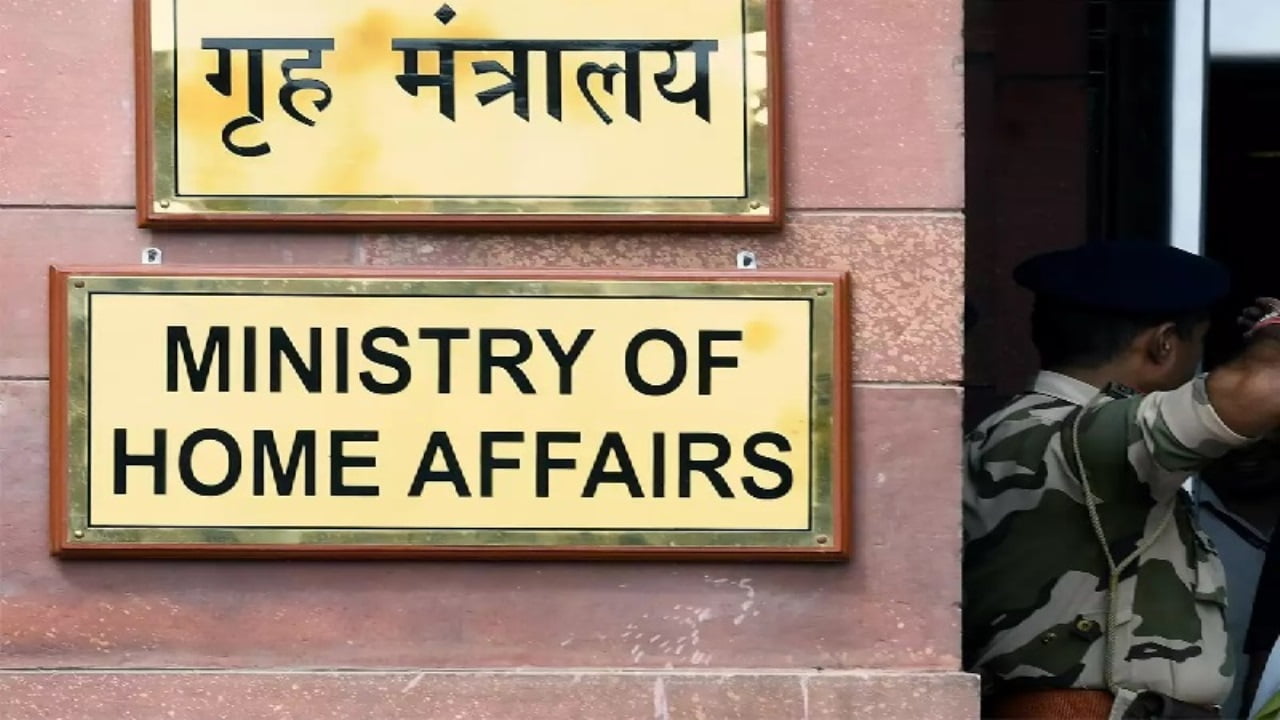
Ministry of Home Affairs

‘The central deputation tenure of Nishtha Tiwari (IRS-IT:2005) as Director in the Ministry of Home Affairs has been extended for a period of two years. According to an order issued by the Department of Personnel and Training (DoPT) on Tuesday (December 9, 2025), the Appointments Committee of the Cabinet has approved the proposal of the Ministry of Home Affairs to extend the deputation tenure of Tiwari for two years beyond December 9, 2025 and upto December 9, 2027, or until further orders, whichever is earlier.

Tiwari has been serving in the Ministry of Home Affairs since December 9, 2020. Her five-year tenure was scheduled to end on December 9, 2025, and it has now been extended for an additional two years.

Himachal govt appoints Sanjay Sood as Head of Forest Force

Sanjay Sood IFS

The Himachal Pradesh government has appointed senior Indian Forest Service officer Sanjay Sood (IFS:1993) as Principal Chief Conservator of Forests (Head of Forest Force). The appointment was cleared on the recommendation of the Special Selection Committee, according to an official notification issued on Tuesday.

Sood was serving as Managing Director of the HP State Forest Development Corporation Ltd. He has been placed in the Apex Scale with a pay of ₹2,25,000. The appointment takes effect immediately.

He will also hold the additional charge of Managing Director, HP State Forest Development Corporation Ltd., and Chief Project Director, JICA.

Telecom Deptt may soon ask DoPT for ITS cadre review & increase in officers’ annual intake  

Indian Telecommunication Service

As per media reports, the Department of Telecommunication (DoT) is contemplating asking the Department of Personnel and Training (DoPT) for the Indian Telecommunication Service (ITS) cadre review and an increase in the officers’ annual intake.

Needless to point out that the ITS is an elite group A civil service with its officers being responsible for policy formulation, regulation, and operations across multiple ministries and departments. But the department rues the meagre intake of only about 25 officers annually. The plight of the department is reflected by the fact that at present there are nearly 1,200 ITS officers nationwide, including those on deputations. It provides reason for the DoT to knock the DoPT for cadre review and increased intake of officers annually.

A senior government official admitted that discussion is being held in this regard.

The experts feel that review would strengthen the cadre structure and boost functional roles for skilled manpower in the state-run Bharat Sanchar Nigam Limited (BSNL) and Mahanagar Telephone Nigam Limited (MTNL), as well as the DoT and other ministries and organisations.

It is pertinent to mention here that the nature and role of telecommunication services have undergone a drastic change over the years, particularly with the advent of advanced technologies across varied sectors. Added to it, multinational assignments are increasing every day, necessitating the cadre review and an increase in annual intake on a priority basis.

The last cadre review took place in 2016 after a gap of 28 years. The DoPT had then agreed to have a recruitment review every five years to meet the growing manpower requirements. During the previous cadre review, the creation of one apex-level post of the Director General of Telecom was created, and the number of duty posts was fixed at 853.

4 IAS officers from other states to oversee SIR process in Tamil Nadu

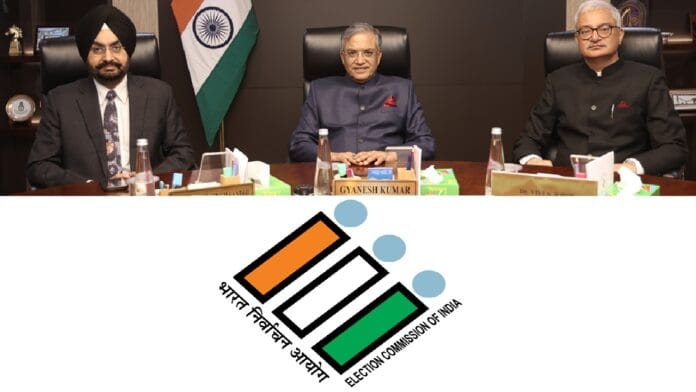
Election Commission of India

Four IAS officers drawn from three different state cadres have been assigned the task of special roll observers in Tamil Nadu for the ongoing Special Intensive Revision (SIR) of the electoral rolls. The Election Commission of India (ECI) issued the order to this effect on December 8. January 1, 2026, will be the qualifying date.

According to Chief Electoral Officer Archana Patnaik, the special roll observers will ensure strict adherence to the Commission’s directions, guaranteeing that no eligible elector is left unenrolled and no ineligible person is included in the electoral rolls.

The four officers are Raman Kumar (IAS:2009:BR), Kuldip Narayan (IAS:2005:BR), Neeraj Kharwal (IAS:2007:UK), and Vijay Nehra (IAS:2001:GJ).

Each of these special roll observers has been assigned the responsibilities of nine to ten districts.

These IAS officers will be overseeing all activities related to the SIR in the enumeration phase, the claims and objections period, and the disposal of notices phases till the final publication of the rolls.

IAS officer Raman Kumar will be the special roll observer for the Tiruvallur, Chennai, Chengalpattu, Kancheepuram, Ranipet, Vellore, Tirupathur, Tiruvannamalai, Villupuram, and Kallakurichi districts. 

IAS officer Kuldeep Kumar has been designated as the special roll observer for Salem, Namakkal, Erode, Tiruppur, the Nilgiris, Coimbatore, Dindigul, Krishnagiri, and Dharmapuri.

Similarly, IAS officer Neeraj Kharwal will look after Tiruchi, Karur, Perambalur, Ariyalur, Cuddalore, Mayiladuthurai, Nagapattinam, Tiruvarur, and Thanjavur. 

And the most senior among them, IAS officer Vijay Nehra, has been named for Pudukkottai, Sivaganga, Madurai, Theni, Virudhunagar, Ramanathapuram, Thoothukudi, Tenkasi, Tirunelveli, and Kanniyakumari.

Latest News

Google Preferred Icon Sticky
Google
WhatsApp Icon Join Us on WhatsApp