In a significant development, the Public Enterprises Selection Board (PESB) has once again invited applications for the post of Director (Domestic Division) at Container Corporation of India Limited (CONCOR).
The vacancy notification was issued on February 20, 2026, and the last date for submission of applications through the PESB portal is March 13, 2026.
The post will fall vacant on March 1, 2026, following the superannuation of the incumbent, Mohammad Azhar Shams, on February 28, 2026. Shams has been serving as Director (Domestic Division) since January 2023.
Notably, PESB had earlier invited applications for the same post on October 21, 2025, with November 11, 2025 fixed as the last date for submission. The fresh advertisement indicates that the position is being reopened for selection.
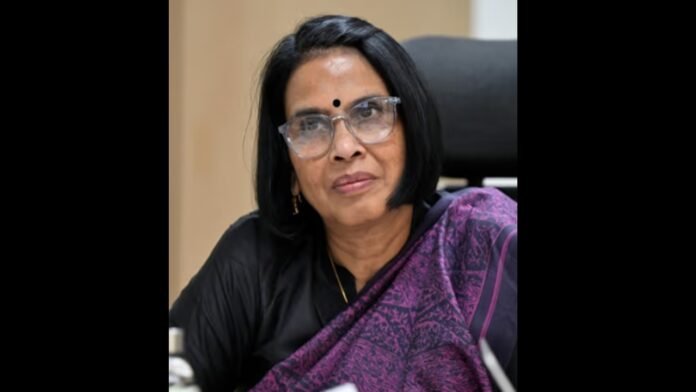
Smriti Sharan (IPoS:1993), currently serving as Joint Secretary in the Department of Rural Development, has been prematurely repatriated to her parent cadre on personal grounds.
According to an order issued by the Department of Personnel and Training (DoPT) on Monday (February 23, 2026), the competent authority has approved the proposal of the Department of Rural Development to repatriate her with effect from March 31, 2026.
Sharan was appointed as Joint Secretary on February 23, 2022, for a five-year tenure. Her central deputation was originally scheduled to conclude in 2027. However, she is being repatriated before completion of her tenure on personal grounds.
The Public Enterprises Selection Board (PESB) has invited applications for the post of Director (Finance) at The Cotton Corporation of India Limited (CCI). The vacancy notification was issued on February 20, 2026, and the last date for submission of applications through the PESB portal is March 13, 2026.
The post will fall vacant on January 1, 2027, following the retirement of the incumbent Rajendra Kumar Gupta on December 31, 2026. He has been serving as Director (Finance) since February 2024.
The Public Enterprises Selection Board (PESB) has invited applications for the post of Director (Corporate Planning & Personnel) at Mazagon Dock Shipbuilders Limited (MDL). The vacancy notification was issued on February 20, 2026. The last date for submission of applications through the PESB portal is March 13, 2026.
The post will fall vacant on January 1, 2027, following the retirement of the incumbent Cdr. Vasudev Ranganath Puranik on December 31, 2026. He has been serving in the position since June 2022.
The Public Enterprises Selection Board (PESB) has invited applications for the post of Director (Operations) at Chennai Petroleum Corporation Limited (CPCL). The vacancy notification was issued on February 20, 2026. The last date for submission of applications through the PESB portal is March 13, 2026.
The post will fall vacant on November 1, 2026, following the retirement of the incumbent P Kannan on October 30, 2026. He has been serving as Director (Operations) since August 2023.
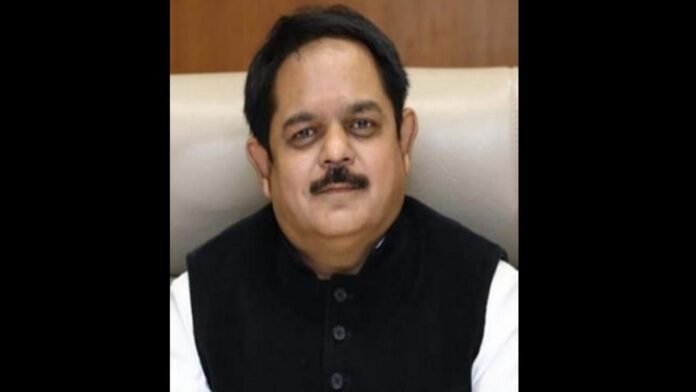
In a fresh development, the Election Commission of India (ECI) has appointed Sandip Janardanpant Sagale (IAS:2007:GJ) as the Chief Electoral Officer (CEO) of Gujarat.
A notification issued by ECI on February 23, 2026 said Sagale has been appointed under Section 13A of the Representation of the People Act, 1950. He will take charge from the day he assumes office and will continue until further orders. He is currently serving as Director General of the Sports Authority of Gujarat, a role he took on following a major state government reshuffle in early 2025.
Sagale replaces Hareet Shukla (IAS:1999:GJ), who had been serving as CEO since July 2024.
The Commission has said that before taking over as CEO, Sandip Janardanpant Sagale must hand over any other posts he is holding under the Gujarat government. While serving as CEO, he may also be given the charge of Secretary to the Government, Election Department, in the State Secretariat.
The Public Enterprises Selection Board (PESB) has invited applications for the post of Director (Finance) at Bharat Electronics Limited (BEL). The vacancy notification was issued on February 20, 2026, and the last date for submission of applications through the PESB portal is March 13, 2026.
The post will fall vacant on January 1, 2027, following the retirement of the incumbent S Damodar Battad on December 31, 2026. He has been serving as Director (Finance) since January 2023. Prior to his elevation to the Board-level position, he was serving as General Manager in BEL.
The Public Enterprises Selection Board (PESB) has invited applications for the post of Director (Personnel) at Mahanadi Coalfields Limited (MCL). The vacancy notification was issued on February 20, 2026. The last date for submission of applications through the PESB portal is March 13, 2026.
The post will fall vacant on July 1, 2026, following the retirement of the incumbent Keshav Raoon June 30, 2026. Rao has been serving as Director (Personnel) since December 18, 2019. His original five-year tenure was scheduled to conclude on December 17, 2024; however, he was granted an extension until his superannuation on June 30, 2026.
In a significant career advancement, 22 officers of the State Civil Service (SCS) from the UT Segment of the Joint AGMUT Cadre have been promoted to the Indian Administrative Service (IAS) against the Select List of 2025.
The appointments were notified by the Government of India on February 19, 2026, under the provisions of the IAS (Recruitment) Rules, 1954 and the IAS (Appointment by Promotion) Regulations, 1955. The officers have been appointed on probation and allocated to the AGMUT Cadre under the IAS (Cadre) Rules, 1954, in consultation with the Ministry of Home Affairs.
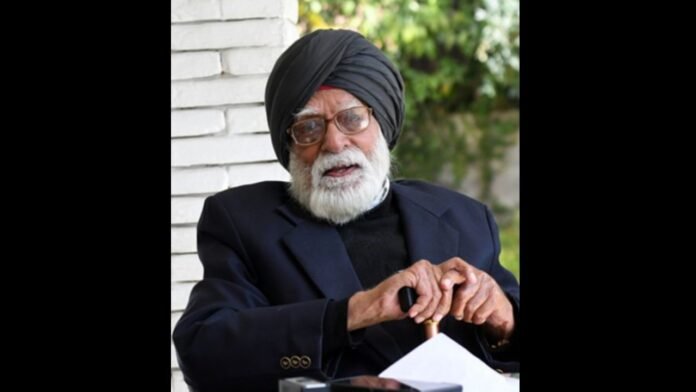
In a noble gesture that will go down into the annals of the state’s policing history, Punjab DGP Gaurav Yadav went out of his way to extend his greetings to a 1951-batch retired IPS officer, Jagjit Singh Bawa, on the occasion of his 100th birthday on Saturday.
Lauding Baba as a towering figure of the Punjab cadre IPS, the DGP said Bawa represents a generation of officers who laid the strongest foundations of professional, principled, and fearless policing. DGP Yadav shared his feelings about the old veteran on X.
Special Punjab DGP SS Srivastava and DIG Personnel Amneet Kondal met the veteran officer at his residence to personally convey the respect and greetings on behalf of the entire force.
Bawa was enlisted in the service on July 13, 1951, and served the state in various capacities, from ASP, SP, and SSP Ferozepur to DIG and IGP, before moving to the Centre on deputation as Director of the CBI on September 27, 1977. He retired from service on February 28, 1985, after being granted a one-year extension beyond the age of superannuation.
Bawa served as the Central Bureau of Investigation (CBI) Director during one of the most turbulent phases of the independent Indian governance during Prime Minister Indira Gandhi’s regime. He still remembers how his life collided with key turning points in the life of the country, including the time he decided to pay his last respects to Indira Gandhi, when Delhi crowds clamoured for the Sikhs’ blood in the wake of her assassination in October 1984.
He vividly remembers that evening when he was repeatedly diverted from Khan Market, Lodhi Road, and other roads close to Gandhi’s residence. It was after the Delhi Police Commissioner sent a vehicle with an escort that Bawa could reach home in the dead of the night.
And how his visit at Gandhi’s residence made headlines and spread like wildfire.
Despite being 100-year-old, Bawa still recalls his first meeting with Indira Gandhi after her return to power in 1980 and how the former PM ordered him to disband the CBI. Bawa claimed he convinced the PM against that move, and thus the institution was saved.
He describes Indira Gandhi as “very authoritative, very decisive, very straightforward, and at times very harsh and very angry.”
Bawa served as CBI Director during Operation Bluestar in June 1984 and says he repeatedly told the PM, “Do whatever you want—impose curfew, stop supplies, do anything, but don’t send the Army or the police into the Golden Temple.”
Bawa says Indira Gandhi seemed to have been misled by certain agencies into believing that ‘Khalistan’ could only be stopped through military action inside the shrine. “She was deeply concerned about Punjab and wanted to save it at any cost,” all he says.






















 Get Latest Updates