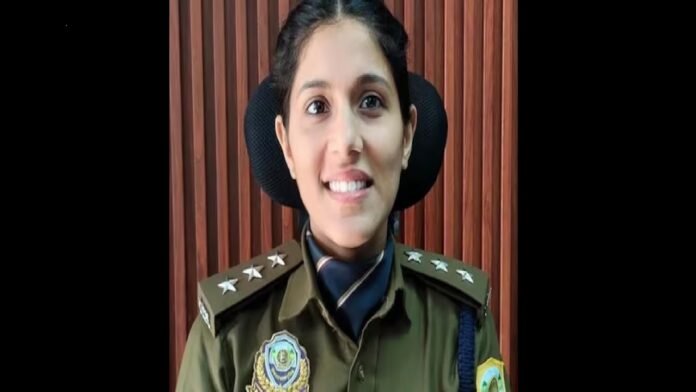
The Punjab government on Monday (January 19, 2026) issued the appointment order of Anindita Mitra (IAS:2007:PB) as Chief Electoral Officer (CEO) of Punjab-cum-Administrative Secretary, Elections (General Election Wings). She has replaced Sibin C(IAS:2005:PB), who has proceeded on central deputation after being appointed as Joint Secretary in the Ministry of Health and Family Welfare.
Prior to this appointment, Anindita Mitra was serving as Administrative Secretary, School Education, with additional charge of Managing Director, Punjab Infrastructure Development Board.
Notably, the Election Commission of India (ECI) on January 15, 2026, selected and appointed Anindita Mitra as Chief Electoral Officer of Punjab from a panel of three IAS officers forwarded by the Punjab government. Following the ECI’s decision, the state government has now formally issued her appointment order as CEO.
Meanwhile, the Punjab government has also issued orders assigning additional charges to two IAS officers.
Sonali Giri (IAS:2009:PB), currently serving as Managing Director, PUNSUP, with additional charge of Administrative Secretary-cum-Director, Civil Aviation and Revenue & Rehabilitation, has been entrusted with additional charges of Administrative Secretary, School Education, and Administrative Secretary, Higher Education & Languages.
Girish Dayalan (IAS:2011:PB), Registrar, Cooperative Societies, Punjab, with additional charge of Managing Director, The Punjab State Cooperative Bank Limited, has been given the additional charge of Managing Director, Punjab Infrastructure Development Board.
With a view to improving civic governance and resolving traffic issues, the Telangana government has for the first time decided to post young IPS officers to key traffic positions across the Greater Hyderabad limits. The reason behind this surprising move is to introduce fresh ideas to improve traffic regulation and enforcement. This is the first time that the govt has entrusted these responsibilities to young IPS officers with about four years of experience, that too in Greyhounds, rural policing, and administration. Earlier, traffic wings used to be headed by senior IPS officers holding ranks of Superintendent of Police or Deputy Inspector General.
Telangana DGP, B Shivadhar Reddy (IPS:1994:TG), took time off to first brief the officers on how to handle traffic-related challenges before their assuming charge. Reddy opined that young and dynamic IPS officers with proven field experience have been entrusted with key traffic responsibilities to ensure effective implementation at the ground level.
The DGP reasoned out the government’s intention by saying that these transfers are virtually intended to reinforce traffic management in Hyderabad, Cyberabad, and Malkajgiri as well as the new Future City Police Commissionerates. Complimenting the DGP’s opinion, Hyderabad Joint Traffic Commissioner Joel Davis (IPS:2010:TG) said the officers were expected to prepare new plans, redesign traffic management in congestion-prone areas, and implement measures to clear snarls.
Among the postings, Avinash Kumar has been appointed DCP, Traffic-I, Hyderabad, and Kajal Singh DCP, Traffic-II, Hyderabad. Both are from the IPS 2021 batch. Also of the same IPS batch, Kankanala Rahul Reddy has been appointed DCP, Traffic-I, Malkajgiri, and Shivam Upadhyay DCP (Traffic), Future City. S. Seshadrini Reddy, a year senior to them, will be DCP, Traffic-II, Cyberabad.
At the Future City commissionerate, senior IPS officer G. Chandana Deepti has been posted as additional commissioner of police (administration and traffic); B.K. Rahul Hegde as DCP, Traffic-III; and G. Ranjan Ratan Kumar as DCP, Traffic-I.
Abhishek Mohanty has been appointed DIG, vigilance and enforcement, to curb illegal activities such as sand smuggling, protect natural resources, and safeguard government revenue.
There are 20 IPS officers in totality who have been pressed into the service of tackling traffic issues, including those mentioned above. The details are as follows:
2008-batch IPS officer Gajarao Bhupal has been transferred from the post of Traffic Joint Commission, Cyberabad. He has been posted as IG, Provisioning & Logistics. He will also be holding full additional charge of Sports & Welfare as IG.
2011-batch IPS Abhishek Mohanty, who was posted as DIG in the Anti-Narcotics Bureau, has been transferred to the post of DIG, Vigilance & Enforcement.
2012-batch R Bhaskaran, posted as SP, CI Cell, Intelligence, has been transferred to the post of DIG.
2012-batch IPS officer Chandana Deepti, posted as SP/DIG Railway, Secunderabad, has been transferred to the post of Additional CP Administration and Traffic Future City Commissionrate.
2013-batch IPS T. Annapurna, serving as Superintendent of Police (SP) in Vigilance and Enforcement department, has been posted as DCP (Administration) in Cyberabad.
2014-batch IPS B K Rahul Hegde, DCP Traffic, has been posted as DCP, Traffic III, (in Rajendranagar and Shamshabad L & O zones) Hyderabad city.
2014-batch IPS K. Apurva Rao, posted as DCP in Special Branch, Hyderabad City, has been transferred to the post of Superintendent of Police, Intelligence, in Hyderabad.
2018-batch IPS officer B Bala Swamy, DCP, East Zone, has been posted as SP, CID.
2020-batch IPS officer, S Chaitanya Kumar, DCP, South East Zone, has been posted as DCP (Crime) in Hyderabad City.
2021-batch IPS officer Ms. Kajal, Addl. SP, has been posted as DCP, Traffic II, Jubilee Hills (L&O Zones), Hyderabad.
2021-batch IPS Sheshadrini Reddy, Addl SP (Admin), Jagitial Grade 1, Utnoor, has been posted as DCP, Traffic-II, Cyberabad Commissionerate.
2021-batch IPS Kankanala Rahul Reddy, Addl SP, Grade – 1, Bhongir, has been posted as DCP, Traffic- I, at Malkajgiri Commissionerate.
2021-batch IPS Shivam Upadhyaya, Addl SP (Operations) at Mulugu Headquarters, has been posted as DCP, Traffic, Future City Commissionerate.
V Sreenivasulu, DCP, Traffic II (LB Nagar), Malkajgiri, has been posted as DCP, Traffic II, at Malkajgiri Commissionerate.
J Ranjan Rathan Kumar, DCP, Traffic, Medchal, Cyberabad, has been posted as DCP, Traffic I, in the Cyberabad Commissionerate. He will also act as in-charge of administration work of the Cyberabad Traffic Wing.
K Shyam Sundar, DCP, CAR, Malkajgiri, has been posted as DCP, CAR Hqrs, Hyderabad City.
P Ashok, Addl DCP, North Zone, Hyderabad City, has been posted as SP, V&E.
A Balakoti, Addl SP, V&E has been directed to report to the state DGP in Hyderabad.
A bureaucratic reshuffle is expected in Rajasthan this week following the promotion of IAS officers, which came into effect from January 1, 2026. The reshuffle is likely to be largely limited to the departmental level, as nearly a dozen key departments are currently being managed through additional charge arrangements.
In several cases, the additional charge of crucial posts such as secretaries and heads of departments has been continuing for six to eight months, prompting the need for regular postings.
The reshuffle is expected ahead of the state Assembly session scheduled to commence on January 28. The session will continue throughout February and into the first week of March, and administrative transfers are generally avoided during an ongoing Assembly session.
However, transfers of district collectors are unlikely before February 15 due to restrictions related to the Special Intensive Revision (SIR). Collector-level transfers are considered inevitable after February 15, as fresh transfer restrictions will come into force in districts in view of the upcoming local body and panchayat elections scheduled for March–April.
The Uttarakhand government on Thursday (January 17, 2026) carried out a major administrative reshuffle by issuing transfer and posting orders for 18 IAS officers across the state.
In what can be described as a move to sensitise top government officials to the needs of common people, Bihar Chief Secretary Pratyaya Amrit (IAS:1991:BR) has written to all Additional Chief Secretaries, Principal Secretaries of departments, senior police officials, and every District Magistrate (DM) and Superintendent of Police (SP), directing them to prioritise what the government describes as “ease of living” for the common people of the state.
The reason behind writing these letters is explained by him when he writes about how several instances came to his notice where people approached government offices with their problems, but the concerned officials were not to be found, causing unnecessary hardship to common people.
This is a pathetic reality for a state like Bihar, which has been highlighted by the Chief Secretary. In a way, he has acknowledged the widening gap between promises made and the delay caused in their delivery and wishes to bridge that gap. The directive asks officers to have two fixed days every week—Monday and Friday—when officials from panchayat offices to district headquarters and state-level departments must be physically present to meet the public. They have to hear complaints patiently, record them formally, and resolve them. If an officer is absent due to unavoidable reasons, an authorised substitute must step in.
Offices have to ensure basic amenities like drinking water, seating, and toilets for visitors. The directive also asks for registers to be maintained, reviews conducted, and compliance enforced.
The idea behind this move is to control officers so that subordinates comply. According to the directive, departmental heads have to regularly review grievance disposal. Senior secretaries have been asked to monitor not only whether complaints are received but also whether they are resolved in time. In bureaucratic terms, availability and responsiveness have been reframed as administrative duties rather than personal virtues, but it remains to be seen how successfully these reforms are enforced in a state known for bureaucratic inertia.
In a disturbing disclosure, the Union Home Ministry has come out with data that shows a glaring number of vacancies in central security agencies, with the Central Government failing to fill even the prescribed quota of IPS officers on deputation.
This is particularly the case with the ranks of Superintendent of Police (SP) and Deputy Inspector General (DIG) in the Central Armed Police Forces (CAPFs) and the Central Police Organisation (CPO), where innumerable posts of SP and DIG-rank officers are lying vacant. It is happening because the central deputation is losing its charm for the growing number of young IPS officers.
The Union Government has increased the quota for IPS officers on deputation. Last year, approximately 678 posts were sanctioned for IPS officers, but this number has risen to over 700 now. Surprisingly, despite this increase, 212 positions of IPS officers remain vacant.
According to a recent ministry report, the Intelligence Bureau (IB) has 83 approved positions for SPs (IPS), but 47 are vacant. The situation is no different for the Central Bureau of Investigation (CBI), where out of the 78 sanctioned posts for SP (IPS), 42 remain vacant. Even DIG positions in these two top central agencies are not fully filled.
The latest MHA report indicates that 78 posts are sanctioned for SP (IPS) in the CBI, but despite numerous efforts, these positions remain unfilled. This has been the case for several years. If 42 of the 78 sanctioned positions remain vacant, the vacancy rate exceeds 50%.
Similarly, 83 positions of SP (IPS) have been sanctioned in the IB, but more than fifty percent, i.e., 47 posts, are lying vacant.
The same is the case with the National Investigation Agency (NIA), where eight out of 39 IPS (SP) positions are vacant. At the National Police Academy (NPA), 14 IPS (SP) positions are sanctioned, but six of these positions are vacant.
The situation is almost similar for the positions of DIG (IPS).
In the BSF, eight out of 26 DIG positions are vacant. In the CBI, five out of 34 DIG positions are vacant. In CIS, nine out of 31 positions are vacant. Similarly, the IB has 63 DIG (IPS) positions sanctioned, but 38 of these are vacant.
This easily illustrates the percentage of vacancies. Here too, more than 50% of positions are vacant. In the NIA, four out of 15 DIG positions are vacant.
The picture is not complete, as, according to a report, there were 149 IG positions for IPS officers on deputation to the Centre, of which 27 were vacant. Of the 256 sanctioned IG posts, 68 were shown vacant. Of the 221 approved SP (IPS) posts, 126 remained vacant.
In prestigious investigative agencies like the CBI, 73 IPS (SP) posts were approved, but 54 remained vacant. Of the 83 SP (IPS) posts approved in the Intelligence Bureau (IB), 55 remained vacant. Sixty-three DIG (IPS) posts were reserved in the IB, but 30 remained vacant. As of March 1, 2024, 30 out of 149 IG posts were vacant. Of the 256 DIG posts, 70 were vacant. Of the 228 SP (IPS) posts, 132 were vacant.
According to the Union Home Ministry’s March 2023 notification, 255 posts were sanctioned for DIG (IPS) positions in various central security forces, commissions, and investigative and intelligence agencies, of which 77 were vacant. Previously, this number of vacancies ranged between 120 and 186. As of December 2021, 252 posts were sanctioned for IPS DIGs, with 118 vacant. Similarly, 203 posts were sanctioned for SP (IPS) positions, but 104 remained vacant. This means that 50% of the posts remained vacant.
As of July 2020, 254 posts were sanctioned for DIG (IPS) positions at the Centre, of which 164 were vacant. The number of SP (IPS) positions was 199, but 97 of these remained vacant. In the CBI, 20 out of 35 sanctioned IPS DIG positions were vacant. In the CISF, 16 out of 20 posts were vacant. In the IB, 28 out of 63 IPS DIG posts and 49 out of 83 IPS SP posts remained vacant.
It seems to be happening due to the Central Government’s deputation rules introduced in 2022. The Govt clarified that if an IPS officer approved for central deputation fails to join, he or she will be barred from central deputation and foreign postings/consultancies for a period of five years.
A committee of the Union Home Ministry had recommended that the panel process for deputation of IPS officers on DIG posts be abolished, as it takes a long time to complete. This move by the government was aimed at addressing the acute shortage of DIG-rank officers at the Centre. The suggestion was accepted. The government hoped that eliminating the panel system for DIG-rank officers would allow more IPS officers to come to the Centre on deputation, as the nomination process used to take about a year to complete.
The Centre also amended the All India Services rules, which stated that the Central Govt could call IAS and IPS officers on central deputation with or without state permission. But nothing seems to be happening right for the central govt at present.
There are various reasons being ascribed to this grim scenario. A retired BSF ADG tries to reason it out by saying that young IPS officers avoid joining any demanding job. As SPs, they get the opportunity to command district police in their state, so they don’t want to move. When they become DIGs, they look for comfortable postings. If they can’t find that position on central deputation, they don’t join such posts.
IPS officers don’t want to join central police organizations or paramilitary forces as DIGs. In these forces, the DIG position falls under “field posting.” According to him, IPS officers are deployed in border areas. Many officers manage to stay at headquarters, but most DIGs are posted to remote units.
Posts like IG/ADG/SDG are mostly available at headquarters, so IPS officers join immediately. CAPF cadre officers are not given permanent promotions to vacant posts. For the past few years, it has been observed that when IPS officers do not join the post of ‘DIG’, some posts are diverted to cadre officers on a temporary basis.
The reason is simple: if IPS officers do not get the desired posting, then why would they come to the Centre. For the same reason, most of the SP (IPS) posts remain vacant in IB and CBI.
Coming to the DIG post, the role of DIG in the state police is no longer significant. In many states, IPS officers are now being appointed to IAS positions. Four to five years ago, 17 retired IPS officers appealed to serving IPS officers to come forward to serve under the central government.
The young officers forget to understand that the idea to have IPS officers on central deputation was meant to strengthen the relationship between the central and state governments, and the All India Services are the most important link that connects the Indian Union and the states. IPS officers need to be encouraged to go on central deputation and contribute to national security at both the macro and micro levels.
The dust seems to be settling down in Haryana, where administration has been run without the administrative head for a week now. A directive from the state govt made it clear that ailing Chief Secretary Anurag Rastogi (IAS:1990:HY) will continue to hold the charge even during his medical leave. Rastogi is recuperating in Fortis Hospital in Mohali after undergoing heart bypass surgery on January 9 and will remain on leave until Jan 22.
As such a precarious situation has arisen for the first time in the state when the entire administration was being run in the absence of the administrative head; there was strong speculation that a senior IAS officer might be given the additional charge of the Chief Secretary.
But an official communication clarified on Friday that Rastogi will continue to hold on to the charge of Chief Secretary, thus putting an end to the growing speculations about a possible replacement during his medical leave.
Rastogi’s Officer on Special Duty (OSD) wrote to five IAS officers posted in the Chief Secretary’s office, streamlining the working and the movements of files in the absence of Rastogi. The OSD says that he was directed by the CS that these IAS officers will put up all cases directly to the chief minister in which the CM is the competent authority. Besides, the cases in which the Chief Secretary is the competent authority will be cleared by the respective IAS officers at their own level from January 16 onwards.
According to the communication, a daily list of all pending cases will be prepared and sent to the OSD by 5 pm every day.
The five IAS officers, to whom the communication has been addressed, handle five departments like human resources, general administration, personnel, training and parliamentary affairs, vigilance, and secretariat establishment in the CS office.
Not only this, but these five IAS officers have also been asked not to proceed on leave during his absence. Besides, in case of unavoidable circumstances, prior permission of the chief minister will be a must.
It means that IAS officers posted in the Chief Secretary’s office will be processing files related to their departments and taking decisions that would otherwise have required the Chief Secretary’s approval. The same model is likely to be replicated in the finance and planning departments, whose charge is also held by Rastogi.
PC Meena (IAS:2004:HY), who holds the charge of commissioner and secretary, Human Resources (HR) and General Administration Department (GAD), will deal with all the files related to HR and GAD.
Pankaj (IAS:2009:HY), who is Secretary (Personnel), would dispose of matters related to the Personnel, Training, and Parliamentary Affairs departments.
Similarly, Varsha Khangwal (IAS-HCS) will deal with vigilance matters.
And Samwartak Singh (IAS-HCS) will look after secretariat establishment matters.
Another IAS officer in the CS office, Priyanka Soni (IAS:2012:HY), will look after monitoring and coordination work.
The directive, which is believed to have been issued after consultation with the Chief Minister’s Office (CMO), is aimed at ensuring continuity in administrative decision-making during Rastogi’s absence and putting an end to speculation about any substitution during his illness.
Rastogi was appointed as the Chief Secretary in February 2025 and was granted a one-year extension. He is now due to retire on June 30 this year.
Former Indian Police Service (IPS) officer of the Bihar cadre, Praveen Vashista (IPS:1991:BH), on Friday (January 16, 2026) took oath as a Vigilance Commissioner in the Central Vigilance Commission (CVC). He was administered the oath of office by Central Vigilance Commissioner P K Srivastava.
The Central government on Thursday (January 16, 2026) entrusted additional charge of Chief Vigilance Officer (CVO) posts in two major public sector oil companies—Indian Oil Corporation Limited (IOCL) and Mangalore Refinery and Petrochemicals Limited (MRPL).
According to orders issued separately by Department of Personnel and Training (DoPT) on Friday (January 16, 2026) the competent authority has approved the entrustment of additional charge of the post of CVO, Indian Oil Corporation Limited (IOCL), Delhi to Shruti Agnihotri (IRAS:1998), who is currently serving as CVO, Engineers India Limited (EIL), Delhi. She has been given the additional responsibility for a period of six months with effect from December 24, 2025, or until the appointment of a regular CVO in IOCL or until further orders, whichever is earlier.
In another order, Meenaxi Rawat (IES:1993), presently serving as CVO, Bharat Petroleum Corporation Limited (BPCL), Mumbai, has been entrusted with the additional charge of the post of CVO, Mangalore Refinery and Petrochemicals Limited (MRPL), Mangaluru. Her additional charge will be for a period of six months with effect from December 12, 2025, or until a regular CVO is appointed in MRPL or until further orders, whichever is earlier.
Senior Odisha cadre IPS officer Rekha Lohani (IPS:1997:OD), currently serving as Inspector General in the Central Reserve Police Force (CRPF), has been elevated and appointed as Additional Director General (ADG) in the Sashastra Seema Bal (SSB) in Level-15 of the Pay Matrix.
According to an order issued by the Ministry of Home Affairs on Thursday (January 15, 2026), the competent authority has approved her appointment against an existing vacancy, with effect from the date she assumes charge of the post.
Rekha Lohani began her central deputation on January 16, 2023, when she assumed charge as Inspector General in the Bureau of Police Research and Development (BPR&D). Subsequently, on November 28, 2025, she was laterally moved to the CRPF as Inspector General. Now, she has been shifted to the SSB as ADG.