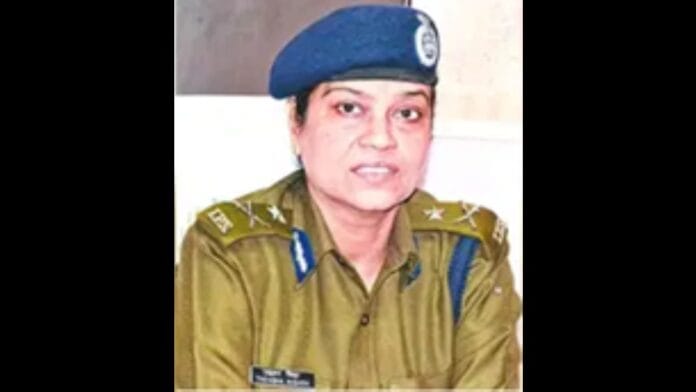
The Jharkhand government on Wednesday (November 19, 2025) promoted the state’s acting DGP, Tadasha Mishra (IPS:1994:JH), to the rank of Director General (DG). The promotion comes after a DG-level vacancy arose following the voluntary retirement of former DGP Anurag Gupta (IPS:1990:JH).
Jharkhand has four sanctioned DG posts. With Mishra’s elevation, all positions are now filled by Anil Palta (IPS:1990:JH), Prashant Singh (IPS:1992:JH), M.S. Bhatia (IPS:1994:JH), and Tadasha Mishra.
Mishra was appointed as the DGP of Jharkhand on November 6 after Gupta’s retirement. At that time, she was serving as Special Secretary in the Home, Prisons, and Disaster Management Departments.
The state government subsequently approved her promotion to the DG rank. Tadasha Mishra is scheduled to retire on December 31 next month.
The Central Government on Wednesday (November 19, 2025) appointed Sandip Pradhan (IRS-IT:1990) as a Whole-Time Member (WTM) of the Securities and Exchange Board of India (SEBI). His term will be for three years from the day he takes charge, or until the government issues new orders, the official notification said.
Pradhan is currently serving as the Director General of Income Tax (Investigation) in Pune.
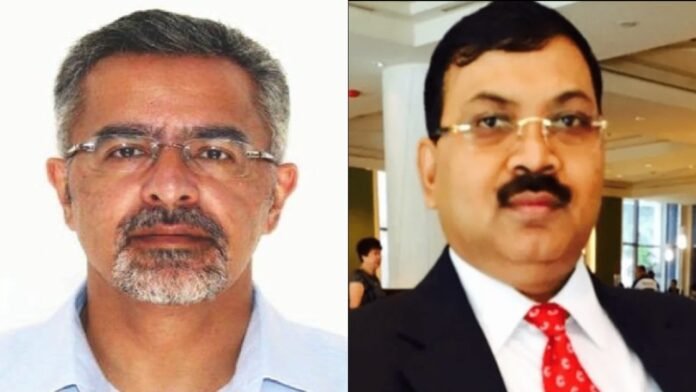
In a significant development for the Rajasthan bureaucracy, IPS officer Pankaj Choudhary, a known face in the bureaucratic circle of the state, has opened a front against two top-ranking IAS officers, Sudhansh Pant and Bhaskar A. Sawant, over a training programme. It all started with Choudhary being invited to an IIM training programme at Kolkata by a Delhi-based sponsor, BPRD. It was a five-day training programme from November 17th to 21st.
As the state government’s permission is required to participate in any training program, the Police Headquarters sent Choudhary’s file seeking permission to the Home Department two months ago. But despite repeated reminders, the Home Department kept on sitting on that file, and the training began in between.
An infuriated Choudhary has now filed a petition in the court against senior IAS officer Sudhansh Pant, who was the state’s Chief Secretary and is currently on central deputation, and Bhaskar A. Sawant, Additional Chief Secretary of the Home Department. Choudhary has alleged that Pant and Sawant worked with ulterior motives and withheld his file. Choudhary also alleges in his petition that two IAS officers recommended sending a corrupt IAS officer, who had been jailed for corruption and was suspended for a long time, for training.
Actually the state govt had allowed IAS officer Anil Agrawal to participate in a month-long training programme at Mussourie. Agrawal is the same IAS officer who had been arrested by the Anti-Corruption Bureau in 2016 in a bribery case related to the National Rural Health Mission (NRHM). It piqued Choudhary.
The IPS officer contends that not taking any decision on his file is against the rules; hence, he decided to take legal action against the duo.
President Droupadi Murmu honoured IAS officer Dr Nagarjun B Gowda at Vigyan Bhavan on Tuesday for his pioneering rain harvesting programme, launched in Madhya Pradesh’s Khandwa district. As a result, Khandwa was declared the ‘Best Performing District’ in the country winning a cash award of Rs 2 crore.
A native of Tiptur in Tumakuru district of Karnataka, Dr Gowda received the award together with Khandwa Collector Rishav Gupta for their model of water conservation. Gowda is currently serving as CEO of Khandwa Zilla Panchayat.
Under their leadership, government officials, from the village accountant to the top, went from village to village, urging residents, farmers, schools, and government offices to adopt rainwater harvesting. The result was overwhelming, as over 129,000 installations, including 40,000 rooftop water harvesting systems, recharge pits, trenches, and other structures, turned Khandwa into a rainwater-positive district and set a benchmark for the country.
Gowda later said his mission was rooted in his childhood experience in drought-hit Tiptur as Khandwa resembled his hometown. He resolved to better his performance next year.
The Uttar Pradesh government on Wednesday (November 19, 2025) allocated districts to trainee IPS officers of the 2023 and 2024 batches for their three-month district training. Of the total 23 officers, 13 belong to the 2023 batch and 10 to the 2024 batch. This field posting is considered a crucial early step in an IPS officer’s career, offering hands-on exposure to law and order management, investigation, crime control, and administrative functioning at the grassroots level.
The district-wise allocation is as follows:
Abhay Rajendra Daga (IPS:2024:UP): Agra Commissionerate
IAS officer Trigun Kulkarni (IAS:2016:MH) has been appointed as president of the Maharashtra State Board of Secondary and Higher Secondary Education (MSBSHSE). This is the first time that the Maharashtra government has deputed a bureaucrat to this position, emulating other educational boards like CBSC, where key positions like chairperson have traditionally been held by senior bureaucrats.
The board’s prime responsibility is to conduct class 10 (SSC) and class 12 (HSC) examinations in the state.
It is a significant development, as this position remained vacant for nearly a year, as Kulkarni’s predecessor, Sharad Gosavi, was handling the additional responsibilities to go with it.
With this appointment the government completes the process of appointing IAS officers to important positions across the education sector. The reason behind it is to ensure effective administration based on research-backed decision-making. While Sharad Gosavi continues as director of primary education, Mahesh Palekar will serve as director of secondary education. Krishna Kumar Patil is responsible for the planning department, while Anuradha Oak heads Balbharati. Besides, most other major positions within the education department are now being held by IAS officers.
Before being appointed as board president, Kulkarni was serving as deputy director at the Yashwantrao Chavan Academy of Development Administration.
Kulkarni’s main challenge would be to effectively manage student-related stress and examination pressure as brought to the fore by research in education. The presence of seasoned officers at the top can help the board navigate challenges and implement policies that benefit both students and teachers.
The Uttar Pradesh government on Wednesday (November 19, 2025) issued a notification inviting applications for the post of Chairman of the Uttar Pradesh Education Service Selection Commission. As per a release from the Higher Education Department, the deadline for submitting applications along with biodata is December 10, 2025, until 6 pm.
The Chairman will serve a three-year tenure from the date of joining or until reaching the age of 65, whichever comes earlier.
According to the notification, interested candidates must submit their applications in the prescribed format, accompanied by their CV and supporting documents, through registered post to the Special Secretary, Higher Education Department (Section-5).
Those eligible to apply include officers who have served as Principal Secretary or in an equivalent position in the state government, current or former university vice-chancellors, and professors with a minimum of 10 years of teaching experience along with at least three years of administrative experience.
With Odisha Chief Secretary Manoj Ahuja’s (IAS:1990:OR) extended one-year tenure ending on December 31, 2025, uncertainty continues to cloud what comes next. The Centre has yet to indicate whether it will grant him another extension, and in the absence of any signal, speculation inside the Power Corridor has only grown louder over who could step in should the top post open up.
According to senior bureaucratic circles, four names have emerged as the most likely contenders—two serving as Secretaries in the Government of India and two currently holding key assignments in the Odisha administration. The officers being discussed include Sanjeev Chopra (IAS:1990:OR), Secretary, Department of Food and Public Distribution; Gudey Srinivas (IAS:1990:OR), Secretary, National Commission for Scheduled Castes; Anu Garg (IAS:1991:OR), Development Commissioner and Additional Chief Secretary, Water Resources, Odisha; and Satya Brata Sahu (IAS:1991:OR), Additional Chief Secretary, Home Department, Odisha.
Among them, insiders say the race appears to be narrowing around two names—Sanjeev Chopra and Satya Brata Sahu. In BJP-ruled states, the pattern in recent years has favoured officers returning from central deputation to take over as Chief Secretary. Seen against this backdrop, Chopra, currently serving in central government, is perceived to have a distinct edge over the others.
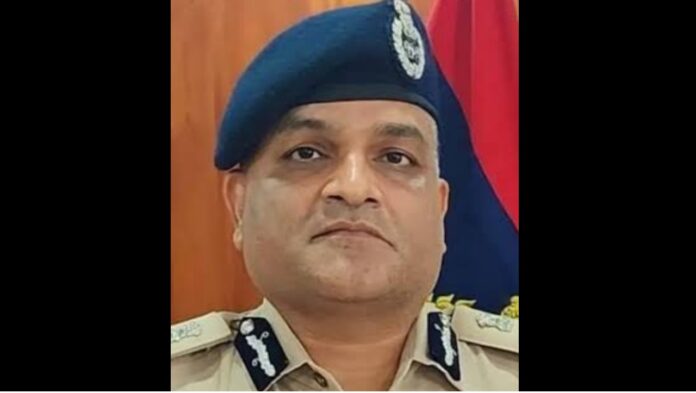
The saga of former Chandigarh Director General of Police (DGP) Surendra Singh Yadav’s tumultuous stint continues. After being stripped of the leadership role in Chandigarh Police and handed out marching orders to proceed on central deputation as the Border Security Force (BSF) DIG, the Ministry of Home Affairs (MHA) has now ordered his premature repatriation from BSF to his parent cadre, the Delhi Police, with immediate effect.
Interestingly, the Home Ministry’s order comes with the subject line ‘Premature repatriation of S S Yadav, DIG (BSF) to his parent cadre.’ The MHA’s order comes seven months after he was moved from Chandigarh to the BSF as DIG on deputation.
His roller-coaster ride began on April 1 this year when he was transferred to the BSF on deputation after serving just over a year as the DGP in the Union Territory. Since April 1, he has been transferred thrice. He was transferred from Chandigarh to the BSF overnight and sent to Delhi. He sought legal protection by rushing to the court, saying the Home Ministry appointed him to the post of DIG in BSF under his junior, but the court rejected his plea.
Yadav’s decision to go to the court against the MHA seems to have paved the way for his troubles, as he was transferred again from Delhi to Rajasthan for orientation and then sent to BSF headquarters in Chhattisgarh as DIG anti-Naxal operations. These transfer orders were issued in quick succession.
In fact, Yadav’s appointment as Chandigarh DGP in March 2024 brought ignominy to him due to his controversial orders. As Chandigarh DGP, he transferred about 2763 police jawans who had been stuck in one place for a long time. Never before had such a large number of personnel been transferred. After this, he started attending public meetings, including police personnel in the police stations.
He did not stop here and even got the police personnel involved in cases related to drug smuggling and corruption retired. Apart from this, cases were also registered against those who set up the police stations.
Yadav’s tenure as DGP is said to have left the Chandigarh police personnel horrified, so much so that most of them decided to leave the police department and applied for the VRS en masse.
These developments seem to have set the ball rolling, and the tide was turned on the night of April 1, when the Home Ministry issued marching orders transferring Yadav from Chandigarh to Delhi as DIG in BSF. He moved the court against it and is believed to be still paying the price for it.
In a key appointment, Jawed Ashraf (Retd. IFS: 1991) has been named Chairman of the India Trade Promotion Organization (ITPO) for a period of two years.
According to an order issued by the Department of Personnel and Training (DoPT) on Wednesday (November 21, 2025), the Appointments Committee of the Cabinet approved his appointment in Level-17 of the pay matrix on a contract basis. His tenure will be for two years from the date he assumes charge, or until further orders, whichever comes earlier. The appointment will follow the usual terms and conditions applicable to re-employed Central Government officers.











 Join Us on WhatsApp