The Public Enterprises Selection Board (PESB) has invited applications for the post of Director (Production & Planning) at MOIL Limited. The vacancy notification was issued on December 24, 2025, and the last date for submission of applications through the PESB portal has been fixed as January 14, 2026.
The post is scheduled to fall vacant on September 1, 2026, following the superannuation of the incumbent, Mirza Mohammad Abdulla, on August 31, 2026. Abdulla has been serving as Director (Production & Planning) at MOIL Limited since January 2022.
PESB has invited applications from eligible candidates belonging to both public and private sector organisations for selection to the post.
You can bend any rule if you have the right kind of political connection. Nothing will come in your way; no government norm can limit your growth, not even if you are retired, no matter how old you are. The story of retired IAS officer Sheik Pareeth (IAS:2000:KL) provides a unique example of it. He was rehabilitated as Managing Director of the Kerala State Coastal Area Development Corporation (KSCADC) after retirement in 2018 and has continuously been granted extension after extension.
There has been a fashion of former bureaucrats heading the public sector undertakings, but Pareeth seems to have broken all records in grabbing extensions despite the fact that the maximum age limit for an MD of a public sector institution is 65 and Pareeth is 67 now. And just for the sake of granting him an extension, the state government has repeatedly revised this term in his case. The government has extended his tenure for a record seventh time ‘at his request’.
He lapped up the seventh extension through his letter to Minister Saji Cherian, in which Pareeth claimed that KSCADC is moving forward with various projects, and if he relinquishes office from the post of MD, the implementation of all these projects will be jeopardized. Following it, the state cabinet decided to extend his tenure for yet another year through an order issued on December 19.
Pareeth first took charge as MD in 2018 but continues to occupy that position, with his term of service being extended every year.
It only reflects how strong a bond he maintains with the political dispensation that the government relaxed the norm to give him numerous extensions. He has been sitting in the post since 2018, after his retirement from the service.
His tenure was extended five times before August 22, 2023, when the corporation forwarded a request to the government to extend his tenure a sixth time. This latest extension is his seventh.
Interestingly, the government had even come up with a policy to fix the upper age limit of Managing Directors (MDs) and Chief Executive Officers (CEOs) of government-controlled autonomous bodies and the PSUs at 65 years. But nothing doing. When his file seeking an extension was forwarded to the government, the matter had to be referred to the Chief Minister, but the CM also decided to waive off the age criterion and give him a further extension for one more year.
Interestingly, the finance department, which usually raises objections to decisions that are in violation of the rules and which cause additional burden to the state exchequer, cleared the file, citing the clearance given by the CM.
The Appointments Committee of the Cabinet (ACC) on Monday (December 29, 2025) approved the redesignation of three officers from the 2012 batch of different services to the rank of Director, with effect from January 1, 2026. All three officers are currently serving at the Deputy Secretary level in their respective departments.
The officers whose posts have been upgraded include Santanu Kumar Agrahari (IAS:2012:JH), who is presently serving as Private Secretary to the Minister of State for Jal Shakti and Railways, V Somanna, at the Deputy Secretary level.
Also redesignated is Ananjay Kumar Tiwari (IRS-IT:2012), who is currently serving as Deputy Secretary in the Department of Drinking Water and Sanitation.
The third officer is Sweta Satya (IES:2012), who is presently posted as Deputy Secretary in the Department of Agriculture and Farmers Welfare.
Madhya Pradesh cadre IPS officer Veerendra Kumar Mishra (IPS:2012:MP), who was recommended for central deputation by the Ministry of Home Affairs, has been selected for appointment as Deputy Secretary in the Ministry of Home Affairs (MHA) for a tenure of four years.
According to an order issued by the Department of Personnel and Training (DoPT) on Monday (December 29, 2025), the appointment as Deputy Secretary will be effective if Mishra assumes charge of the post on or before December 31, 2025.
However, the order clarifies that if he takes charge on January 1, 2026 or thereafter, he will be appointed as Director in the Ministry of Home Affairs with effect from January 1, 2026. In such a case, his tenure will continue till December 31, 2029, the date of his superannuation, or until further orders, whichever is earlier.
It sounds ludicrous in a democratic setup to use an honorific for an elected representative, as it is the common people who occupy the most honourable position in a democracy. The matter of fact is the usage of titles is a remnant of royal and colonial rule.
This thinking seems to have guided Chittur-Thathamangalam municipality in Palakkad to decide to stop using the honorific “honourable” before the names of its Chairman and Secretary. It has happened despite the Kerala government’s refusal to remove it. Though the state govt accepted in principle that there was no law requiring honorifics to be used before elected representatives.
This is not the lone example of a municipality deciding to drop this honorific. Before it, the Mathur panchayat in Palakkad has already done away with the practice of using honorifics like ‘sir’ and ‘madam’ in its offices.
The Chittur Municipality Chairman, Sumesh Achuthan, said the decision was based on the belief that honours and titles were not necessary to use for public servants either. He puts forward the rationale behind such a decision, saying the honorific creates a divide between citizens. “We aim to ensure equality, dignity, and civil rights for every citizen of Chittur as guaranteed by the Constitution,” he explains. The decision will soon be presented in the council for ratification.
This is not all. The municipality will also not use the honorific in its documents and letters to the govt.
Sumesh happens to be the son of former Chittur MLA K Achuthan.
Sumesh feels that when respect is documented in govt notices, plaques, and official letters, it serves as a reminder of authority, creating an impression that public servants must be respected and honoured. Sumesh further says terms like ‘his majesty,’ ‘your highness,’ used as forms of address, disappeared with the end of monarchy, but the tradition continues.
There is no denying the fact that new titles were introduced for modern-day rulers, and the term ‘honourable’ found its way into official documents and inscriptions with a bit more prominence. The use of the term ‘honourable’ became fashionable to address too many people holding positions in the bureaucracy as well as the elected government.
Interestingly, the state govt, while responding to an RTI, had said the honorific was intended to respect the position and not the person and that it was part of basic courtesy in a democracy. But Mattumantha is adamant and even requested other local bodies to emulate such initiatives.
Kerala is considering to setting up a mentoring system for IAS and IFS probationers, mainly to give them some guidance and support in their first few years of service. The idea came up in a meeting of department secretaries held recently under the chairmanship of the Chief Secretary.
The plan borrows the broad concept from what already exists for IPS probationers, where each trainee is linked to a senior officer. In the IPS setup, probationers get help on investigations, field situations, administrative issues and questions of ethics. Officials involved in the Kerala discussion said the state does not want a carbon copy of that model. What is being thought of is something lighter and optional, with a mix of online and occasional in-person interactions, rather than a very structured routine.
Some officials involved in the discussion said probationers often struggle during their initial postings and could benefit from an experienced hand to consult. At the same time, they pointed out that the system will only work if it is practical and does not add heavy responsibilities for senior officers.
After the meeting, the Chief Secretary asked the General Administration Department to work out a detailed plan. This would include who can be chosen as mentors, how often they should interact with probationers and what sort of reporting is needed, if any. Once the draft is ready, the government will take a final call on moving ahead.
The thinking behind the proposal is simple: new officers often need someone they can turn to in their early years, especially during difficult postings. At the same time, the system should not overload senior officers or create rigid rules that nobody can follow in practice.
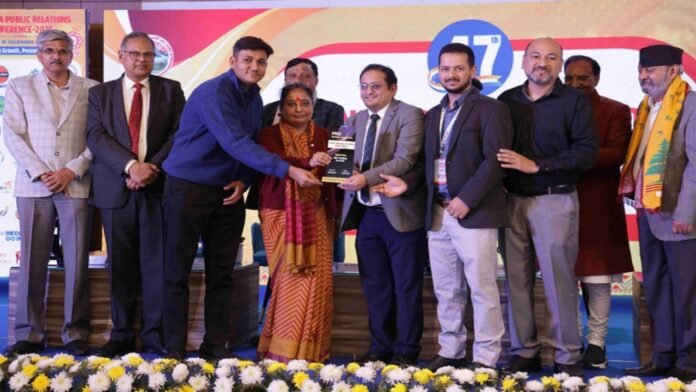
REC Limited has won two prestigious awards at the 47th All India Public Relations Conference organised by the Public Relations Society of India (PRSI) recently in Dehradun.
The company received awards in the categories of Public Relations and In-house Journal, recognising its sustained efforts in strengthening stakeholder communication, promoting transparency and effectively showcasing institutional initiatives through structured and credible communication practices.
The awards were presented by former Union Cabinet Minister for Education and former Uttarakhand Chief Minister Ramesh Pokhriyal Nishank, and Ritu Khanduri Bhushan, Speaker of the Uttarakhand Legislative Assembly, during the conference.
The awards were received by Shri Sunil Bisht, CPM, REC Limited, Dehradun Office, along with members of REC’s Corporate Communications team at the award ceremony held as part of the conference proceedings.
During the conference, REC’s Corporate Communications team also delivered a presentation on “Role of Corporate Communication in Public Sector Undertakings”, highlighting the growing strategic importance of communication in enhancing transparency, trust and institutional credibility in public sector organisations.
The recognition underscores REC’s focused approach to public relations, its consistent engagement with stakeholders and the relevance of its in-house journal in strengthening internal communication, employee engagement and alignment with the organisation’s vision and values.
The All India Public Relations Conference is PRSI’s flagship annual event and serves as a national platform for discussions on emerging trends, best practices and the evolving role of public relations and corporate communication in governance, business and society.
Energy continues to drive India’s economic growth, and coal still supplies a large share of the country’s energy needs. In a recent push to strengthen governance and improve accountability in the sector, the Prime Minister’s Office (PMO) has asked the Ministry of Coal to draw up a roadmap for mapping and listing all subsidiaries of Coal India Limited (CIL) by 2030.
Following this, the government now plans to set up coal exchanges that will allow surplus thermal coal to be traded competitively. With domestic output expected to climb beyond 1.5 billion tonnes by 2030, officials say the new system is meant to support market-based price discovery as the sector moves toward a surplus.
The Ministry of Coal has already circulated revised draft Coal Exchange Rules and invited stakeholder comments. Through a recent gazette notification, the Coal Controller Organisation (CCO) has been named as the authority responsible for registering and regulating these exchanges.
Officials also pointed out that a series of policy reforms in recent years has boosted self-sufficiency and raised domestic availability. India’s coal production crossed the one-billion-tonne mark in 2024-25, reinforcing the need to rethink how surplus coal is sold and priced.
The legal foundation for establishing coal exchanges comes from the Mines and Minerals (Development and Regulation) Amendment Act, 2025, which gives the Centre the power to promote mineral trading through regulated platforms.
The Prime Minister’s Office (PMO) has asked the Ministry of Coal to prepare a roadmap for mapping and listing all subsidiaries of Coal India Limited (CIL) by 2030 as part of a broader push to improve governance, transparency and accountability in the coal sector, according to reports.
The move is aimed at streamlining oversight and unlocking value through asset monetisation in Coal India, which accounts for over 80 per cent of India’s domestic coal production. The exercise is being seen as part of a wider effort to strengthen corporate governance and improve financial efficiency across public sector enterprises in the energy sector.
Coal India operates through eight subsidiaries — Eastern Coalfields Limited, Bharat Coking Coal Limited, Central Coalfields Limited, Western Coalfields Limited, South Eastern Coalfields Limited, Northern Coalfields Limited, Mahanadi Coalfields Limited and Central Mine Planning and Design Institute Limited.
Bharat Coking Coal Limited (BCCL) and Central Mine Planning and Design Institute Limited (CMPDIL) are expected to be listed on the stock exchanges by March 2026. Preparatory work for these listings, including domestic and international investor outreach in the case of BCCL, has been completed, according to reports.
Bharat Coking Coal Limited had earlier filed its draft red herring prospectus (DRHP) with the Securities and Exchange Board of India (SEBI) for a proposed initial public offering. The DRHP relates to an offer for sale of up to 46.57 crore equity shares by Coal India and remains subject to regulatory approvals and market conditions. CMPDIL has also filed its DRHP with SEBI for an IPO through the offer-for-sale route.
Coal India has also informed the stock exchanges that its board of directors has approved the listing of South Eastern Coalfields Limited and Mahanadi Coalfields Limited. The decision follows directions from the Ministry of Coal to initiate concrete steps for listing these two major subsidiaries in the next financial year.
Meanwhile, Coal India Limited has set a production target of 875 million tonnes for the current financial year, reflecting the government’s continued focus on balancing structural reforms with operational expansion.
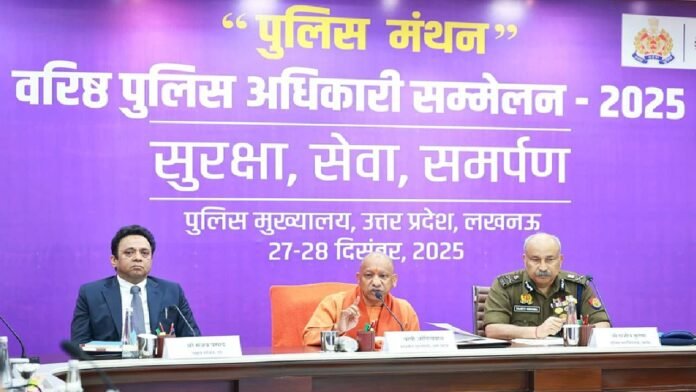
Uttar Pradesh Chief Minister Yogi Adityanath on Saturday said that policing reforms over the past seven and a half years have changed the law-and-order situation in the state. He said these changes have raised public confidence and helped make Uttar Pradesh a model of rule-based administration.
He was speaking at the inauguration of the two-day ‘Police Manthan: Senior Police Officers Conference–2025’ at the Police Headquarters in Lucknow. The Chief Minister said the work of the Uttar Pradesh Police is now receiving recognition in India and abroad. He added that results on the ground matter more than self-promotion.
The Chief Minister said that before 2017, Uttar Pradesh faced serious law-and-order problems, weak training capacity and poor public perception. He said reforms taken since then have improved policing and made the state more stable and competitive.
Yogi Adityanath launched the ‘Yaksh’ mobile app at the event. The app is meant to strengthen beat policing and increase use of technology in daily police work. He was earlier given a Guard of Honour at the police headquarters.
On capacity building, the Chief Minister said training infrastructure has expanded and more than 60,000 police personnel are undergoing training at state-run facilities. He also referred to structural changes such as the police commissionerate system in seven districts, expansion of cyber policing and investment in forensic infrastructure.
He said every district now has a cyber police station, and all police stations have cyber help desks. The number of Forensic Science Laboratories (FSLs) has increased from four to twelve, and six more are under construction. He said the Uttar Pradesh State Institute of Forensic Science in Lucknow has become an important centre for forensic training.
The Chief Minister also mentioned the functioning of units such as the State Disaster Response Force (SDRF) and the Uttar Pradesh Special Security Force (UPSSF). He said new model police stations with improved public facilities have been set up. He noted that emergency response time under UP PRV 112 has come down from around 65 minutes earlier to about 6–7 minutes now.
Yogi Adityanath said policing should remain strict against criminals while being respectful and reassuring to law-abiding citizens. He also noted that the Safe City project has been implemented across 17 municipal corporations.
Earlier, Principal Secretary (Home) Sanjay Prasad said a zero-tolerance policy against crime has been followed under the Chief Minister’s leadership. He said recruitment and infrastructure have improved, women beat policing has expanded, and reservations have been given to Agniveers joining the police force. He also mentioned preparedness against narcotics, terrorism and human trafficking.
Director General of Police Rajeev Krishna said policing in the state has seen major reforms since 2017. He said these reforms have improved efficiency and public trust.
Senior police officers attended the conference in person. Police officers from districts joined virtually.


















 Get Latest Updates