


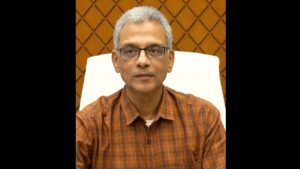
Former IPS officer Rahul Rasgotra is making trending news after his appointment as National Security Adviser (NSA) to Mauritius. But there is nothing new in it, as it has been a norm to nominate an IPS officer as the NSA to Mauritius, so what is special about it this time? It is so because the choice of Rahul Rasgotra (IPS:1989:MN) offers a clue to a strategic shift in India’s geopolitical calibration.
The post of Mauritius NSA has traditionally been seen as a prize for the PMO’s preferred “blue-eyed pearls,” drawn either from RAW or the Cabinet Secretariat. It was more like a compulsion, as advising a friendly foreign government required exposure to the external security and intelligence nuances.
But Rasgotra’s appointment breaks that pattern, as he is neither a Cabinet Secretariat-chosen bright spark nor a deep RAW pedigree flying out. Besides, Rasgotra has never been involved in external operations. So it is a subtle departure from that tradition.
It needs to be understood that our geopolitical needs have changed, and India is placing a premium on quiet operators, who can build trust, strengthen institutional capacity, and keep the Indo-Mauritius security architecture closely aligned.
Rasgotra fits into the bill, as his disposition of being quiet, methodical, and insulated from publicity suits India’s requirements in the changed scenario. That is why his transition into a strategically sensitive overseas role is more than just routine.
The reason behind it is that before taking over as DG in the Indo-Tibetan Border Police (ITBP), from where he retired, Rasgotra served as Special Director in the Intelligence Bureau (IB). In that position he excelled in handling and managing complicated layers of counterinsurgency, border management, and domestic intelligence. His tenure in IB is widely viewed as his strongest credential within the security establishment.
Besides, during his posting in high-profile positions in Islamabad and Washington, he earned a reputation for operational clarity, steady nerves, and the ability to handle politically sensitive theatres without noise.
A senior IPS officer explains the significance of Rasgotra’s appointment by saying that the region demands hybrid intelligence experienced officers who understand both the domestic pulse and the geopolitics around it.
To cap it, Rasgotra’s tenure in ITBP saw him guarding some of India’s most volatile frontlines with China. It gave him unique insight into border militarisation and the tactical realities of great-power competition in India’s backyard.




















 Get Latest Updates